3 months ago
10
3 months ago
10
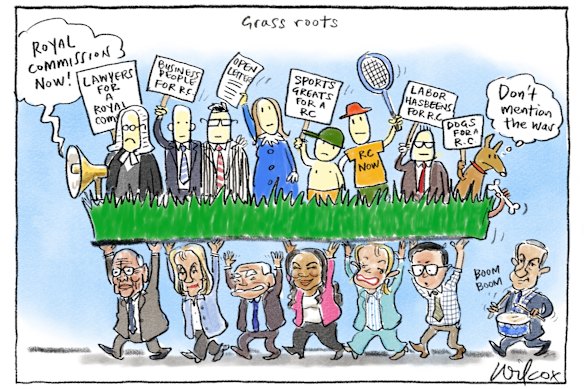
Many correspondents appear to have misunderstood the rationale behind calls for a royal commission, wanting instead to include all manifestations of racial prejudice within Australian society (Letters, January 6). While every form of prejudice is reprehensible and demands serious attention, unfortunately, antisemitism isn’t like other forms of racism. The deaths and injuries of dozens at Bondi confirm that. Antisemitism is not just about disdain or exclusion – it can and does inspire lethal violence. Antisemitism cannot be adequately addressed as a subset of broader racism. It warrants its own royal commission, one that acknowledges its particular dynamics and to find effective strategies to confront and eradicate it, as well as to examine the terrible events leading up to the massacre. Antisemitism is different because this hatred is historically entrenched in certain sections of society that are united in this hatred – even though they are often diametrically opposed to each other in other ways. Peter Neufeld, Mosman
Credit: Cathy Wilcox
Public concern about the PM’s response to the Bondi attack continues to grow. The government says a federal royal commission would take too long. That argument sidesteps accountability by narrowing the scope of scrutiny. Barrister Robert Richter KC told the Herald that failures by ASIO, the AFP, NSW Police and border agencies were sufficient explanation for the attack, and that “we don’t need a royal commission for that”. If accepted, responsibility would stop at operational agencies, while federal government decision-making and policy settings remain beyond scrutiny. Yet understanding the consequences of federal government policy is imperative. For more than two years, rising extremism, intimidation and antisemitism have been evident. As Herald political editor Peter Hartcher warned last September, “hate is on the march across Australian society”. That makes this a national problem requiring a national review and a national response. The inquiries that have been implemented exclude federal government action or inaction, and exposures in other states. These flaws virtually guarantee a response that treats symptoms rather than causes. Mark Stevens, Cammeray
Recent letters calling for a royal commission into antisemitism should make us consider what our form of representative democracy really means. When decisions are made to raise our taxes, strengthen Medicare or change the laws on same-sex marriage, they are taken by our representatives in parliament. They are not made by “eminent” Australians who practise law, run businesses or used to swim fast (“Former Labor politicians plead with PM to back down on an antisemitism royal commission”, January 6). The Australian model of democracy enshrines the principle that every citizen has one vote and each vote is of equal value, no matter how “eminent” the individual. Eight months ago, those same people voted overwhelmingly to put their trust in a government led by Anthony Albanese to run the country. They didn’t elect James Packer, Dawn Fraser or Justice James Spigelman to make decisions on our behalf. Mike Reddy, Vincentia
If a royal commission were to fully examine the causes and manifestations of antisemitism, it would need to travel far back in history and to many countries. This aspect of human behaviour is far from new, nor is it a local phenomenon. How much time would a commission need to complete such an undertaking? Barry Wooldridge, Harden
Control shooters
Riley Walter’s story about “Jimmy” and the Bondi killers who used his farm for target practice articulates perfectly why the loophole that allows “recreational shooters” to use private properties needs to be closed (“Lucky they didn’t kill me”, January 6). Half the time, the property owners have no idea who is using the property, or what they’re doing. If feral animals need controlling, leave that to the property owner or professional shooters. All other shooters, if they want to follow that hobby, should go to a firing range where there is some form of management and control over who is doing the shooting. Art O’Brien, Coogee
Dump Trump
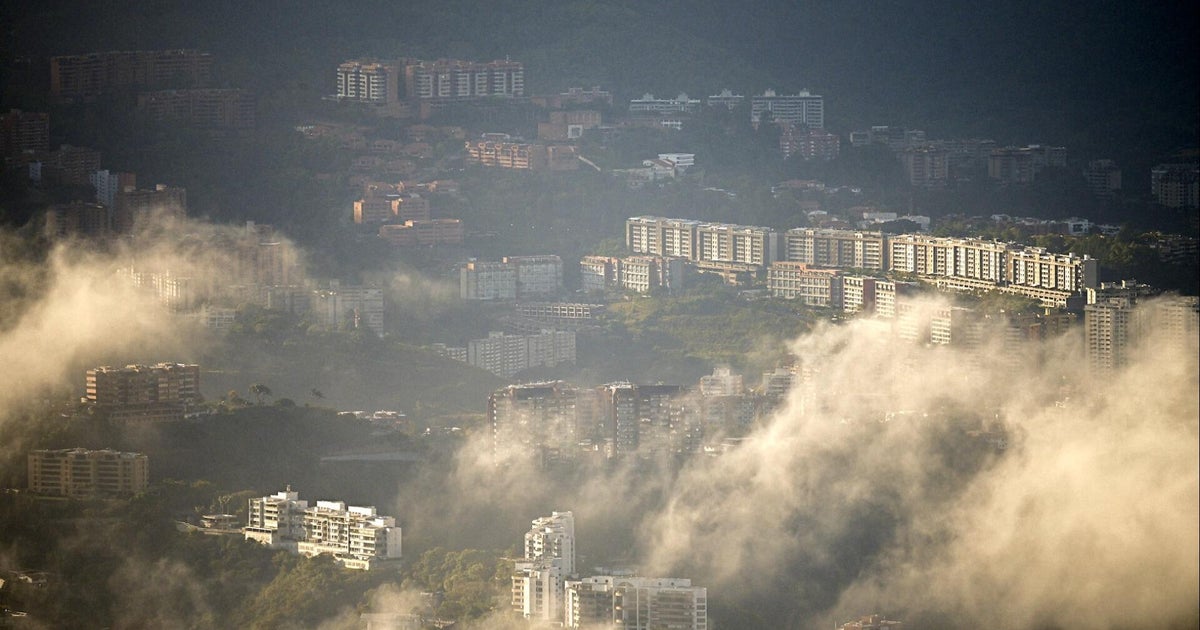
Despite the embarrassingly impotent response by our federal government to the illegal invasion of Venezuela by Donald Trump’s lawless regime, it is now ethically essential, and prudent, for Australia to withdraw our support for the dubious AUKUS alliance and request the return of our recklessly squandered money (“Outrage, delight or silence, reactions to US strike telling”, January 6). If we hope to prosper as a society, we cannot afford to continue to be beholden to and “linked by association” to a nation controlled by warmongering rednecks who would seem to have totally abandoned their social conscience. Rod Luffman, Nambucca Heads

Protesters at a rally in Houston,Texas.Credit: AP
Maria Corina Machado won the Nobel Peace Prize in 2025 “for her tireless work promoting democratic rights for the people of Venezuela and for her struggle to achieve a just and peaceful transition from dictatorship to democracy” (“Five scenarios for a post-Maduro Venezuela”, January 6). Notwithstanding the likely illegality and blatant aggression of his venture into Venezuela, could Trump’s reluctance to recognise Machado as the rightful leader of a new, democratic Venezuelan government just be sour grapes? It’s also unsurprising that we haven’t heard much from FIFA about its own peace prize after the attack on Caracas. Peter Singer, Hamilton South
In 1953, the CIA orchestrated the removal of the Iranian government of Mohammad Mosaddegh and the installation of the Shah as absolute monarch. In 1973, the CIA helped topple the democratically elected Chilean socialist government of Salvador Allende and was instrumental in installing the brutal dictatorship of Augusto Pinochet, who maintained the support of Ronald Reagan and Margaret Thatcher. Considering past actions, the US administration’s claim that it toppled Maduro because he is a dictator rings rather hollow. Colin Douglas, St Kilda (Vic)
I sent a good friend of mine who lives in America copies of some of Tuesday’s letters in the Herald, which discussed/attacked Donald Trump’s actions in Venezuela (Letters, January 6). I asked him if there were any newspapers in the US that published letters like this. His response: “Not that I see, but keep in mind Australia has freedom of the press. Cherish it.” We live in such a lucky country. Bernie Carberry, Connells Point
There was much hue and cry recently about Australia buying oil from India because it originated in Russia. Will it be OK now for Australia to buy oil from Uncle Sam, which was stolen from Venezuela? Ariyur Rangarajan, Baulkham Hills
The headline in another Sydney newspaper reporting on the American intrusion into Venezuela was one of the heaviest pieces of irony I’ve read: “Trump puts dictators on notice.” Bill Forbes, Medowie
E-bike laws needed
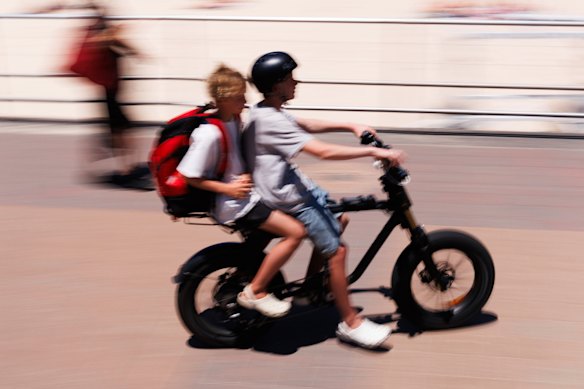
I totally support the editorial advocating CTP insurance for compliant e-bikes (“E-bike accidents demand better state regulation”, January 6). As a former general manager of a CTP insurer and with five years as a director of the Motor Accident Commission and Road Safety Authority, I understand the consequences a serious incident causing personal injury can have for the individual injured, their family and the person causing the injury. As an example, a brain injury to a person with much of their life still ahead of them can cost more than $30 million over that person’s lifetime. That is a heavy burden on the community when there is no insurance to cover these costs. It would be rare that the individual causing the injury would have assets to cover this amount when recovery action is taken against them. What is missed in the articles written about e-bikes is that most bikes causing the problem are not e-bicycles, they are non-compliant, unregistered, unregisterable motorbikes. The problem would not be as big if the law was enforced. Fatbikes have 1000-watt motors that Transport for NSW and police advice say are not legal, even with after-market restrictions. Perhaps we should ask the government why it is not enforcing the law already in place. Greg McCarthy, Cronulla
Young riders often lack the experience to safely control powerful e-bikes.Credit: Max Mason-Hubers
Thanks for your editorial. Last night about 9pm I was walking in my inner-city suburb when two teenage girls went by on an e-bike with no lights. Neither had a crash helmet. The rider had no shoes and was reading her phone with one hand while steering with the other. My street is on a regular route from a nearby private high school to well-off beachside suburbs. Most afternoons after school there’s an “e-bike derby” down the street with five bikes across both sides of the street, the boys turning heads to yell. Another day a young pillion passenger, no helmet, spraying kerbside diners with a water gun while having a good laugh. I could fill the page with similar incidents. I like e-bikes, but they’re small motorbikes, not pushbikes. Teenage behaviour is the main problem. E-bikes should be registered with number plates. The riders should be licensed and have to pass the same knowledge and riding tests as motorbike riders. If they’re under 18, their parents’ names should also be on the official records. Schools should run compulsory safety courses. Nothing less will solve the increasing accidents and injuries to the riders and innocent pedestrians. Kevin Fell, Cooks Hill
Tuesday’s editorial was timely. A few days ago, a group of children swept down the hill outside my apartment building on e-bikes. The leader of the “peloton” proudly shouted “43!” to his mates as he swooped around the sharp corner, travelling 3km/h over the speed limit. The sooner the NSW government legislates for registration of these bikes and makes underage use illegal, the better. Elizabeth Elenius, Pyrmont
Fired with regret
The authorities are predicting a dire bushfire season ahead, with hot weather forecast and extremely high fuel loads everywhere owing to a sequence of wet summers (“Monster heatwave to hit the south-east”, January 6). When the inevitable happens, I wonder how we, the mug public, will feel at the end of summer about the Coalition’s recent ditching of the goal to achieve net zero carbon emissions by 2050 – which is really a proxy for denial of climate change. I expect that there will be an extreme about-face, switching from the current state of apathy to extreme antipathy, similar to the reaction to Scotty’s holiday in Hawaii. My prediction is that, once again, the Coalition will have come down on the wrong side of history. Ian Morris, Strathfield
Fair go on housing
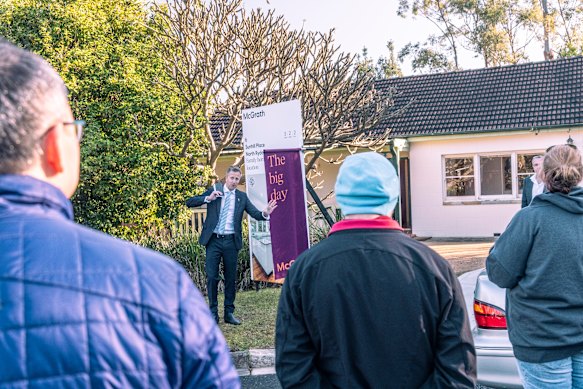
Australians believe in fairness to the extent that “fair dinkum” is a specifically Australian term. How then is the current real estate buying situation allowed to exist? Young new first house buyers are forced to compete with investors who are backed by a tax system where negative gearing supports their already comfortable financial arrangements. The struggling first home buyer is alone while the investors have the help of negative gearing in their back pocket. How is this fair in any sense? One is looking for a home and the other is looking for somewhere to park their money with tax benefits. Hardly a fair competition. Australia, no longer the land of the fair go. Eric Sekula, Turramurra
First home buyers are at a disadvantage when competing with investors. Credit: Thomas Wielecki
Change of pace
During the Pink Test television coverage, viewers were rightly invited to support the McGrath Foundation’s vital work in breast cancer care. Yet in the ad break, Glenn McGrath appeared in repeated advertisements for a sports gambling app. At a time when there are growing calls to curb gambling advertising due to its social harm, the juxtaposition felt jarring. It sends mixed messages about what we choose to normalise on our national sporting platforms. Fundraising for serious illness deserves clarity and consistency, not moral whiplash. Andrew Slade, Glenhaven
Seat and be merry
Phil Rodwell’s problem with children taking up seats on public transport while older people stand is easily overcome (Letters, January 5). As a user of public transport for 76 years, when faced with this situation I just say in a loud voice, “OK, whose lap am I going to sit on?” Someone always stands up. Gordon Scales, Gymea
Your correspondent suggests that by offering a seat on public transport to an older person, a young person “often of Asian and Middle Eastern backgrounds” has adopted Australian values (Letters, January 6). Isn’t it just possible that the values they have displayed came from their own cultures? Randi Svensen, Wyong
Aged don’t have energy
Federal and state governments are repeatedly telling us to shop around for the best energy deals (Letters, January 6). Problem is, you need a PhD to understand your electricity bill, as well as computer skills to shop around on the internet. With all the resources governments have, it would be much easier for their experts to assess which companies represent the best value. Many old people just don’t have the skills to shop around. Governments should come to the party to help the aged and infirm find the best arrangement. Ray Armstrong, Tweed Heads South

Power bills are going one way - up.Credit: Getty Images/iStockphoto
Un-beater-able
My late mother’s Sunbeam Mixmaster would be as old as Cath Hunting’s (Letters, January 6). I remember using it as a girl in her kitchen, and now I use it regularly some 50 years later. It doesn’t have the fancy whisk attachment often called for in recipes, but it doesn’t seem to matter. It still produces our family’s pavlova every Christmas. Remarkably, it still has on it a repair sticker from 40 years ago when it was taken to the Sunbeam Repair Centre in Parramatta. Maryann Gobee, Fairlight
- To submit a letter to the Sydney Morning Herald, email [email protected]. Click here for tips on how to submit letters.
- The Opinion newsletter is a weekly wrap of views that will challenge, champion and inform. Sign up here.