3 months ago
22
3 months ago
22
Daniella Pager had no risk factors for breast cancer: no family history, no genetic mutations or lifestyle factors.
She was a decade off being in the demographic for which the most common female cancer usually appears – in women’s 50s and 60s.
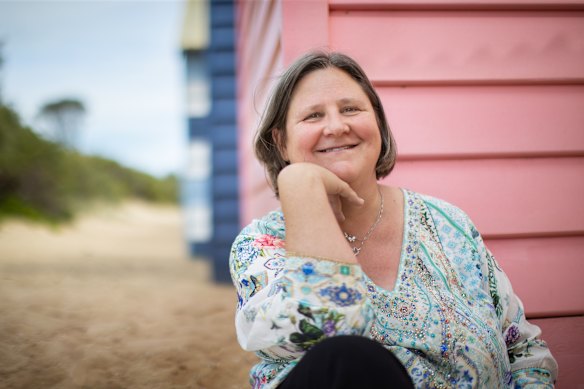
Daniella Pager is a health professional who has seen through her own cancer experience how patients with recurrence of the disease must fight for the best treatment.Credit: Simon Schluter
Pager knew plenty about women’s health through her work as an ultrasound sonographer, and when she was diagnosed with early breast cancer on her 40th birthday, she decided to do whatever it took not just to fight it but to prevent its return.
She had the recommended mastectomy, chemo and radiotherapy, took oestrogen-blocking Tamoxifen for a decade, and insisted on having a hysterectomy and her ovaries removed.
“I did everything to stop this bugger coming back,” says the Brighton mother of two.
Thirteen years later, when she developed back pain that regular painkillers couldn’t touch, in February, a scan revealed the disease had metastasised to her bones. Like the first time, the diagnosis was “completely unexpected”.
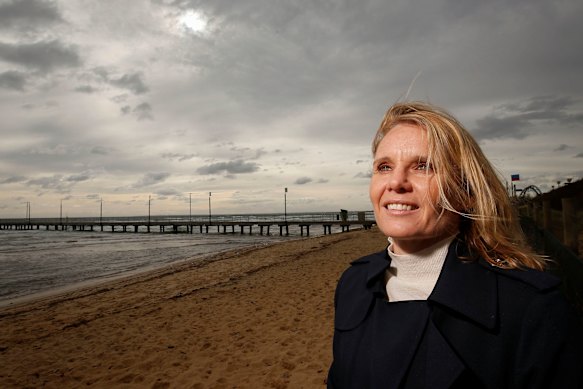
The late Labor MP Peta Murphy travelled to Canberra to advocate for the counting of metastatic breast cancer patients to enable adequate resourcing and medical support.Credit: Darrian Traynor
Pager has since discovered something else unexpected that she wants other Australians with stage four cancer to know: you need to fight for up-to-the-minute tests and treatments.
“Fight to get people to listen to you: don’t just accept the bare minimum,” she says.
This is because the medical system may make assumptions about the methods and limits of treatment for people with metastatic breast cancer, in part because it doesn’t have an accurate indication of how many women in Australia are living with the cancer.
Pager is among a cohort of Australians who until Thursday were considered to be “invisible” because the number of women (and men) living with the advanced disease was never even counted.
Loading
After 27 years of lobbying by the Breast Cancer Network Australia and other advocacy groups, the Australian Institute of Health and Welfare has released figures showing there are twice as many people living with metastatic breast cancer than had previously been assumed.
There are 20,800 women and 150 men living with metastatic disease nationally. Among women, there are 5900 in NSW, 5400 in Victoria, 4600 in Queensland, 2000 in Western Australia and 1800 in South Australia. The figures for Tasmania, the ACT and the Northern Territory are 510, 370 and 170 respectively. The state of residence for 50 people is unknown.
This revelation should lead to better policies for resourcing and care of the increasing number of people living longer with disease recurrence, says Kirsten Pilatti, chief executive of Breast Cancer Network of Australia.
“For the first time, those people will feel seen. But more importantly, we’re going to be able to understand what care, treatment and support looks like for people living with metastatic breast cancer,” she says.
“The great news is, we’re living longer, but we actually need to provide more support and care for this group who have felt unseen for so long.”
The data will also help inform guidelines for service provision.
“Most importantly, they [these patients] know that they matter now – and we will all be held account to deliver for them in our health system,” Pilatti says.
Rod Glover, husband of the late Victorian MP Peta Murphy, will travel to Canberra for Thursday’s launch of the world-leading data. During what would ultimately be the last week of her life in December 2023, Murphy was in parliament promoting Breast Cancer Network Australia’s call for the national statistics to be collected.
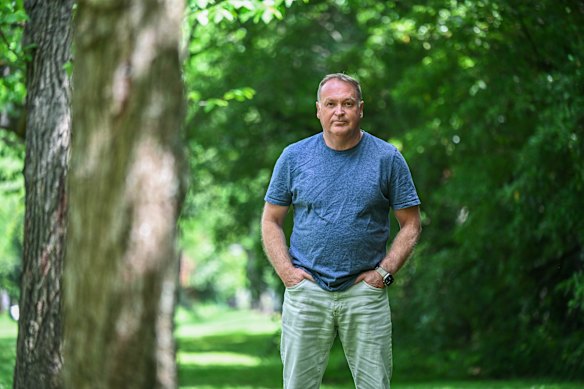
Rod Glover, who was married to the late Labor MP Peta Murphy, will attend the launch of the data she lobbied to have collected about how many Australians are living with metastatic breast cancer.Credit: Joe Armao
“Without this visibility, we can’t plan to adequately meet [their] healthcare needs,” Murphy posted to Instagram shortly before she died of metastatic breast cancer.
Glover said it would have meant a lot to Murphy that the new data brought the hope of better care and support for people with less accessibility to it than she did.
“When you go through this stuff you realise the system does its best, but the system fails in so many ways,” he said.
Loading
“Peta made a firm decision to be an advocate for those who couldn’t speak up, and people feeling counted is actually about people feeling recognised and valued. That is the promise of the data.”
It would also help amplify the message that metastatic breast cancer does not mean the end of living fully. “Peta lived 4½ years after a terminal diagnosis, but people live longer still – and really productive lives while they’ve got metastatic breast cancer,” Glover said.
Daniella Pager is also hopeful that publication of the data could promote funding for more research into new treatments.
She thanks having fought for, and secured, a biopsy and genomic testing of her tumour for her own renewed hope.
These tests revealed the disease had come back as a different type of breast cancer, and Pager found a place on the trial of a drug that targets her specific type of tumour. She is feeling encouraged that while other treatments tried in the past seven months made no difference to her tumour markers, “this drug has smashed them back towards the levels of normal”.
“It’s definitely not a miracle cure,” she says. “We do not know how long it will be effective for, but it is the only treatment I have been on that has been shown to be effective, and that is because we managed to find the mutation specific to me.”
Start the day with a summary of the day’s most important and interesting stories, analysis and insights. Sign up for our Morning Edition newsletter.
Most Viewed in National
Loading