3 months ago
7
3 months ago
7
Bringing teenage criminals face to face with their victims and using targeted police intelligence to disrupt gang hotspots is more likely to stop kids reoffending than locking them in adult prison, say those on the front line of Melbourne’s youth crime crisis.
As the Victorian government vows to put more teens in jail for longer stints, two government agencies warn the system is already struggling to cope with youth offenders, leaving kids cut off from programs proven to help break the cycle of reoffending. Youth workers say politicians are listening to their pollsters rather than experts as they fall over each other to promise harsher youth crime crackdowns.
Yet, for all the bluster dominating headlines, some teens caught up in gang violence say they’re more worried about the federal government’s looming age restrictions on social media – in case it kills off their favourite Reddit pages – than the premier. One Reddit thread, in which users keep score of gang violence across the state in online “league tables” is particularly popular.
“But they’ll just find another platform, of course,” says one youth worker, speaking anonymously due to privacy restrictions.
Time in adult jail does scare some, he says, but usually only those who have already been inside to understand. “These kids are smart. They know the sentences they might roughly get. But they’re not thinking about that when they’re out with their boys. They’re not thinking. None of these policies by any party are getting even close to solving this. And kids are dying.”

Youth crime waves are nothing new. But experts warn youth crime and gang violence is escalating.Credit: Tom McKendrick
Face to face with his victim, almost a year after stealing the car in their driveway, the teenager made a promise. He had come to court to apologise for the home invasion and car theft that had uprooted both their lives – part of a Victorian restorative justice program some young offenders can opt into ahead of sentencing.
“It takes courage” to be in that room, says Julie Edwards of Jesuit Social Services, which mediates the program through the Children’s Court. “Victims will be blunt.”
This teen had listened to the man in front of him speak of his fears for his young toddler the night he heard intruders smashing their way through his house, and the nightmares that had followed.
The offender vowed he would save up money to replace the child’s car seat, though he couldn’t afford to replace the car, torched after being used in a string of other burglaries. He planned to return to the sports club he’d left when family violence had torn his own home apart. And he would go back to school. He wouldn’t let himself end up here again, he promised, in a courtroom facing someone he had hurt.
This is a common story in Melbourne’s youth crime crisis, according to Edwards and others who work with young offenders. Teenagers are committing more serious crimes than ever, and a growing chorus of commentators, community groups – and state politicians – say they need to face harsher consequences to stop the revolving door of kids offending while out on bail.
Off the back of toughened youth bail laws, the Allan government is now vowing to impose adult time for violent offences, which could mean some 14-year-olds would be locked up for life for burglaries and home invasions.
But many experts and those in the youth justice system say the crackdown will just lock more young people into lives of crime. Instead, they say, reforging their connections to the community – by having them face the consequences of their actions, and rebuilding their ties with family, school, and employment – is a cheaper way to break the cycle of offending.
“The system is failing – well, our leaders are failing,” says Edwards. While she says offenders need to be held to account, she notes more than 60 per cent of kids in custody are victims of trauma, abuse or neglect themselves. Yet funding cuts for early intervention and school support programs means kids in need are still lingering on long wait lists. “Or they’re offered nothing at all,” Edwards says.
Loading
“There’s a false divide between this idea [of] the victims and the perpetrators. We’re often talking about the same people. We really care about victims too, but victims aren’t silly … they want what works.”
On Friday, the state watchdog took the rare step of writing to the Allan government and the leaders of the major parties, warning of more human rights breaches under the proposed laws.
“My office is already seeing the impacts of the recent … bail laws which have increased both complaints to our office and integrity risks in the sector,” Ombudsman Marlo Baragwanath wrote.
Complaints from adult and youth prisons were up 20 per cent compared to last year, Baragwanath wrote, with conduct issues including use of force and misuse of power having doubled in that time to now account for 14 per cent of all complaints. Her office was “anticipating a 157 per cent increase in youth justice complaints even before these announced reforms take effect”.
“Our work shows that rapid increases in the number of people in custody leads to less humane treatment and less effective rehabilitation, which does not improve community safety in the long run.”
Data released last month in Victoria’s latest youth parole board report also paints a troubling picture. With the system now choked with youth offenders, their cases are taking longer to resolve, and access to rehabilitation programs, from education or drug and alcohol interventions to mentoring, for kids in prison isn’t happening as it should.
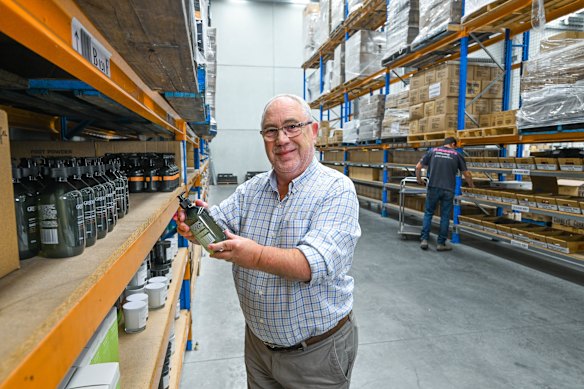
Mark Watt, chief executive of Big Brothers Big Sisters, runs a mentorship and employment program. This warehouse is where some of the youths come to work and learn skills.Credit: Joe Armao
“Often, it doesn’t happen,” says Edwards. “Many young people are spending most of their sentence, or a lot of their sentence, receiving nothing at all.”
More kids are now held on remand to await trial under recent crackdowns. By the time they begin their sentences, there often isn’t much time left (or any) to be served, meaning they aren’t getting the opportunity to finish programs shown to help reduce reoffending.
The youth parole board warned that “since last financial year, we have seen a 53 per cent increase in time served sentences for young people”, which it said can “confine access to rehabilitative and transitional supports”.
Many of the kids caught up in crime are among the state’s most vulnerable, often bounced around refuges and foster care, looking for somewhere to belong. Data from the youth parole board shows that about half of children in youth detention have a history of alcohol and drug use – more than a third were under the influence when they committed a crime.
“They are sky-high figures,” says Victorian Drug and Alcohol Association chief executive Chris Christoforou. “If we’re going to be serious about addressing youth crime, then we need to do more to intervene early in some of those patterns of behaviour around substances.”
Loading
Christoforou, whose organisation represents more than 80 of Victoria’s alcohol and drug services, says funding for youth treatment has flatlined over recent years, despite surging demand. Last month, more than 400 young people were waiting to access treatment, the association’s data showed.
Youth workers warned many teens could still get their hands on contraband in youth detention. “And the system is often too clinical for kids,” one worker said. “The last thing they want to do is sit down with a psychologist. You often need a court to compel them to go.”
Inside a warehouse in Dandenong South, Mark Watt teaches a group of teens how to pack boxes and stack shelves. The training is part of a six-week program by Social Engine, a small not-for-profit giving vulnerable young people skills to hold down a job. Last year, the program found jobs for 30 of them.
Watt’s youth mentorship program, Big Brothers Big Sisters, has more than 1000 youths on its waiting list right now. He says getting to children early is key to diverting them away from crime. “It’s so much more valuable to give a young person a job and a mentor than lock them up,” he says. “The stats are there. The research is there.”
As for the core group of 200-odd repeat offenders largely driving Victoria’s youth crime rates, experts say it’s never really too late. Mentoring by peers who have turned their lives around has shown particularly promising results, even with the state’s most notorious youth crims.
“And honestly, staying on some of these kids with targeted policing, getting cops to hit hotspots and use their intel for preventative work can be really critical,” says one youth worker.
Those who work with young offenders say the stabbing murders of two young teens not connected to gangs in September has had a bigger impact of late than any legislative change. One of the boys, 12-year-old Chol Achiek is believed to be the youngest casualty so far of Melbourne’s youth gang crisis, which The Age has linked to more than 20 homicides in the past five years.
“I’ve seen guys I never thought would leave the lifestyle have a rethink, show up to programs,” said one worker. “I have hope, in spite of all this, that things might shift.”
Loading
The government has also vowed to pursue organised crime bosses recruiting teens into gangs, though youth workers despair prison is itself prime gangland hunting ground for young members. Research consistently shows the younger a child is incarcerated, the more likely they are to graduate to an adult criminal lifestyle.
“And it’s unlikely any of these kids are going to snitch on their organised crime bosses anyway,” says one youth worker.
Meanwhile, in the Children’s Court, restorative sessions bringing offenders and victims together can be confronting. They’re not for everyone, says Edwards, but they can be healing for both sides. “Some kids might make them a piece of art. We’ve had victims even offer a boy a job.”
But when Adele Andrews considers sitting down with the machete-wielding youths that broke into her Black Rock home in March, she says it’s not an answer for her, though she can see how it might give other victims closure.
But Andrews calls the government’s youth sentencing crackdown “ludicrous”. She’d rather see offenders being put to work on farms and learning skills than being sent to adult jail. “Sitting down with the perpetrator is not an answer for me. It’s knowing that these kids are learning a tough lesson.”
Start the day with a summary of the day’s most important and interesting stories, analysis and insights. Sign up for our Morning Edition newsletter.