2 months ago
25
2 months ago
25
Opinion
January 30, 2026 — 3.30pm
January 30, 2026 — 3.30pm
Are multi-year NRL playing contracts much more than mere suggestions these days?
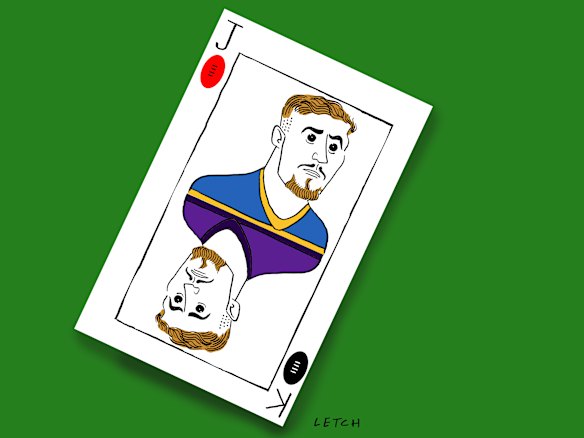
The terms of Zac Lomax’s release from his Parramatta deal – his second release from an NRL contract in two consecutive years – are set to occupy at least two days of argument before a Supreme Court justice next month.

Zac Lomax is headed to court over his contractual dispute with the Eels. Credit: Getty Images
The NSW winger was contracted at the Eels until the end of 2028 but, late last year, with the lure of a new rugby competition R360 apparently impossible to resist, requested to be allowed to leave.
Lomax’s request was granted by Parramatta, subject to him entering into a deed of release. Standard stuff. Apparently, that deed included a term stating that Lomax agrees not to play for another NRL team before the 2029 season without the Eels’ consent.
Apparently, it also recorded Lomax’s acknowledgement that he was afforded the opportunity to obtain legal advice about the terms of the deed before executing it. Apparently, Lomax received that advice – an important factor to which courts pay close attention. And apparently the executed deed was registered with the NRL.
Credit:
Now, though, Lomax is displeased with the deal he negotiated and would prefer to be cut loose from its shackles. There is talk the NRL was close to registering a new deal for Lomax to join the Melbourne Storm for the coming season.
It makes sense Lomax is looking for rugby league opportunities, now that Mike Tindall and the merry jesters of R360 have exited, stage left – having acknowledged the competition will not be up and running for another three years.
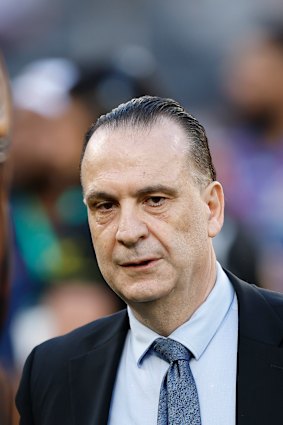
Rugby league boss Peter V’landys threatened players with 10 year bans for negotiating with rebel competitions, like R360.Credit: Getty Images
Evidently, the Eels won’t countenance a future reality where Lomax joins the Storm. Which lands us at the crossroads, and the question of what happens next.
My first observation is this: in October 2025, with the threat of R360 looming large over the player market, the NRL issued a statement that in part reads:
“Any NRL Player who negotiates, signs or enters into a Letter of Intent, Playing Contract, or any other form of agreement – whether verbal or written – with a football competition, league, or organisation not recognised by the Australian Rugby League Commission (ARLC) as a national sporting federation, will be banned from participation in the NRL and any ARLC-sanctioned competitions for a period of ten (10) years …”
If it’s revealed in evidence that Lomax, or anyone on his behalf, conducted negotiations with R360 before he was released from the Eels contract, then surely the NRL must make good on its word and ban Lomax until 2036 or thereabouts. Otherwise, how can one take seriously any similar edicts in the future?
(Of course, there are a half-dozen reasons why the NRL proceeding on that basis wouldn’t withstand a properly constructed legal challenge.)
Besides that, where this all lands in a fortnight is an examination of the reasonableness of the terms of the granted release.
Simply asked, if Lomax executed a deed of release on his way out the door at Parramatta in which he covenants to curtail his liberty by not playing for any other NRL club before the 2029 season, except where the Eels permit him to do so, is that promise legally enforceable?
Because that’s a huge promise: giving up the freedom to work in the only professional rugby league market in the world that can afford to pay Lomax even half of the $800,000 annual salary he was reportedly banking at the Eels.
What Lomax agreed to, to achieve a release from Parramatta, will only be upheld by a court if the special circumstances of the case qualify as sufficient justification that the restrictions on him are reasonable. Put differently, is it reasonable that the Eels should be able to deny Lomax’s proposal that he be permitted to play in 2026 for the Melbourne Storm or any of the other 15 NRL clubs besides the Eels?
Here, courts give consideration to two matters. First, whether, in this case, Parramatta have a legitimate, protectable interest; and second, whether the terms of the restraint are no more than reasonable for the legitimate protection of that interest. What is that legitimate interest? An interest in not having to play against Lomax, if he plays for a strong team? Without an identified legitimate interest, the restraint is void.
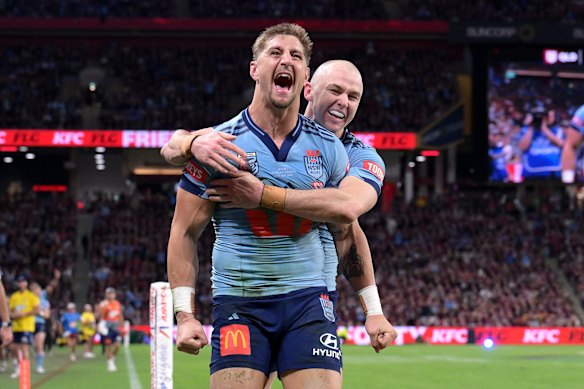
Zac Lomax remains in limbo barely a month before the NRL season kicks off.Credit: Getty Images
Relevant are the effects on the ex-employee sought to be restrained, and principally the fact he really doesn’t have any other rugby league market, anywhere, in which to monetise his expertise. Note also, it’s not the Eels who will be paying him.
Parramatta bear the onus to demonstrate that the terms of its November 2025 deed are no more onerous than legally necessary to protect its legitimate interests. Which isn’t straightforward.
Lomax is a representative-standard player who plays in a competition where each club’s top squad is composed of 30 players. It doesn’t obviously follow that the Eels’ legitimate interests would be adversely impacted should Lomax sign to play for the Storm in 2026. How do Parramatta prove that, on balance?
Does Lomax have access to Parramatta’s trade secrets and confidential information that would be invaluable in the hands of the Storm? Hardly; players change clubs all the time. Will Lomax’s transfer entice fans and sponsors from the Eels? Again, hardly – Lomax was only in blue and gold for a season.
Loading
What’s really going on here is that the Eels don’t want to acquiesce to another team – already way better performed than Parramatta, who haven’t lifted a premiership for 40 years – gaining a further competitive advantage as a consequence of Lomax’s aborted courtship with R360.
What’s the logical endpoint? Is it reasonable for the Eels to refuse overtures made between now and the end of the 2028 season made by Lomax for permission to sign elsewhere? Where rigidly upholding the restraint results in Lomax having to play rugby league in the north of England, turn his hand to rugby union or commence a new career away from sport?
These are matters of balance. The foundational legal principle of Pacta Sunt Servanda translates roughly as stating agreements must be kept. Conversely, we live in marginally more enlightened times than demanding that professional athletes become indentured servants.
Forty years ago, the great Gary Buckenara was contracted to play in the (then) VFL for Hawthorn. He received an approach from the newly established West Coast Eagles to sign for the club.
Buckenara’s mother had recently become paralysed in a car accident. He wanted to return to WA for personal reasons. That wish conflicted with an option he’d granted Hawthorn for his services for the 1987 and 1988 seasons.
Hawthorn sought an injunction stopping Buckenara playing for any other club for those seasons; Buckenara asserted the option constituted an unreasonable restraint on his trade. Hawthorn won the case, and Buckenara played in their 1988 and 1989 premiership sides.
But Buckenara’s situation is different to that of Lomax, and the latter will be scrutinised much more carefully. Buckenara was still employed by Hawthorn. Lomax is no longer employed by Parramatta, the markets in which he can work are extremely limited, and it’s hard to see how Parramatta having such a stranglehold on his future is reasonable.
Most Viewed in Sport
Loading