3 months ago
17
3 months ago
17
Opinion
November 10, 2025 — 3.30pm
November 10, 2025 — 3.30pm
We rightly remember the dismissal of the Whitlam government – 50 years ago – as our most extraordinary political crisis. But the dismissal was also a big setback for women’s rights. Whitlam offered new political recognition to women, and his policies transformed many women’s lives. The women’s movement campaigned for Whitlam in the post-dismissal election because they knew that the gains they had made under Labor could easily be lost.
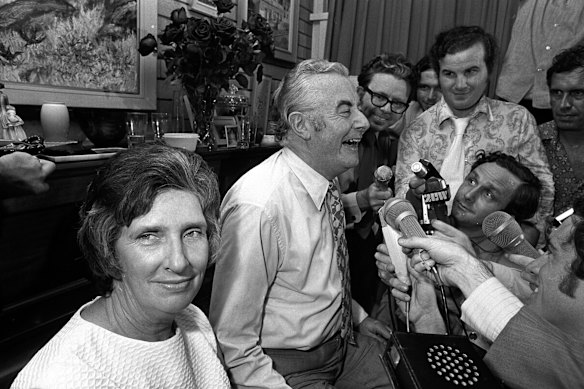
Gough Whitlam, with wife Margaret, addresses a crowd in Sydney after winning the federal election, December 2, 1972.Credit: Lipman
Even though Australia was the first nation in the world to grant white women full political rights (the right to vote and to stand for parliament), for much of the 20th-century, women were not actively encouraged to take active roles in politics, and there were very few female MPs.
By the late 1960s, women were entering the paid workforce and expanding their horizons. But sexism was ever-present. Women’s liberation changed women’s understanding of their oppression. The newly formed Women’s Electoral Lobby (WEL) used this knowledge to change Australian politics in the 1972 federal election.
WEL organised its members to interview political candidates about issues that concerned women, like contraception, childcare and equal pay. Many Labor candidates, including Whitlam himself, scored very highly. The results were published in The Age and women were encouraged to “think WEL before you vote”. Neither major party had developed a women’s policy before the election, but WEL ensured that women’s issues were, for the first time, part of mainstream political debate.
The unique convergence of an energetic women’s movement and Whitlam’s reforming zeal meant that Australian politics started to take women seriously.
Whitlam was the first national leader in the world to appoint a women’s affairs adviser to his staff. Under his leadership, policy began to recognise women not just as wives and mothers, or as secondary earners to male breadwinners, but as citizens in their own right. He did this through policies including equal pay for work of equal value, expanding childcare, the supporting mothers’ benefit and Medibank, the precursor to Medicare. The Family Law Act made divorce simpler. Contraceptives became cheaper.
There were other transformative reforms too. From 1974, feminist activists began opening women’s refuges after realising that women fleeing domestic violence had nowhere to go. They ran these services with donations and volunteers before asking governments for support. It took a while, but Whitlam funded women’s refuges from 1975. Refuges were a great example of how feminists could work with government to respond to women’s distinctive needs.
That year, 1975, was International Women’s Year. Whitlam himself took ministerial responsibility for Australia’s commemorations, which included grants for women’s projects. These projects were to fulfil three aims: to change attitudes towards women, to combat discrimination, and to encourage women’s creativity.
Women across Australia received funds for community projects, to make films and publish histories, to create educational resources, and to help women understand their rights. One of the headline events for the year was the Women and Politics conference, which was intended to encourage all women to become more politically active.
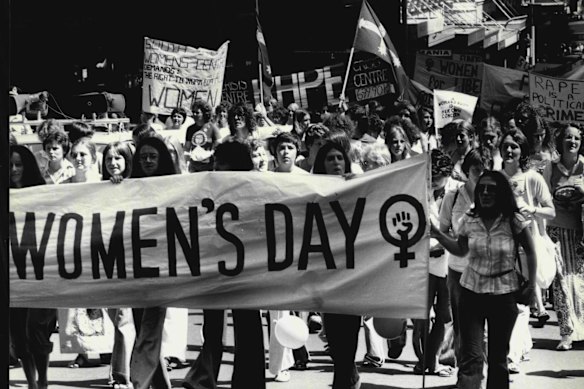
About 3000 women and some men took to the march through the Sydney’s streets on International Women’s Day.Credit: David James Bartho/Fairfax Media
Just how far Australian women had to go to be taken seriously can be gauged by the media reaction to the conference. Men arguing about politics? Business as usual. Women disagreeing on politics? Evidence that the conference had failed. The media’s response was a sign that women were still not quite welcome in Australian politics.
Just weeks later, the dismissal shocked the nation. Despite some reservations about the Whitlam government’s shortcomings, the women’s movement campaigned for Whitlam’s return, urging women to “use your vote for women’s rights”, warning that they “had a lot to lose”. They were right.
Whitlam’s political opponent, Liberal Party leader Malcolm Fraser, was promising to cut government spending but refused to give specifics. The women’s movement, which had just secured government funding for women’s refuges and health centres, feared that they would bear the brunt of these cuts. Fraser said little about women during the election, beyond earning the ire of feminists when he said that more women in parliament would “brighten the place up a bit”.
Labor lost the 1975 election in a landslide, in part because the global economic downturn had created high inflation and high unemployment. Fraser had promised to “turn on the lights”, but he soon found that economy was stubbornly difficult to fix.
Fraser’s record on women’s policy was mixed. He maintained some of the women’s programs built under Whitlam (and in areas like childcare, arguably improved them) but other services, like women’s refuges, gradually lost funding in the late 1970s. Just when women had successfully demanded that governments respond to their distinctive needs, the new orthodoxy of neoliberalism undercut them. However, most of the Whitlam reforms for women survived the Fraser years to become part of Australia’s policy infrastructure.
Women’s policy in the Whitlam era was characterised by experimentation and creativity. In responding to the feminist demand that issues like childcare, contraception and domestic violence were political issues, the Whitlam government helped to transform Australian politics. The dismissal delayed, but could not stop, this transformation.
Michelle Arrow is professor of history at Macquarie University and president of the Australian Historical Association.
Get a weekly wrap of views that will challenge, champion and inform your own. Sign up for our Opinion newsletter.
Most Viewed in Politics
Loading