3 months ago
10
3 months ago
10
Opinion
December 22, 2025 — 3.55pm
December 22, 2025 — 3.55pm
Dust off the fondue set – the “battle of the sexes” is back.
Women’s tennis world No.1 Aryna Sabalenka will take on Australian Nick Kyrgios, currently ranked No.673, in Dubai on December 28.
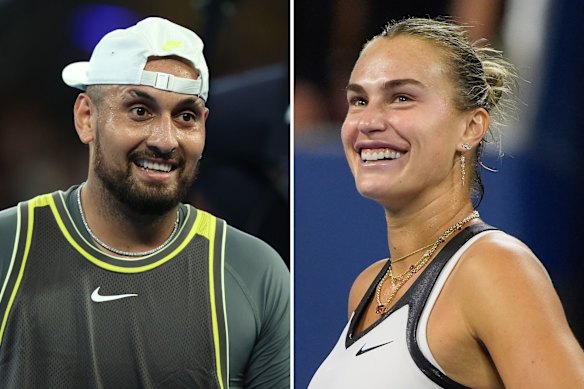
Nick Kyrgios and Aryna Sabalenka.Credit: Getty
In September, Kyrgios said the match was about getting more eyes on tennis. He added that he would defeat the Belarusian without having to try 100 per cent. Sabalenka says the match is a good thing for women’s tennis.
This weekend’s event comes more than half a century after a gold-coated rickshaw pulled by a group of female models – wearing “sugar daddy” T-shirts – carried Bobby Riggs to court to play Billie Jean King. As far as gimmicks go, this one actually had some merit and social purpose.
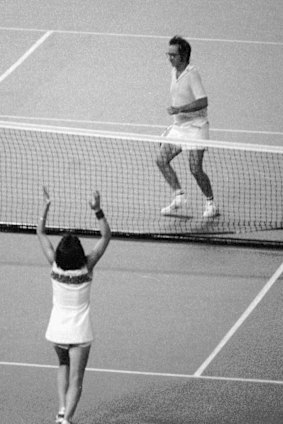
Billie Jean King raises her arms after defeating Bobby Riggs in the 1973 Battle of the Sexes. Credit: AP
It was 1973, and second-wave feminism was on the rise when former American tennis champion and self-proclaimed chauvinist Riggs provoked the “Battle of the Sexes”.
He claimed he could beat any of the top female players in the world because, in his view, men were intrinsically superior athletes. He was 55 at the time.
King, 29, ranked No.2 and a women’s rights campaigner, took the bait – but on her own terms. She saw the match as an opportunity to refute his assertions and build respect and visibility in women’s tennis, and challenge sexism more broadly.
The match was played the same year King founded the Women’s Tennis Association, and just after the United States passed Title IX legislation, which prohibited sex-based discrimination in school and education programs, and gave male and female athletic teams equal opportunities and treatment.
For the record, King won the match decisively, 6-4, 6-3, 6-3.
When asked about her thoughts on the sequel, King was blunt: “The only similarity is that one is a boy, and one is a girl. That’s it. Everything else, no. Ours was about social change; culturally, where we were in 1973. This one is not.”
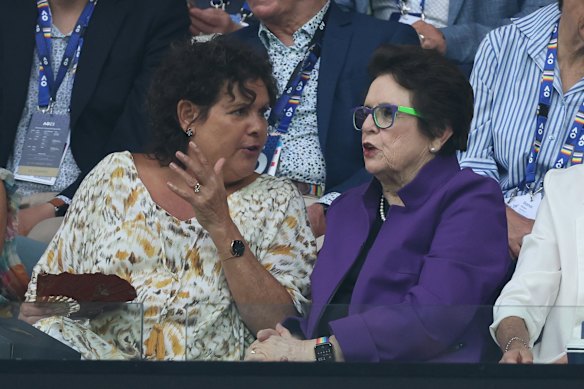
Billie Jean King, right, with Evonne Goolagong Cawley at the 2023 Australian Open.Credit: Getty Images
King is right. This remake has nothing to do with social change and everything to do with crass commercialism.
Over the past decade in particular, there’s been a seismic shift for women in sport globally. One of the joys of documenting this has been the move away from comparing women’s and men’s sport. There’s now broad recognition that the two are different and should be celebrated equally in their own right.
No longer is the word “equality” an afterthought – it is central to the whole discussion. Girls and women are crashing through the grass ceiling, creating pathways and opportunities across a range of sports. Female sporting role models are more visible; these days, they’re celebrated for their actual sporting prowess, not for lying in a bathtub full of golf balls.
When it all comes together, and sport invests in women, you get results like 86,174 at the MCG for the Women’s T20 World Cup Final between Australia and India on International Women’s Day, 2020.
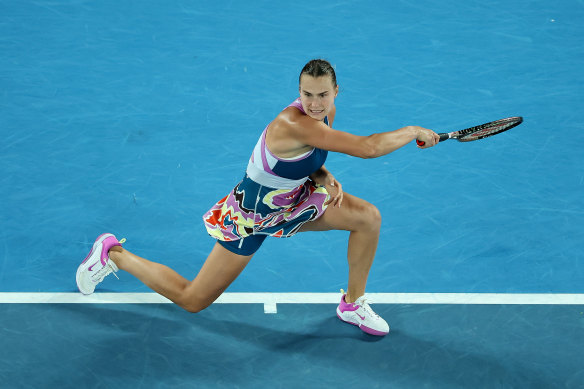
Aryna Sabalenka won the Australian Open in 2023 and 2024.Credit: Getty Images
We can, at last, see real and meaningful progress.
Considering these advances, it feels grossly out of step to promote a tennis match that insults Sabalenka, who has won four grand slam singles titles and is the women’s world No.1. Pitting her against a man suggests that it’s all well and good being a women’s champion, but let’s measure you against a real yardstick.
Loading
Fitting for the circus, but not modern sport.
Perhaps most disturbingly, the battle of the sexes provides a sugar hit for misogynists who use social media as a vehicle to denigrate, threaten and abuse women in sport.
As a journalist who expresses opinions about sport, I know from personal experience that there’s something darkly savage about the online abuse that women in sport cop. It’s truly disgusting – and emanates from a belief that women don’t belong here. This match is exactly the sort of story that feeds the beast.
Sabalenka says the match will help take women’s tennis to a higher level, but I can’t see how. If she loses, the women’s game will be ridiculed, and misogynists will melt keyboards. If she wins, the narrative will be that she beat an injured has-been who’s barely picked up a racquet in two years.
I’m not suggesting that the sporting landscape is entirely fair in 2025. There are still barriers – structural and attitudinal – that stop women and girls from thriving in sport. But stunts that invite ridicule and abuse are not the answer.
Respect. Invest. Promote.
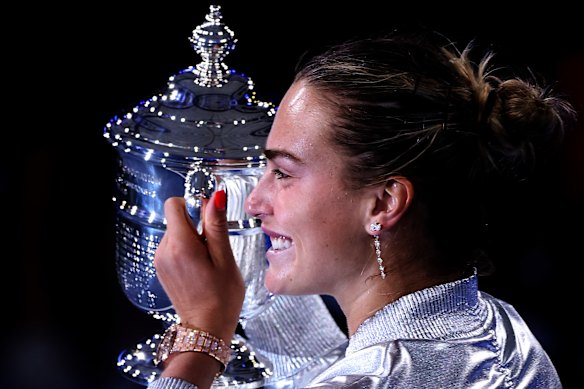
Sabalenka has won four grand slams, two at the Australian Open and two at the US Open, including this year.Credit: Getty Images
Some things from the 1970s are worth hanging onto, but the battle of the sexes isn’t one of them.
Aside from bank accounts, there are no real winners here.
Angela Pippos is a journalist, writer, filmmaker and former political adviser.
The Opinion newsletter is a weekly wrap of views that will challenge, champion and inform your own. Sign up here.
Most Viewed in Sport
Loading