3 months ago
50
3 months ago
50
March 14, 2026 — 5:30am
A minor disability, provided it is short-lived, has this one, simple virtue: it should make us realise how lucky we are. Most of us, for most of the time, come equipped with a body that does its work without complaint. We forget, most of the time, to give that useful body the thanks it deserves.
Most of the time, for example, I can make two cups of tea and walk them down the hallway to the bedroom, whistling as I walk. I can load and unload a dishwasher in under five minutes. I can rise from a chair without looking like a Bulgarian weightlifter attempting a particularly challenging manoeuvre. “Will he make it? Wait for it! Yes, he’s upright, he’s done it!”
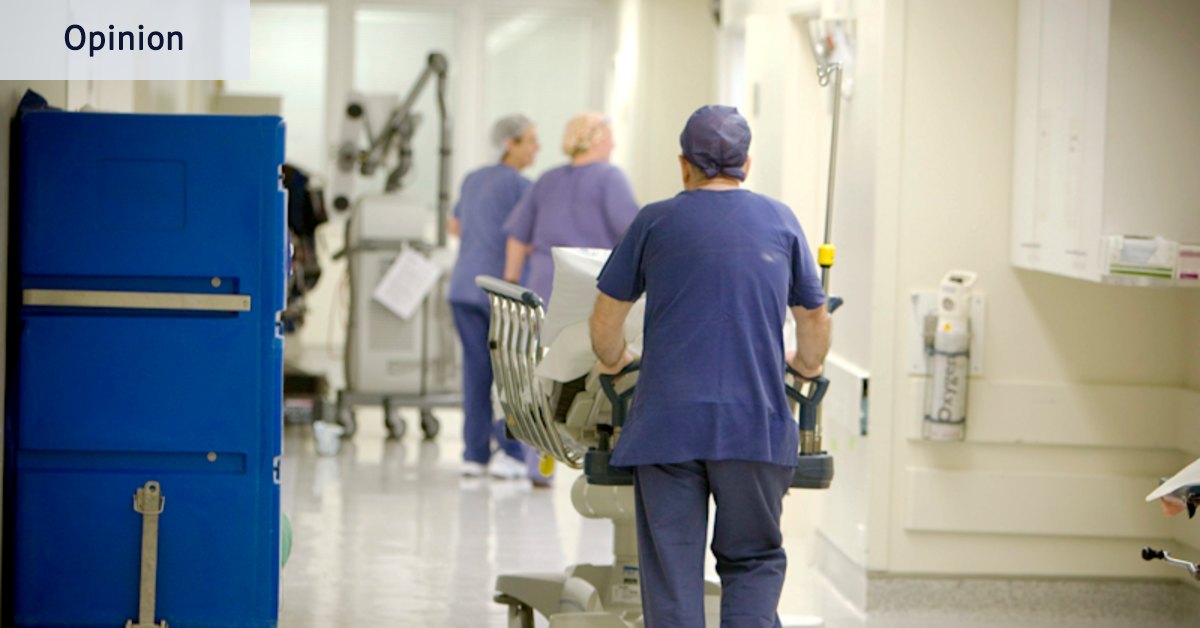
Now, for two or three weeks, I’m on crutches, informing my newly installed knee as to its future responsibilities. Life, for a moment, is incredibly tedious. I can carry a book from room to room, but not if it’s a thick one. Putting on my compression socks involves the squawks and screeches you’d associate with two cats fighting. Getting up and down steps requires complex mnemonics about whether to first use my bad leg or good leg – “Remember,” I say with every step, “heaven is up and hell is down”, a wording that rather indicates attendance at a Catholic hospital.
How do people who are on crutches all the time manage? What about those in wheelchairs? Or living with chronic pain? Or with a million other ailments? Why am I not more sympathetic to the permanently burdened? And why don’t I take more pleasure in my own body, during those lengthy periods when it mostly works?
Human beings have such short memories. One moment we sit, sweating and groaning, after a bad case of food poisoning. The night seems to last forever. We plead for the illness to be over, and then – when it is – we forget it ever happened. Or we’re laid low with flu, miserable for days. Or a bone snaps, a tendon tears. Then we recover, and we banish the memories.
Really, we should wake up every morning and give thanks. “Stomach: settled. Legs: working. Eyes: able to see, albeit with assistance. Hands: only minor arthritis, at a level that allows the carrying of tea. Elbows: good. Toes: connected. Legs: surprisingly attractive. Hurrah.”
We’re better practised, of course, at focusing on the negative; on those moments when our bodies fail. Bill Bryson makes the point brilliantly in his book The Body: A Guide for Occupants, noting that between one and five of your cells turn cancerous every day. And then your immune system, nearly all the time, captures and kills them. As he puts it: “Our bodies are a universe of 37.2 trillion cells operating in more or less perfect concert more or less all the time.”
Or again from Bryson: “In the second or so since you started this sentence, your body has made a million red blood cells. They are already speeding around you, coursing through your veins, keeping you alive. Each of those red blood cells will rattle around you about 150,000 times, repeatedly delivering oxygen to your cells, and then, battered and useless, will present itself to other cells to be quietly killed off for the greater good of you.”
The thing that grabs our attention is the knee that doesn’t work, the rash that has just appeared, or the cancer that was recently detected. Fair enough, of course, but we could spare a little attention for the miraculous machine we mostly inhabit?
When you’ve burnt the bottom of a casserole dish, a Wettex is too soft to remove the baked-on crust, and a steel scratchy is too harsh – but there, dangling at the end of your arms, are fingernails – perfectly suited for the task, hard enough to scrape, soft enough not to mark the enamel. Or, on a hot day, there’s the way our system pumps out a light sheen of water – perspiration – to transmit excess heat away from the body. Or, on a cold night, pulls blood inwards to maintain your core temperature.
I don’t want to use the term “tiny miracles”, as you’ll think I spent too long in the Catholic hospital, but it’s something to behold: this human body, most of the time, doing its work.
Like the way a callus will form, on hands or toes, to protect the exact bit of skin that needs an extra layer, as required by our particular trade or hobby. Or the way we get a second set of teeth right at the age when we’re old enough to look after them. Or the way our noses and ears come equipped with tiny hairs, perfectly positioned to keep out the dust.
The body demands our attention when it stops working, only to be ignored when service is resumed. This time around, I hope to do better. Once I get the chance to set aside my crutches, I pledge to give more attention to my knees.
“Thank you,” I’ll say, as I whistle down the hallway, hot tea in each hand. “I couldn’t do any of this, I now understand, not without you.”
Get a weekly wrap of views that will challenge, champion and inform your own. Sign up for our Opinion newsletter.