3 months ago
33
3 months ago
33
Coding education charity Grok Academy and its billionaire backer Richard White entered later, after White pledged $50 million to support Grok’s schools work.
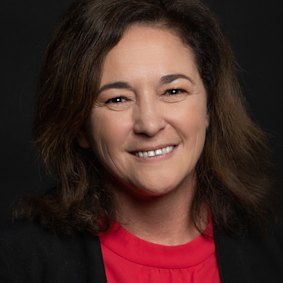
Jenine Beekhuyzen.
Grok came on as the key partner for the show with an expected advertising and promotional spend of about $1.3 million – funding that came from WiseTech – and hopes for a multi-episode run on Nine, the owner of this masthead. Filming went ahead in 2024 with a 10‑student cast, culminating in international shoots in San Francisco; Beekhuyzen says eight one‑hour episodes were almost fully finished and were likely only weeks from going to air when everything stopped. “Seeing 100 people turn up every day to bring my idea to life was pretty incredible,” she says. “We had 10 young people cast who were very inspiring, and it was just an incredible time of filming and creation.”
For Armidale parent Kirsten, whose daughter Amy teamed up with Summer on the show, it felt like a once‑in‑a‑lifetime run of opportunities. “It turned out to be the most incredible journey for them,” she says. “Travelling overseas, solving real‑world problems ... It was so different to being at school.”
Then came the collapse, driven not by ratings or budgets, but by revelations about the man who had made himself the show’s indispensable centre and amid uncertainty around Grok Academy’s future.
The host at the centre
Curran was chief executive of Grok Academy and one of the most prominent faces of school coding in Australia. He co-hosted all eight episodes and travelled with the teenage cast to the United States. Parents and producers say he was chosen in large part because Grok and WiseTech were funding the project, despite some in the production having other preferences for the role. Curran did not respond to detailed questions from this masthead.
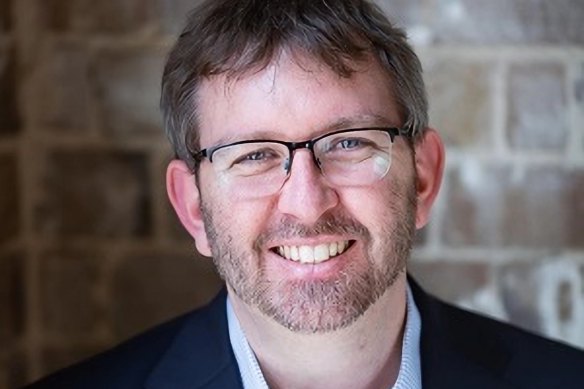
Former Grok Academy chief executive James Curran resigned from his position after multiple allegations of harassment were substantiated by an independent investigator.
Once aboard, Beekhuyzen says, Curran’s influence was outsized. Meetings rarely happened without Curran present, and his word was final. “No one made any decisions without him,” Beekhuyzen says. “Pretty much everything I would put forward, he’d go, ‘No, Jenine, that’s not a good idea.’ It was very condescending.” Even in the US finale, where a second host was arguably unnecessary, “he still put his face on everything”, she says.
Behind the scenes, however, as production was wrapping up, Grok’s board had already been grappling with a formal complaint about Curran’s behaviour in its own workplace, prompting him to step aside from his chief executive role while an external workplace investigation unfolded. Emails seen by this masthead show Curran telling Spence in mid‑August 2024 that he was on leave, the investigation was confidential, and that he could not directly address rumours Rawkus staff had heard in Grok’s office about “serious allegations”.

James Curran on the Future Fixers set.
Those allegations (unrelated to Future Fixers) later crystallised publicly and were first detailed by this masthead in October 2024: independent investigations found multiple girls and young women, including several who were still in high school, had accused Curran of inappropriate messages and harassment. None of the allegations resulted in any findings or charges of criminal conduct.
Curran presented as a powerful, influential mentor figure who promised to help the girls and young women with their careers, but who had been accused of abusing the trust of some by making sexualised comments, and in some cases inappropriate touching during a game he called “jungle speed”.
An investigation in 2019 by Curran’s then-employer, the University of Sydney, fully substantiated 35 allegations of harassment against him by a student at the campus. He was issued a “first and final warning in the strongest possible terms”, according to paperwork seen by this masthead. He wrote a letter of apology to the complainant, but remained employed by the university.
The University of NSW conducted its own investigation in early 2024 after a separate complaint by two students. It then referred the matter to NSW Police over concerns regarding his behaviour. The police concluded no criminal offence was committed, for reasons including that the two complainants were over the age of 16 at the time of the alleged harassment.
A third investigation, run by an independent external investigator for Grok, WorkDynamic, substantiated two complaints of sexual harassment and six incidents of general harassment.
Grok and Curran have previously said the investigations of the complaints at Grok were handled through external specialists and that there were no charges or findings of criminal conduct in relation to the internal Grok matter, a point the board emphasised when briefing partners such as Rawkus.
Beekhuyzen says none of this history was disclosed to her nor to the show’s creators and families while Future Fixers was being developed and filmed. “We had no idea,” she says. “He certainly concealed it from everybody. Even the people who were side by side with him for 10 years literally had no idea.”
She recalls learning something was wrong only after filming wrapped up, and the cast returned from the US at Easter. Curran “literally disappeared the day after we got back”, she says; Grok had quietly sent another senior staffer on the trip as a last‑minute chaperone, but never told producers or parents why.
Show frozen
From the perspective of the production company, Future Fixers did not start to unravel until White abruptly told Grok he was terminating his personal financial support on July 29, 2024, blowing a multimillion‑dollar hole in the charity’s budget. Internal Grok correspondence sent to Rawkus seen by this masthead describes a scramble to cut more than 80 staff, renegotiate survival funding, and warn partners that the show’s promotion budget and broadcast plans were now in jeopardy.
White himself has been at the centre of a separate scandal that has shaken his company WiseTech and the broader tech sector. He was forced to resign as chief executive and from the board of WiseTech last October after a joint investigation by The Sydney Morning Herald, The Age and The Australian Financial Review revealed a $2 million settlement with a former lover and allegations of bullying and intimidation by a former director.
A WiseTech spokeswoman said in response to detailed questions that neither White nor any WiseTech representative sat on the Grok board nor held an officer role and that they “did not have any involvement in the management or operations of Grok”, beyond providing funding and supporting external education programs.
Curran, however, told Spence in an email in August 2024 that WiseTech’s sponsorship was “a significant part of Grok’s budget” and that White had cooled on the TV show. It was Grok’s position that Future Fixers could still be broadcast “with minimal risk” because the complaint he was facing did not involve the teenage cast, but that White did not want the program shown and had the leverage to stop it. If Grok approved Future Fixers to be broadcast, White would “simply withhold any financial support”, Curran claimed – forcing Grok to shut down. It was “hard to see” how Nine could air a show built around an organisation that no longer existed, Curran wrote.
In responses via a WiseTech spokeswoman, White did not address why he withdrew his personal financial support for Grok in July 2024, saying only that he and WiseTech had continued to back the platform under its new owner KIK Innovation.

Richard White at the WiseTech AGM last year.Credit: Sitthixay Ditthavong
That left Rawkus, which says it had sunk hundreds of thousands of dollars into the show and related contracts, suddenly exposed. In a sharply worded legal letter in mid‑August, Spence accused Grok management of failing to be transparent about “serious allegations” and said those allegations were now “blocking the finalisation and broadcast of the show”, exposing his company to more than $600,000 in potential damages.
Nine was contacted for comment, but it declined. A source close to Nine not authorised to speak publicly said network executives had viewed a pilot episode of Future Fixers but had not yet committed to broadcasting the show.
The affected students and their parents have now been effectively left in the dark for more than a year. For Summer, who went through Grok programs as a high school student, the show felt like the culmination of an unlikely pivot into tech.
“I was always into gaming and mucking around with code, but it felt like a hobby, not a real path,” she says. “Future Fixers made it feel like there was actually a place for people like me in tech.”
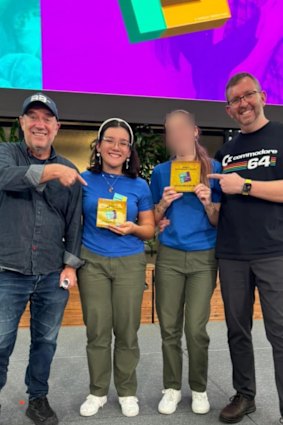
Rick Spence and James Curran with Summer Saunders and another Future Fixers contestant.
The rules, though, were strict. The students were required to sign NDAs, which prevented some of them from speaking to this masthead for this story. “They were unable to speak about why they were missing so much school,” Charry says.
“They were unable to speak about where they were and what they were doing because that would all be revealed when it was aired on TV.” Summer even kept quiet about winning the Australian series and then the San Francisco finals alongside Amy. “She didn’t speak about any of those achievements publicly because the terms of the contract didn’t allow that,” Charry says. “I was so impressed by her private pride, and devastated when it looked like the show might not even go to air.“
Safety questions, not just money
Charry’s concerns now go beyond lost opportunities. She says that as she heard more details from her daughter about how shoots were run in Sydney and San Francisco, and as she reviewed images from the set, she began to worry about how minors were supervised and whether boundaries consistent with child‑safe practice had been maintained. She points to episodes in which chaperones allegedly left accommodation early, leaving Curran in de facto charge of teenagers.
None of the parents interviewed allege sexual misconduct occurred on the Future Fixers set itself, and both Grok and Rawkus say there were no complaints about Curran’s behaviour during filming from any participant. Rawkus, through its first lawyer, has argued it complied with all legal requirements – including ensuring all staff and contractors held Working With Children Checks and that registered chaperones were engaged – and says no concerns about Curran’s conduct were reported to the company during production.
Charry has lodged a complaint with the NSW Office of the Children’s Guardian raising concerns about supervision and says she has yet to receive any substantive response.
Rick Spence’s defence of Rawkus
In a written statement provided to this masthead, Rawkus founder and Future Fixers executive producer Spence says the company only learnt of the serious allegations against Curran on August 15, 2024, about four months after the US trip with the teenage cast.
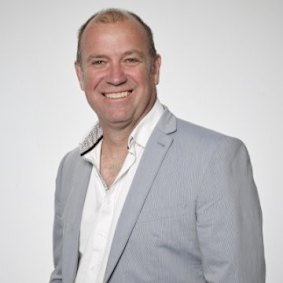
Rawkus founder and CEO Rick Spence.
“We were therefore unaware of these allegations before or during the production of Future Fixers which occurred between January and April 2024,” he says, adding that, had Rawkus known, it “absolutely would not have worked with Curran or Grok Academy” or proceeded with the trip or the program at all.
“The first priority for Rawkus is always the safety and wellbeing of everyone involved in our productions. We have strict policies and stringent measures in place to manage the safety and wellbeing of everyone on set, especially minors,” he says.
Once the allegations surfaced, he says Rawkus wrote to all parents and students asking them to contact NSW Police if they had any concerns and set up immediate access to an independent clinical psychologist for contestants and their families.
Rawkus’ lawyer Michael Easton wrote to Charry in February that, having explored “various options”, the company now considered it “not feasible to proceed with the show” in any form, extinguishing a plan to potentially re‑edit Curran out of the show, which had been held out as a potential compromise.
On the show’s fate, Spence says Rawkus canvassed families on whether they wanted the series to proceed and “there was not a unanimous view to do so”, so the company “ceased with progressing the show to respect those involved”.
Collateral damage
For the families and educators closest to Future Fixers, there remains a sense that key decision makers have avoided fronting up to the human consequences, and that a show designed to celebrate teen innovators has become another piece of collateral damage from Curran’s alleged pre-production misconduct.
“Honestly, there are no words for the shock,” Beekhuyzen says of reading the allegations against Curran. “My first thought was for the safety of the people on the show – I had done everything I possibly could to keep everyone safe – and then it hit me that this thing I’d built over 25 years was falling apart. I now believe the show is completely dead and that no one will ever see it, unfortunately, including the cast themselves.”
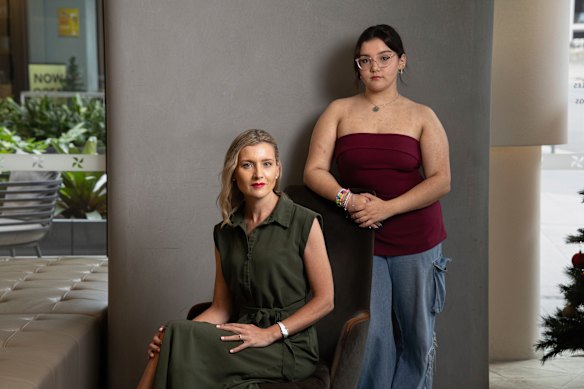
Charry and Saunders are bitterly disappointed by what happened to the show.Credit: Sitthixay Ditthavong
She worries that the collapse of a show sends a chilling message to young women who might otherwise have considered careers in the sector.
“I’ve been working on culture change for 25 years, and this felt like the thing that could really shift the dial,” she says. “Now I worry that women and girls will just look at this and think, why would we go into STEM if this is what happens?”
National Sexual Assault, Domestic and Family Violence Counselling Service 1800RESPECT (1800 737 732)
Start the day with a summary of the day’s most important and interesting stories, analysis and insights. Sign up for our Morning Edition newsletter.