3 months ago
28
3 months ago
28

February 9, 2026 — 6:09pm
Chiquita Searle loves her name.
“I like having something about me that is memorable and unusual, especially in a world that really does advocate sameness,” she says.
Searle, a Melbourne woman, has always embraced her name for its singularity, explaining that it shaped her in various ways.
“From a very young age, I became comfortable being different because I’ve never met another Chiquita, which I think helped build a thick skin,” she says.
“Not ‘fitting in’ has created resilience within me that has served me well in both life and business.”
The idea that your name can influence your life has been extensively explored in popular culture.
George Orwell [originally Eric Blair] wrote in his letters, “People always grow up like their names. It took me 30 years to work off the effects of being called Eric. If I wanted a girl to grow up beautiful, I’d call her Elizabeth.”
More recently, author Florence Knapp looked at the various ways your name can shape the course of your life in her 2025 bestselling novel, The Names.
The subject has also been the focus of numerous academic and scientific studies worldwide, examining how a person’s name influences whom they are likely to date, the likelihood of committing a crime, job pathways, and career success.
It starts in childhood
While much of the research has focused on adults, as in Searle’s case, the impact a name has on shaping your life starts at an early age, says psychologist Dr Bailey Bosch.
“Children love hearing how and why their name was chosen, and this information starts to influence their self-concept and their sense of belonging or connection to a wider family system, especially when names have deep traditions in their family history,” she explains.
Whether in the school playground or the office, names also play a role in forming a first impression of someone.
“They give us information in the absence of other information – they provide us with an initial starting point to begin our evaluation of others,” Bosch says.
That can lead us to believe we know how someone might behave before they even say a word to us. Kate Burridge, professor of linguistics at Monash University, says that some studies have shown that we associate names with certain personalities.
“Certain names might make us recall the personality of individuals who have that name,” she says.
“The name then somehow seems to fit that personality – Marys are quiet, Davids are strong, Kylies are sexy, and so on. When we encounter that name in a stranger, it generates a certain expectancy.”
“The expectations can, of course, be positive, negative, accurate or completely wrong-headed,” she says.
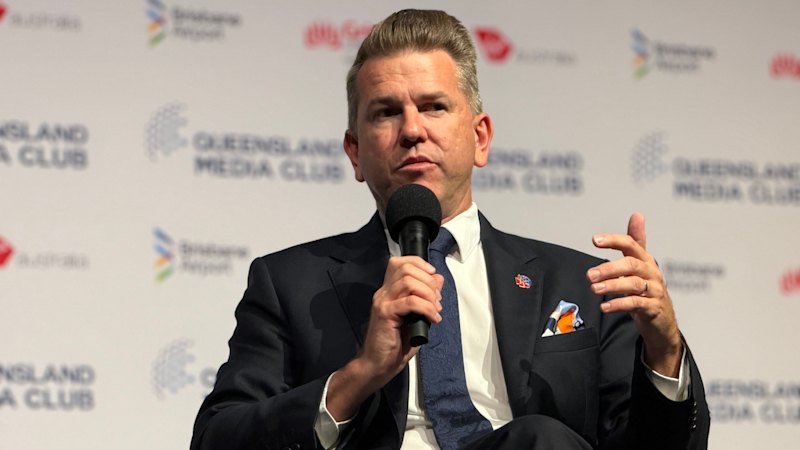
Brisbane man Sandy Lokas says assumptions about his first name have misrepresented him in many ways.
“In a lot of Western countries, the name Sandy tends to bring to mind a very specific image: a lovely blonde from Grease with a sweet voice – not a six-foot Asian man,” he says.
Lokas says it was particularly difficult when he was a child.
“Honestly, I can’t say I liked my name because it came with a lot of assumptions. I’ve lost count of how many times people assumed I was a girl, only to sound disappointed when they heard my voice or met me in person,” he says.
“Growing up, I got teased at school, too. Kids can be brutal, and a feminine-sounding name gave them easy material.”
Despite the Western association with femininity, Lokas’ parents named him after a man.
“My [mum’s manager] was an American expat in Indonesia: Sandy Smith. She really admired him. So, she named me Sandy, hoping I’d follow a similarly successful path,” he says.
Our names at work
Lokas’ mother was right to think names can be powerful when it comes to influencing our careers.
Pivotal to the evaluations we make of people, Ricardo Twumasi of King’s College London believes names are “remarkably efficient” carriers of demographic information.
“[They enable] perceivers to make rapid, often unconscious inferences about ethnicity, gender, approximate age, socioeconomic background, and sometimes religious affiliation,” he explains.
A lecturer in organisational psychiatry and psychology, Twumasi says these inferences can subsequently influence job prospects.
“In professional contexts where conformity signals reliability, highly distinctive names may inadvertently mark their bearers as unconventional in ways that disadvantage them during evaluations,” he explains.
Racial inferences drawn from names can also affect outcomes, with one study from the early 2000s showing that, in the US, candidates with “white-sounding” names were favoured over those with “black-sounding” names, even when they had the same qualifications, Twumasi explains.
Even the alphabetical ordering of surnames can affect outcomes.
“The evidence on alphabetical ordering of surnames, showing that individuals with names earlier in the alphabet receive more favourable treatment in academic and professional contexts, suggests that even seemingly trivial sources of distinctiveness can accumulate into meaningful disparities over time,” Twumasi says.
For Lokas, his relationship with his name has changed over the years into something positive.
“These days, I’ve embraced it – and I actually love it,” he says.
“It’s always an easy starting point for a laugh, a quick joke, and a bit of friendly banter. Over time, I’ve managed to turn what used to feel like a disadvantage into a conversation starter – something warm, memorable, and surprisingly useful. Instead of my name working against me, I’ve learnt to make it work for me.”
Make the most of your health, relationships, fitness and nutrition with our Live Well newsletter. Get it in your inbox every Monday.