
 1 month ago
63
1 month ago
63
Acclaimed author Anna Funder this month embarks on an Australian tour for a series of unscripted conversations exploring history, power, democracy and other stories the Miles Franklin Award winner has touched on in her bestselling books Stasiland, All That I Am, and Wifedom.
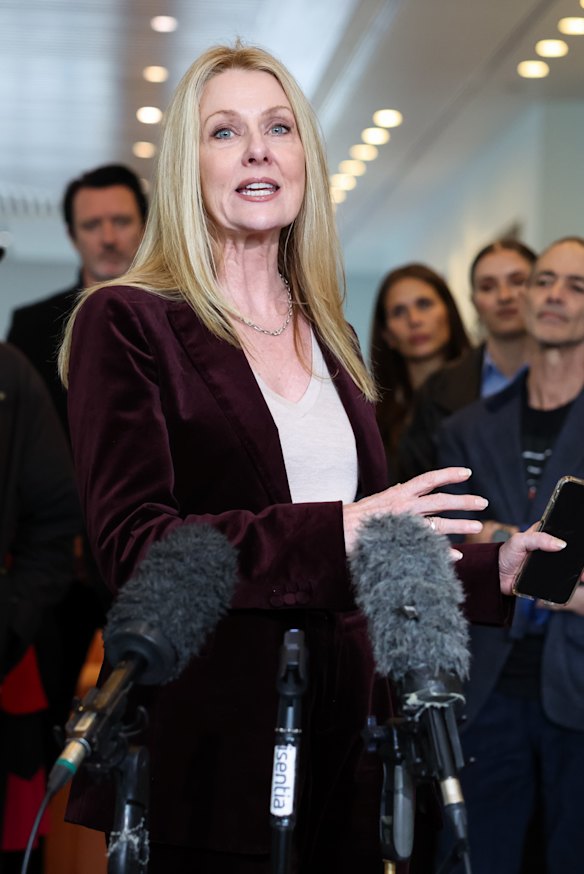
“I think the organisers looked at my work and thought, ‘Here’s someone who’s got something to say about what’s happening in the world now’,” Funder says, referring as much to her books as to her recent lobbying of MPs around the work of artists being ingested into AI programs without consent or payment.
During her tour, she plans to discuss her books, the reactions to them, and the parallels between them and the present political landscape. “It’s a little bit behind the scenes and a little bit about how to take these human values, and look at them in our world now.”
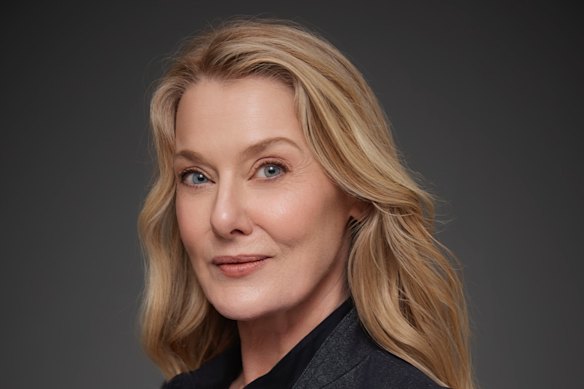
Worst habit?
I have a lot to choose from, but I think one of my worst is that I’m not very good at filing. I’ve got this screen here so that you can’t see my floor – whatever I’m working on, I have in piles of paper around the place.
Greatest fear?
That I will find myself in a situation, like one of my characters, where I will be required to say or do something out of fear of the consequences, and that will bend me morally out of shape. My fear is that I would not have the courage and I would be … morally unrecognisable to myself. It’s very hard to know what you’re going to do until you’re in a very extreme situation.
The line that stayed with you?
Last year, I gave the closing address at the Sydney Writers Festival and I adapted a quote I really love from American novelist Richard Powers. He has a character in his novel Plowing the Dark (2000) who says, “belief is not the form my astonishment takes”. I said in my speech, “writing is the form my astonishment takes”. He’s writing about a character who experiences the wonder of our planet and people, but doesn’t express that in a religious way – it’s a secular expression of wonder, and I feel that very strongly.
Biggest regret?
One of my biggest regrets in recent times has been that when my book All That I Am came out, there was a lot of film interest and there were competing companies, in the UK, Australia and Germany, and I didn’t go with a very famous icon, (German filmmaker) Margarethe von Trotta, to make it into a movie. Out of some kind of … patriotism, I went with the Australians and I really regret that because she would have made an amazing film – and the Australian thing fell over.
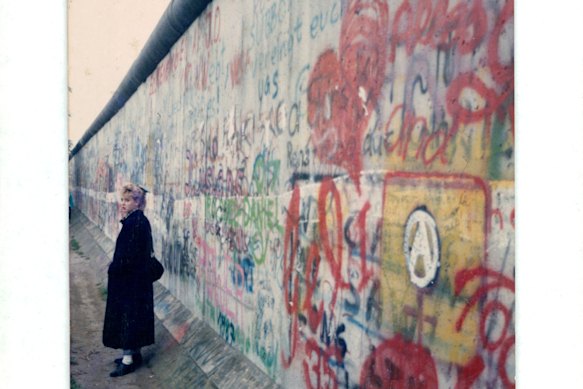
Tell us about your turning point.
When I was 20 I went to West Berlin, which was surrounded by a wall, so it was a city deep inside the Eastern Bloc. I was a student at the Free University [of Berlin] doing German studies, film studies and fine art. That was a turning point for me because I had known since I was six that I wanted to be a writer – whether I could do it or not, I didn’t know. And that was when I got to know some people who were exiles from East Germany – they were writers and painters, and they had been kicked out of their country.
For me, that sort of aligned all of my artistic and aesthetic interests, and this political fascination: what it is to be human, how some humans will continue to make up or speak out in a totalitarian environment and then what it feels like to be kicked out and to be on your own.
It was also about what it’s going to be to live an artistic life because that always puts you on the outside of things. And then what it is also to look at these terrible totalitarian systems. Out of that later, I came to write Stasiland and then All That I Am and then Wifedom.
The artwork or song that you wish was yours?
I don’t know that I’d be able to choose just one, but I am really obsessed with the Aboriginal artist Sally Gabori. I look at her canvases, and I am overwhelmed by them and I love them. There’s something particularly about the ones that are in pinks which is a lot of them. Her work is sort of … coming deep from her psyche, and it so speaks to my psyche. It’s massive and bold and feminine at the same time. If I ever win Lotto, I’ll go and get myself a Sally Gabori.
If you could time travel, where would you choose to go?
I’d like to go 60 years or so into the future to meet my great-grandchildren as young adults and to see what the world is like then. I’d like to be able to tell them that we had a story from the past in the way that we hear about the rise of fascism in the 1930s.
I’d like to tell them about the rise of these crazy chainsaw-wielding misogynist tech bros and how those values threatened to infect the whole globe, but eventually, we turned things around because we realised that every society that is both fair and rich, empowers women.
So we sent the tech bros to Mars, and we stayed here and put children and the next generations and caring for them and the planet in the centre of things.
An Evening With Anna Funder: Telling Untold Stories is at Riverside Theatre, Perth, July 31; Adelaide Town Hall, Adelaide, August 2; Sydney Town Hall, August 4; Brisbane City Hall, August 9; and Melbourne Town Hall, August 10.

















































