3 months ago
38
3 months ago
38
‘We’re losing careers’: Leading cardiologist warns Australian medical research is in crisis
The head of Australia’s Heart Research Institute has seen first hand what world-leading medical research can do: the centre was the first to uncover a link between diabetes and cardiovascular disease and, more recently, has pioneered world-first clinical trials for an anti-clotting drug to treat strokes.
But Professor Andrew Coats, its scientific director and chief executive, is now warning aspiring scientists that there are terrible prospects for them if they pursue a career in medical research.
Diminishing success rates for government-funded research grants are crippling Australia’s output and destroying hundreds of careers, the senior academic and cardiologist warns. All the while, $5 billion in Australia’s medical research fund is sitting unspent.
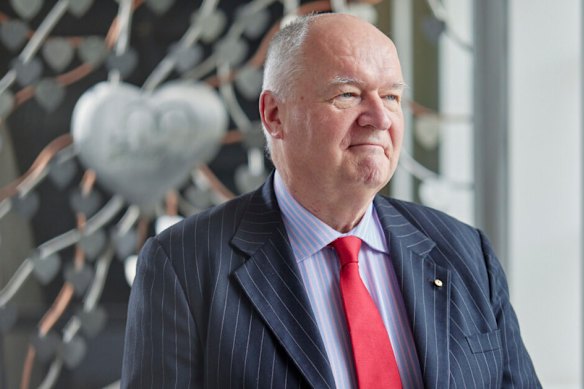
“Maybe we need to stop being so polite and start calling it out for what it is,” said Heart Research Institute head Andrew Coats. “This is a tragedy.”Credit:
“In the four years I’ve been scientific director I’ve seen a number of people give up their careers, and a significant element in all those cases has been lack of security in the job and future due to grant success rates,” Coats told this masthead.
“We’re at constant risk of losing researchers who have put 10 years into their careers because they didn’t get a grant in the latest round, which had a success rate of one in 10. It’s hard to emphasise the sense of crisis.”
Loading
This masthead this month revealed that 92 per cent of Australian medical researchers who applied for the National Health and Medical Research Council’s annual “ideas grants” last year were unsuccessful; about half of those deemed to have an outstanding application were rejected.
At the same time, Australia’s medical research future fund holds almost $25 billion – about $5 billion more than was ever intended. The fund was supposed to disburse $1 billion annually once it reached a $20 billion baseline, but the federal government is only releasing $650 million each year.
“We are putting structural barriers in front of the true potential of Australian research,” Coats said.
Coats, whose career spans 45 years as a clinician and researcher between Australia and the United Kingdom, said he was not affected as he reached the end of his career. “But if any bright person comes along saying they want a career in medical research, I would be derelict in my duty not to warn them it’s a terrible career path,” he said.
“They’re left to flounder with total job insecurity and family pressures. It’s the best recipe we have for raiding our future, in terms of a medical research workforce and the benefits of medical research, which are profound and help everyone.”
‘In how many other walks of life would you put aside three months a year to apply for something with a success rate of 10 per cent?’
Professor Andrew CoatsCoats said major grant applications typically took three months. “And their chance of success is in the lottery range. It’s incredibly wasteful of time, money and effort. It means hundreds of talented researchers turn their back on a career in medical research,” he said.
“The public doesn’t hear those stories, they don’t see young researchers whose ambitions are dashed. Maybe we need to stop being so polite and start calling it out for what it is: this is a tragedy.
“In how many other walks of life would you put aside three months a year to apply for something, at the expense of anything else, with a success rate of 10 per cent, when you know half the money that was meant to support medical research is being held back for no good reason?
“The only message I’m hearing is: ‘it was decided by the previous government’. This isn’t, to me, a compelling argument. We’re losing careers, and something has to give.”
Federal crossbench MPs, universities and the research sector want the Albanese government to lift its annual disbursements from the medical research fund.
Parliamentary Budget Office costings commissioned by independent MP Monique Ryan in September last year show it could lift annual disbursements to Australian researchers to as much as $1.4 billion annually – more than double the current level – without making a dent in a base level of $24.5 billion over the next 10 years.
“The MRFF is not distributing nearly as much money as it could, or as much as it should, by its previous planning,” Coats said. “It’s hard to see why you would build up a future fund, say it should reach $20 billion, and then release less than the sustainable portion you could distribute while maintaining it.”
Asked about the issue earlier this month, Health Minister Mark Butler said the health and medical research budget was about 250 per cent bigger than it was 15 years ago.
Butler said the government was considering a review it was handed last year. “For the first 10 years the MRFF, the Medical Research Future Fund, has delivered precisely what it was intended to do,” he said.
“But I do understand that one of the calls from the sector is the larger disbursements from the big capital fund that has now been accrued over those 10 years. We’re going to work through that report. It has a range of recommendations and options within it.”
Start the day with a summary of the day’s most important and interesting stories, analysis and insights. Sign up for our Morning Edition newsletter.
Most Viewed in Politics
Loading