3 months ago
42
3 months ago
42
Hollywood suffered some major losses last year. Gene Hackman, Robert Redford, Diane Keaton – these 1970s movie legends helped herald a golden age in cinema, a time when studios no longer constructed the star but the star constructed themselves.
Granted, they weren’t the last celebrities to rise to such mega-fame. Several younger movie stars picked up the baton, from Arnold Schwarzenegger and Tom Cruise to Julia Roberts and Angelina Jolie. Though perhaps less free-spirited than their ’70s predecessors, they were still major drawcards, even for films with less spectacle or sub-par reviews.

Legends like Robert Redford helped define what a “movie star” is. Will any emerging stars ever reach his level?Credit:
Fast-forward to today, however, and the certified movie star is an endangered species. Sure, celebrities like Paul Mescal and Sydney Sweeney are churning out titles but they seem more like “it boys” or “it girls” than movie superstars. Having their name on a film doesn’t guarantee it’ll smash the box office (just look at the commercial flop that was Christy).
Even older movie stars, those who secured the title back in the ’90s or early 2000s, are struggling to get butts in seats now. Dwayne “The Rock” Johnson’s The Smashing Machine lost millions against its budget, while Julia Roberts’ After the Hunt only grossed $10.6 million worldwide. Leonardo DiCaprio’s award-winning One Battle After Another even struggled commercially, regardless of its leading man, star-studded supporting cast, Oscar-winning director and incredible reviews.
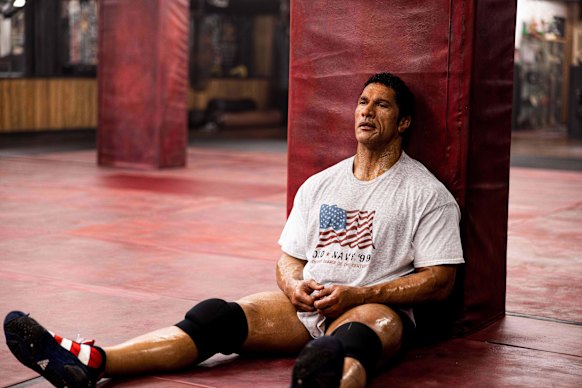
There was a time when having The Rock’s name on a movie would guarantee box office success. Times have changed.Credit: AP
So, what’s going on? Has the loss of those like Keaton and Redford marked the end of the movie-star era?
Loading
Bruce Isaacs, an associate professor in film studies at the University of Sydney, says movie stars aren’t necessarily disappearing but the concept of stardom has changed.
“It’s still rare for a Hollywood film to try to open without a movie star … When [Christopher] Nolan releases The Odyssey, it’s still important that Matt Damon is the lead,” he says. “[Stars] are still cultural icons but they’re circulated through hyper-mediation, through constant social media networks.”
It’s the reason many of the stories around Timothée Chalamet’s Critics’ Choice Awards win this month focused on his speech to girlfriend Kylie Jenner. Thanks to social media, many know more about his romantic life than his full filmography.
Having access to this much personal information may initially increase people’s interest in actors but each of them is competing with a slew of others, all of whom are trying to capture the same eyeballs. Zendaya, for instance, was sublime in Challengers but some still may not recognise her name – such “pan-culture” has ceased to exist.

Gone are the days when everyone in an intergenerational family knew the name of a movie star.Credit: Alamy Stock Photo
This access also strips stars of their mystique, a defining feature of those such as Hackman and Redford. You can’t be a larger-than-life legend when fans know what you ate for breakfast.
Loading
Further, if an actor’s persona is displayed online, it’s more likely they’ll get a negative reaction from some observers, which could slow (or even stop) their stardom trajectory. For example, many believed Sweeney would be the “next big thing” after Anyone but You but her ties to conservative politics and a questionable jeans campaign sent her on a far rockier path.
Stars ultimately represent the era of cinema they operate within, Isaacs says. The earliest movie stars – Audrey Hepburn, Humphrey Bogart – were highly managed, just as the films were. By the ’70s, stars were given more agency, starring in more experimental, auteur-led films and promoting them in a way that suited their individual goals. Stars of the ’80s, ’90s and 2000s were predominantly about box-office clout – Tom Hanks became one of the highest-paid actors of the 1990s and early 2000s off the likes of Forrest Gump and Saving Private Ryan, while Sylvester Stallone and Arnold Schwarzenegger were the selling point for big blockbuster action movies such as the Rambo and Terminator series of films, among many others.
But today, the state of cinema is less certain, making it less clear what modern-day stars represent.
It’s within this confusion that existing IP and franchise fare have flourished. This is exacerbated by the rise of streamers, which have fragmented audiences and shifted focus from individual star power to data-driven content.
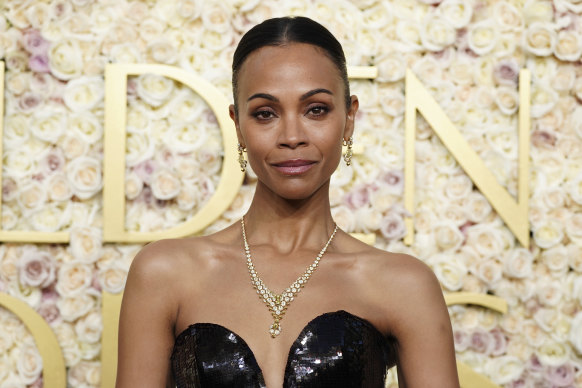
Zoe Saldaña is an award-winning actress but the franchise films she stars in are arguably what made her. Credit: AP
“IP governs the day now,” Isaacs says. “It offers a repeatable template that will guarantee a certain audience, so it’s not necessarily about the movie star any more. You can take out the movie star and the director – all you need is the IP.”
Just look at the highest-grossing actor of all time, Zoe Saldaña. Though certainly recognisable, Saldaña’s name arguably isn’t what pulls people to the cinema, rather it’s the franchise hits in which she features (Avatar, Guardians of the Galaxy). Even the classic stars couldn’t resist IP, with Redford appearing in Captain America: The Winter Soldier in 2014.
“Young stars now, like Chalamet, need to be the brand. [Independent studio] A24 can’t make $100 million from Marty Supreme by just casting a great actor. That’s the difference – movie stars have become like a product, something that can be a currency in the marketplace,” Isaacs says.
This is a far cry from Hollywood’s golden age, when mid-budget original content would regularly make $50 million in the US every year, especially films with major stars on the poster.
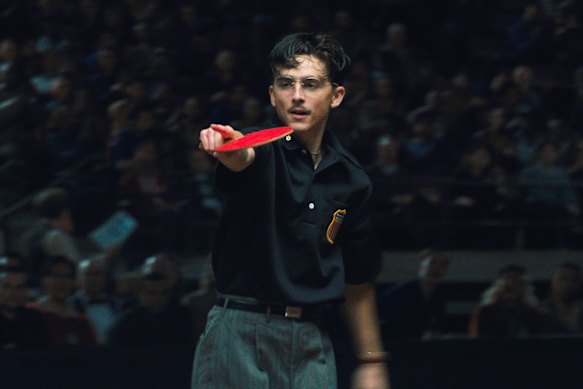
Timothée Chalamet can’t just be a great actor in Marty Supreme. He must become part of the Marty Supreme and A24 brand.Credit: AP
David Marshall, emeritus professor in the faculty of arts at Deakin University in Victoria, says these changes reflect a broader shift in human connection.
“I have this fear that our cultures are beginning to break down to a degree that we might not even have the same notion of how we connect,” he says. “For the last 100 years, media and movies were where the great connections were. Whereas now, many people are connected to something or someone but they aren’t anywhere near where the other person lives, and they’re connected to so many other things at the same time.”
AI further complicates this, Marshall says, as it becomes less obvious which parts of a film are AI-generated. For example, The Brutalist was plagued with controversy last year after it was revealed AI was used to perfect the lead actors’ Hungarian dialogue. Then there was the AI-generated actress Tilly Norwood, which some perceived as a harbinger of the death of human creativity. With so much AI-generated content, how can we trust that our movie stars are fully authentic?
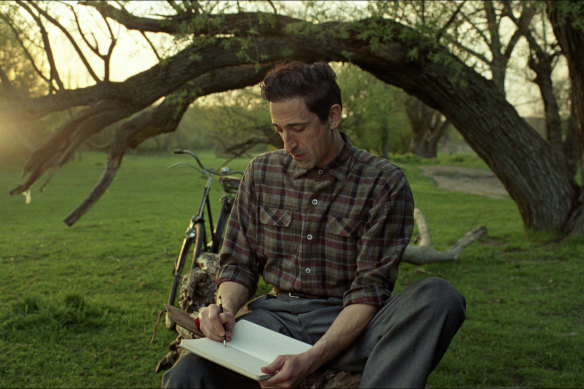
Adrien Brody won an Oscar for his performance in The Brutalist but fans weren’t happy to find out AI was used to help perfect his dialogue.Credit: AP
Sean Redmond, associate dean of media, writing and publishing at the Royal Melbourne Institute of Technology, considers this less of an end and more of a disruption. Movie stars merely exist in a more crowded media environment. He points to Chalamet as someone who may carry the charm and skill of a classic movie star, à la Cary Grant or George Clooney.
“All the stages of stardom and performance arenas remain – Hollywood glamour nights, award ceremonies, star-struck media coverage. So we still find representations that resemble this nostalgic past. And we still have great auteurs at work,” he says.
Loading
That being said, this “disruption” could still feel like a loss.
“Our film stars are manifestations of our art, culture and society at large,” Redmond says. “We live in the age of replication, facsimiles and surface-level screens, which means contemporary film stars embody these shifts. So, many of us mourn the passing of those legends because everything today seems so superficial, commercial, empty.”
Keaton, Redford and Hackman, meanwhile, were the opposite of empty. They were complex risk-takers and, most of all, deeply human. We may not have lost the concept of the movie star but, with these actors’ passing, we have certainly lost some of its heart.
Must-see movies, interviews and all the latest from the world of film delivered to your inbox. Sign up for our Screening Room newsletter.