3 months ago
11
3 months ago
11
WA bushfire numbers tell a story that should terrify us – and galvanise us to action
Tuesday marks the 10th anniversary of the devastating Yarloop bushfire and in the past seven days, more than 100 bushfires have torn across Western Australia; that’s one hundred, in one single week.
The numbers tell a story that should terrify us – and at the same time, galvanise us to action.
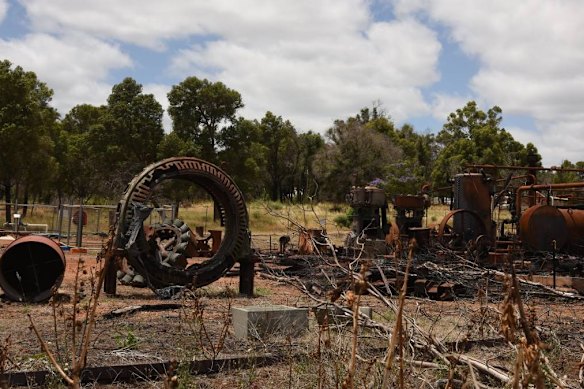
The Yarloop bushfires devastated the small South West community in 2016.Credit: Marta Pascual Juanola
In what we still quaintly call the “start” of summer, as if this were just another seasonal cycle – think bikinis and beaches, not the ones with algal blooms – as if the calendar still holds true to what it used to mean in decades past, when climate change wasn’t yet wreaking havoc in every corner of the country.
Families fleeing homes. Lives threatened. Out-of-control bushfires threatening the community in Kalamunda and Maida Vale.
This is now. This is the summer of 2026, and it’s only the beginning.
Loading
This is not our natural cycle, and we can measure exactly why this is happening.
The Soil Dryness Index (SDI) in Southwest Western Australia is an objective measure. It tells us that root zone moisture levels – the water that trees and vegetation depend on to survive – ranges from “below average” to “very much below average”.
The forest itself has become kindling. For 32 months now, the region has suffered persistent rainfall deficiencies and since April 2023, the rains that once recharged deep soil moisture levels simply haven’t come.
The SDI values now regularly exceed 1000 in forested areas during summer peaks, with fire management agencies using these numbers to predict flammability of logs and deep forest litter. They’re essentially measuring how well the landscape will burn.
Make no mistake, this is climate change writ large; not as an abstract projection or computer model, but in the reality of parched soil and forests transformed into fuel.
And yet, Western Australia remains the only Australian state without a climate change bill and no interim emissions reduction targets.
We have no overarching legislative framework to address the crisis that is, quite literally, burning down homes right now.
What’s worse, is that the state relies on water legislation more than a century old, drafted when Australia was just a decade on from federation and the concentration of carbon dioxide in the atmosphere was 300 parts per million instead of today’s 425.
We have a state government that says the federal government is taking care of it. We have a federal government that won’t assess climate when assessing impacts to the environment.
Loading
And we have a “safeguard mechanism” that allows industry to pay for emissions reductions that aren’t real, while we pay the consequences.
These outdated water laws are contributing to falling groundwater levels, which in turn cripple the ecosystem’s ability to recover from drought and fire.
The summer of 2019-2020 marked a step change for Australia and our relationship to fires.
For a while, we woke up to the reality of climate change, and the alarms are still sounding for those who follow the science.
But it seems we’ve become mute to the warning sirens, and have fallen back to sleep; lulled into inaction by the politics of climate change denial.
So here’s the question we need to ask, loudly and repeatedly: When will the government act? When do we acknowledge the clear and present danger?
We can’t mobilise a community into action if we don’t even acknowledge the threat.
Most Viewed in National
Loading