3 months ago
24
3 months ago
24

Updated March 13, 2026 — 9:20pm,first published 6:31pm
Washington: The Trump administration is temporarily lifting US sanctions on Russian oil, allowing more than 100 million barrels already at sea to be shipped to countries around the world, in an attempt to contain prices that have spiked above $US100 a barrel.
US Treasury Secretary Scott Bessent announced a temporary authorisation that would permit countries to buy any Russian oil “currently stranded at sea”. The product must have been loaded on tankers before March 12, and the waiver expires on April 11.
“This narrowly tailored, short-term measure applies only to oil already in transit and will not provide significant financial benefit to the Russian government, which derives the majority of its energy revenue from taxes assessed at the point of extraction,” Bessent said.
Still, the move represents a significant concession to Vladimir Putin’s Russia, which is benefiting from as much as $US150 million ($212 million) a day in additional taxes from oil exports due to the US-Israeli war on Iran, according to new calculations by The Financial Times.
Data analytics firm Kpler estimated there were about 130 million barrels of Russian crude oil at sea last week, including about 27 million barrels in the Arabian Sea and Indian Ocean region, 20 million near the Red Sea and Suez Canal routes, and 7.5 million barrels around Singapore.
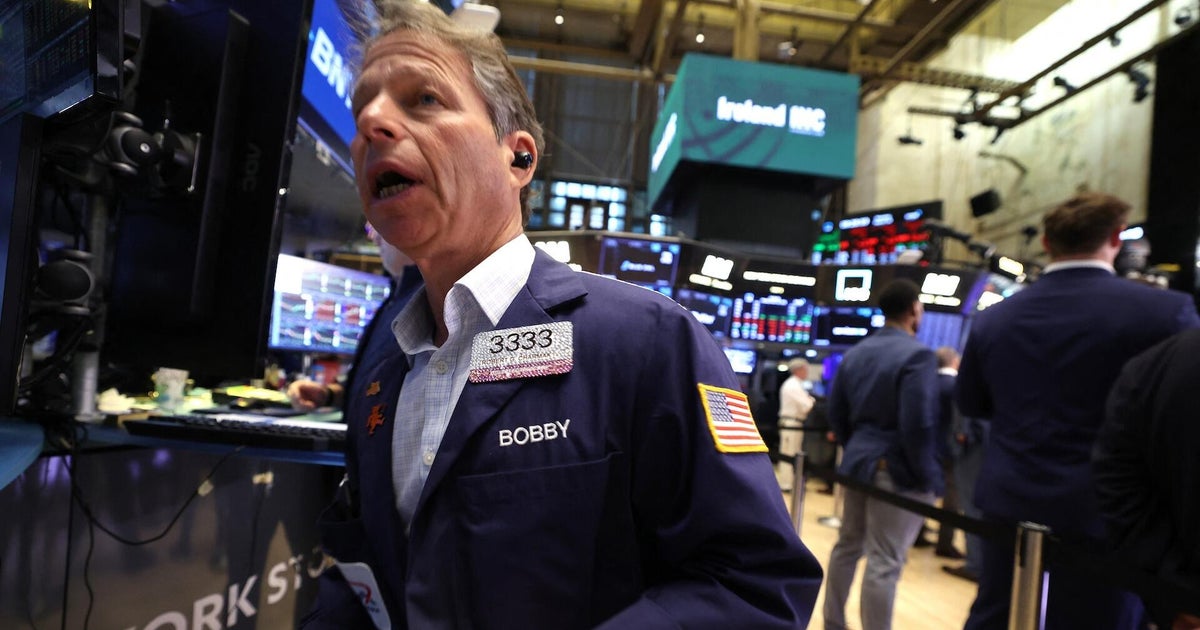
The price of Brent crude settled above $US100 a barrel on Thursday for the first time since August 2022, as US President Donald Trump downplayed the impact on consumers, arguing the US benefited from a surging oil price.
“The United States is the largest Oil Producer in the World, by far, so when oil prices go up, we make a lot of money,” he posted on social media.
“BUT, of far greater interest and importance to me, as President, is stoping [sic] an evil Empire, Iran, from having Nuclear Weapons, and destroying the Middle East and, indeed, the World. I won’t ever let that happen!”
Trump also urged the US Federal Reserve to cut interest rates immediately, rather than waiting for its next scheduled meeting.
The gyrations in oil markets came as an American KC-135 refuelling aircraft went down in Iraq. US Central Command confirmed the incident involved two aircraft – the other landed safely – and said it was not due to hostile or friendly fire. The Islamic Resistance in Iraq, an umbrella group of Iran-backed armed factions, claimed responsibility for downing the plane.
The Pentagon said rescue efforts were ongoing, but US Central Command confirmed four US service personnel had died.
In Iran, a large midday explosion rocked a Tehran square filled with demonstrators who were there for the annual Quds Day event in support of Palestinians, Iranian state television reported.
The cause of the blast in Ferdowsi Square wasn’t immediately known, but came shortly after Israel had warned people to clear the area because it planned a strike. There were no immediate reports of casualties or damage.
Ongoing attacks didn’t deter thousands of people from taking to the streets for Quds Day, with crowds chanting “death to Israel” and “death to America”.
Meanwhile, Iran’s new Supreme Leader, Mojtaba Khamenei, issued his first statement since succeeding his father, Ali Khamenei, who was killed in one of the initial strikes nearly two weeks ago.
“Iran will not refrain from avenging the blood of its martyrs,” Khamenei said, according to a BBC translation. He also vowed to keep blocking the Strait of Hormuz, between Iran and the Gulf states, through which a fifth of the world’s oil supplies ordinarily moves.
The statement was read on state television on Thursday (early Friday AEDT) by a news anchor. Khamenei, 56, did not appear on camera. Iranian officials said the new leader was injured when the war broke out. His comments came as The New York Times reported Iran had begun laying mines in the Strait of Hormuz, citing a US official.
Other senior Iranian officials continued to taunt Trump over the economic impact of the war. “Americans won’t ‘make money’ from surging oil prices and tariffs,” Iranian Foreign Minister Abbas Araghchi said on X. “They enrich corporations and crush households.”
He also accused Trump’s special envoy Steve Witkoff and son-in-law Jared Kushner of failing to grasp the technical proposals Iran made during high-stakes negotiations over its nuclear program last month.
Their summary – that a satisfactory nuclear deal with the Iranian regime was unlikely – factored in Trump’s decision to launch combat operations, though it was not the only consideration.
Trump derided Iran’s leaders as “deranged scumbags” and said it was his great honour to kill them.
“We have unparalleled firepower, unlimited ammunition, and plenty of time – Watch what happens to these deranged scumbags today,” Trump said.
“They’ve been killing innocent people all over the world for 47 years, and now I, as the 47th President of the United States of America, am killing them. What a great honour it is to do so!”
In his first press conference since the start of the joint US-Israeli operation, Israeli Prime Minister Benjamin Netanyahu said he had “added another goal” to the mission: to create the conditions for the Iranian people to overthrow the “terrible, tyrannical regime” in Tehran.
“This is no longer the same Iran. This is no longer the same Middle East. And this is also not the same Israel,” Netanyahu said.
“We are not waiting, we are initiating. We are attacking, and we are doing so with a force, the like of which has not been seen before.”
The Israeli PM said he wanted to create “optimal conditions” for Iranians to take to the streets, but admitted regime change may not happen. “It’s up to you,” he said, addressing the Iranian people.
He also made a thinly veiled threat to kill the country’s new supreme leader, as well as the secretary-general of Hezbollah, Naim Qassem.
“I wouldn’t issue life insurance policies on any of the leaders of the terrorist organisations … I don’t intend to provide an exact account here about what we are planning or what we are going to do,” Netanyahu said.
The remarks came as the death toll from the conflict rose to more than 2000, mostly in Iran. Almost 700 of those deaths were in southern Lebanon, where Israel has continued launching strikes at Hezbollah targets, displacing close to 800,000 people.
Foreign Minister Penny Wong said non-essential Australian officials posted to Lebanon had been told to leave due to the deteriorating security situation. A few officials would stay to provide consular support to Australians.
The Israel Defence Forces also said it had struck more than 200 targets in western and central Iran over the past day, including ballistic missile launchers, air defence systems and weapons production sites.
Iran launched its own barrage of missiles and drones overnight, with one of its missiles striking a Bedouin Arab town in northern Israel near Nazareth, according to the military, heavily damaging several homes. Israel’s ambulance service said 58 people were injured.
France’s President, Emmanuel Macron, said one soldier had died and several were wounded during an attack in northern Iraq, hours after an Italian base was also targeted in the area.
The United Nations refugee agency says more than 3 million people have been displaced in Iran since the start of the war. It estimates between 600,000 and 1 million Iranian households have been impacted, representing up to 3.2 million people.
With Reuters, AP, Emily Kaine
Get a note directly from our foreign correspondents on what’s making headlines around the world. Sign up for our weekly What in the World newsletter.