Ukraine has reportedly struck several oil tankers off the coasts of Turkey and West Africa in a campaign against Russia's so-called shadow fleet, months after President Volodymyr Zelenskyy called for Kyiv's partners to strengthen their response to the vessels that Moscow uses to evade international sanctions and continue selling its natural resources.
Ukraine has previously targeted fuel tankers and infrastructure in Russian ports and on land as part of its efforts to undermine the crucial source of Moscow's war funding, but the recent attacks reported by Ukrainian media, citing the country's intelligence agencies, have taken place outside Russia's territorial waters.
Europe and the U.S. have sanctioned hundreds of ships in the shadow fleet, accusing them of violating bans on Russian oil sales, transporting stolen Ukrainian grain, and even suspected of spying on or damaging underwater telecommunications cables and pipelines.
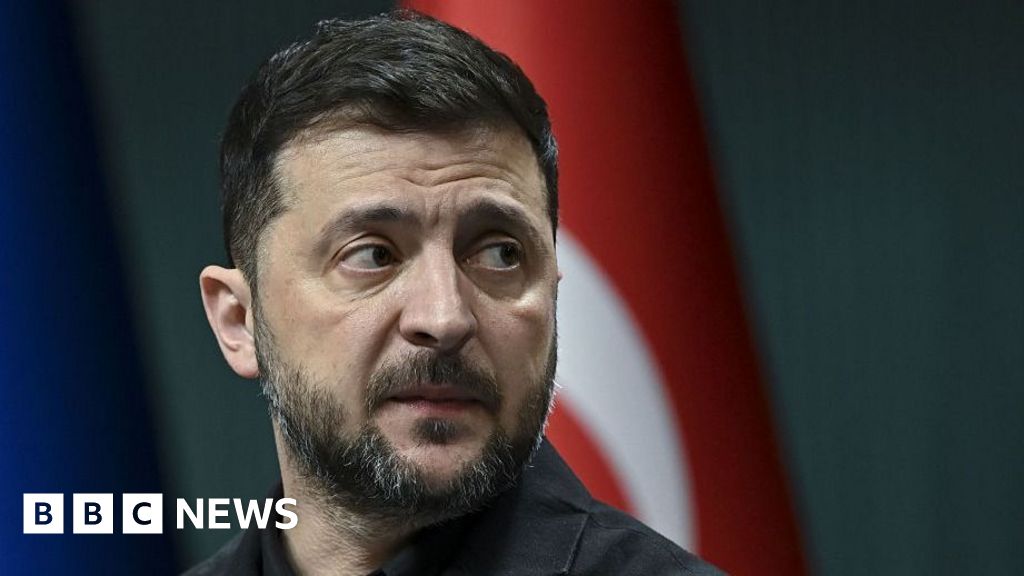
In October, Zelenskyy said Kyiv's intelligence service was providing information to European partners and "expect that efforts to counter Russian interference will be significantly strengthened."
As of Tuesday, the sanctioned crude oil tanker Kairos was grounded off the coast of NATO member Bulgaria after a Turkish tugboat that had been towing it from Turkey's exclusive economic zone in the Black Sea separated from the vessel in Bulgarian waters, according to state-owned Bulgarian news agency BTA.
Kairos and another sanctioned oil tanker, the Virat, were both hit by Ukrainian "Sea Baby" drones in the Black Sea in separate attacks at the end of November, according to the independent Ukrainian news outlet Hromadske, which cited sources in the Security Service of Ukraine (SBU).
Sea Baby drones hit the two sanctioned oil tankers in the Black Sea in a joint operation between the 13th Main Directorate of Military Counterintelligence of the SBU and the Ukrainian Navy, sources in the SBU told CBS News.
"The SBU continues to take active steps to curtail Russia's financial capabilities to wage war against Ukraine," an SBU source said. "Sea Baby naval drones disabled ships that could transport oil worth almost $70 million and helped the Kremlin circumvent international sanctions.
Publicly available ship tracking data corroborated the BTA report suggesting the Turkish tug had separated from the tanker six miles from Bulgaria's coast. The Kairos was stranded on Tuesday off Ahtopol, on Bulgaria's southern Black Sea coast, without heat or electricity, according to BTA.
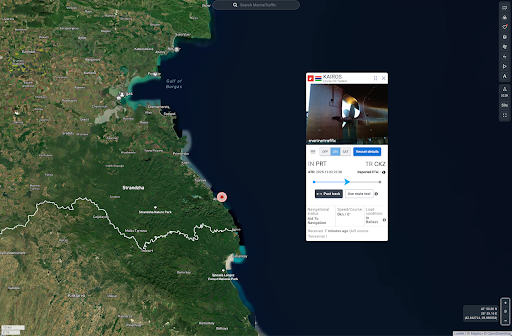 The Kairos has been stranded off the Bulgarian coast since it ran aground on December 5
MarineTraffic.com
The Kairos has been stranded off the Bulgarian coast since it ran aground on December 5
MarineTraffic.com
The Bulgarian Navy airlifted several crew members to shore, but authorities had been unable to tow the oil tanker to safety as of Tuesday due to poor weather conditions.
Late last month, the technical manager of another tanker, the Mersin, said the vessel was impacted by a series of explosions while anchored off the coast of Senegal. The crew was rescued, according to Senegalese officials, and the vessel's technical manager, Besiktas Shipping, said seawater flooded into the engine room but the ship remained "safe" and posed no safety or navigational risks.
The Mersin remained stranded with some 30,000 tons of diesel fuel on board, however, according to the African Security Analysis think tank.
The tanker departed from the Russian port of Taman on August 21 and arrived in Senegal in late September, where it has remained at anchor, according to open-source data from MarineTraffic. While the Mersin is not currently among the vessels sanctioned by the U.S., ships operated by BesiktasShipping have engaged in highly risky ship-to-ship crude oil transfers while anchored, according to the sanctions compliance monitoring organization OpenSanctions.
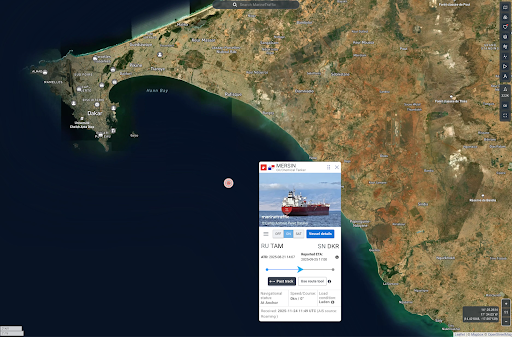 Open-source information shows the Mersin at anchor off the coast of Dakar on December 9, 2025
MarineTraffic.com
Open-source information shows the Mersin at anchor off the coast of Dakar on December 9, 2025
MarineTraffic.com
Video circulating on social media, dated Nov. 30, shows the Mersin sinking. CBS News has not confirmed the source of the video, but the oil tanker's partially-submerged name is visible in the clip, seemingly recorded from a passing vessel.
Ukrainian officials have not publicly confirmed any involvement in any of the explosions in the Black Sea or off the coast of Africa, all of which occurred within a few days. On Dec. 3, Besiktas Shipping said it was immediately ceasing all "Russia related voyages."
While insisting that it always complied and complies with restrictions on Russian oil shipments, the company said "the security situation in the region has escalated considerably," and "we have concluded that the risks posed to our vessels and crew have become untenable."
European nations have imposed multiple rounds of sanctions on hundreds of vessels they say are part of the Russian shadow fleet, but a planned European Union-wide move to allow national authorities to board and inspect suspected ships has yet to materialize.
Shadow fleet vessels have also been linked to drone sightings at European airports, including last week when unidentified drones breached Irish airspace during a visit from Ukrainian President Volodymyr Zelenskyy.
The EU and America's European NATO allies have issued increasing warnings about Russia's alleged hybrid warfare tactics in recent months, including the drone airspace incursions and sabotage operations across the continent and at sea.