3 months ago
23
3 months ago
23
There’s no more surefire recipe for either comedy or drama than the odd couple: two characters from different worlds thrown together by fate. That’s the basis for new French movie My Brother’s Band, the story of two brothers adopted by separate families who have grown up unaware of each other’s existence.
Thibaut (Benjamin Lavernhe) is an internationally successful orchestra conductor who is diagnosed with leukemia and needs a bone marrow transplant. The search for a successful donor leads him to Jimmy (Pierre Lottin), who leads a much more modest life in a mining town in northern France, where he works in a cafeteria.
In his spare time, Jimmy plays trombone in a local brass band – and while music becomes a symbol of everything that divides him from his brother, it ultimately serves as the bridge between them.
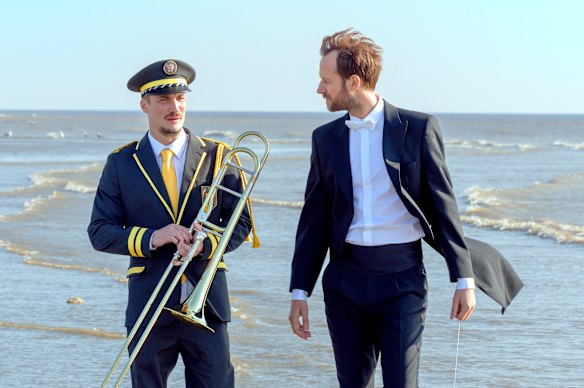
Benjamin Lavernhe and Pierre Lottin are long-lost brothers who share a love of music in My Brother’s Band.Credit: Thibault Grabherr
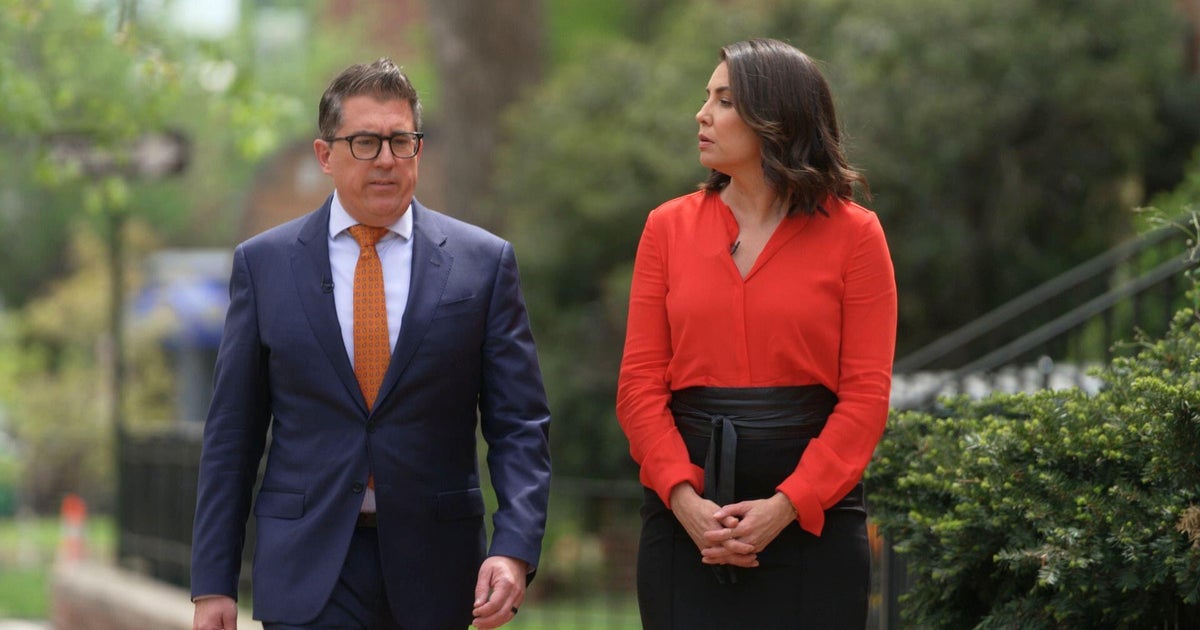
Writer-director Emmanuel Courcol, who looks like the gentler kind of school principal, is somewhere between these two characters (he started his career as a stage actor before moving into screenwriting, but didn’t direct his first feature until he was in his mid-fifties).
Talking to him, it’s clear he identifies more closely with Thibaut, especially in his preference for what he frankly calls “higher-level” classical music. It’s also clear there are parallels between life and art: Courcol wrote the role of Jimmy for Lottin, and the pair make an odd couple in their own right.
Loading
The 36-year-old Lottin has been a star in France for more than a decade, but until recently has remained much less well-known in the English-speaking world. At home, he’s best-known for the Les Tuche film series, a variant on The Beverly Hillbillies about a working-class family who win the lottery (the latest instalment, God Save the Tuches, where the family visit the UK, was the most popular homegrown film in French cinemas this year).
Like everyone in the Tuche family, the Lottin character in these films is an outrageous stereotype, a closeted would-be rapper who wears his cap backwards and speaks in a strangled, high-pitched voice. The humour may be lost in translation, but then you could imagine French audiences feeling the same about, say, Fat Pizza.
Over the past few years Lottin has shown there’s more to him than just broad comedy. Recently, he had a supporting role in Francois Ozon’s highly-praised thriller When Fall Is Coming – and before My Brother’s Band, he and Courcol made another film together, the 2020 comedy-drama The Big Hit, about a production of Waiting For Godot staged in a prison.
“To me, he is a really whole man,” Courcol says of Lottin, whom he describes as an instinctive actor and far less talkative than the motor-mouthed characters he commonly plays.
“There’s something in his gaze, in his whole presence on the set. He’s not coming from a working-class family, but anyway from a more popular background … and he has no academic education. Actually, he quit school very early, and did different things.”
“When I’m doing the casting I think about what the actor will not have to play because it’s already part of him.”
The classically trained Lavherne was cast later, as a deliberate contrast – although both leads, according to Courcol, have a “relationship with music” that helped them bond in the same way their characters eventually do.
“Most of all, I wanted to have actors that would in a way represent the roles they played in the film without faking too much,” he says. “When I’m doing the casting I think about what the actor will not have to play because it’s already part of him.”
My Brother’s Band is entertainment firstly, but it has a more earnest side. The film’s success at the French box office led to a discussion between Courcol and political scientist Jerome Fourquet was published in the current affairs magazine Le Point, which focused on the gap between France’s prosperous big cities and its ailing “periphery”.
Loading
“I think we live in a society where there is a huge rupture between the urban world and the rural world,” Courcol says. “And I think that this rupture is getting deeper and deeper as time goes on.”
My Brother’s Band doesn’t claim to have any solution to this, certainly not in economic terms. All the same, it’s important to Courcol the film is grounded in research. Brass bands of the kind depicted here endure in small towns across France as part of working-class culture.
“I don’t want to make any fairy tales, or feelgood movies,” Courcol says, “because, of course, the reality is not that beautiful. But I wanted to have a movie that brings some hope because I think that, despite this very fractured society, people still have something to share. And in this case, it’s music.”
My Brother’s Band is in cinemas now. Must-see movies, interviews and all the latest from the world of film delivered to your inbox. Sign up for our Screening Room newsletter.
Most Viewed in Culture
Loading