3 months ago
44
3 months ago
44
A decade ago the Herald examined what Sydney would look like and how it would function in 2026. Here is what did get done - and what needs to be done next.
See all 8 stories.Leo Fenton-Wells is ready for battle. Charging ahead of his mother through the gates of the Lego store in Sydney’s CBD on Wednesday, the six-year-old finally reaches the dragon’s pit.
Before him is a towering wall of Ninjago Lego sets. “I wish I could have this one!” he says, picking up a $150 box. Inside this brick universe, Leo becomes Lloyd, a tree dragon who will demolish Acid Monster (his dad) using a golden hammer. “I always take down the bad guy,” he says.
It’s the shopping experience of the future, Lego Certified Stores managing director Matthew Robertson says. Interactive, tactile spaces with knowledgeable staff, giving shoppers a reason to come in store and not purchase online. For Lego, that means a place children can play for hours. As Robertson describes it: it’s not a store, it’s a “destination”.
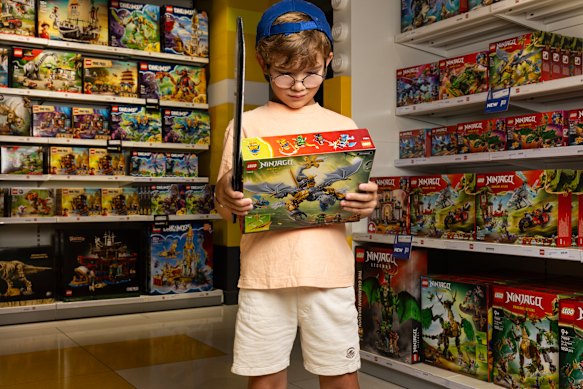
Six-year-old Leo Fenton-Wells looking at the Ninjago Lego range at the Lego Store in Pitt Street Mall.Credit: Louise Kennerley
These destinations exist across Sydney. Tweens queue hundreds of metres down the street for Yo-Chi’s self-serve bar, while corner delis are packed with patrons hungry for focaccia sandwiches going viral on social media. Mecca customers end up spritzing four perfumes, trying on a holographic eyeshadow and taking home a $100 collagen-boosting moisturiser.
“What really drives people into stores and gets real people engaged are those experiences,” Robertson says.
Ten years ago, the Herald forecast how Sydneysiders would shop today, predicting shopping would be an experience, full of customisation, and with online-offline integration. Retailers and experts we spoke with this week agreed with that prediction and they have shared a new vision for the next decade.
Shopping in 2036 will be purposeful.
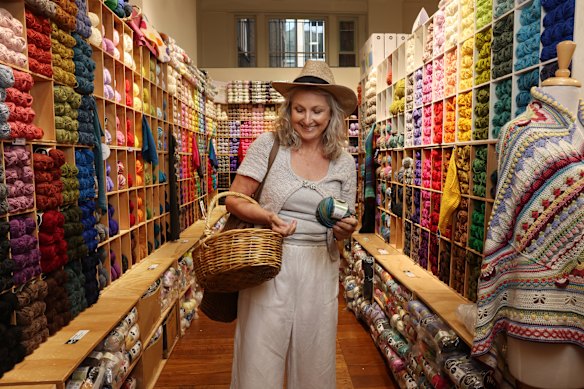
Deborah Ritchie buying wool at the Morris & Sons store in Sydney CBD.Credit: Louise Kennerley
Experts say in-store shopping has survived the rise of online by adapting to consumers’ need for a third space, community and human interaction.
Consumers acclimatised to online shopping during COVID, and they will divide their spending between convenient Amazon purchases and wholesome Saturday mornings at farmers’ markets. Consumers will need to come to terms with a growing presence of AI and technology in shopping, and high streets will have a resurgence.
On a call from New York City’s National Retail Federation’s annual Big Show, Gary Mortimer, a professor of retail marketing and consumer behaviour at Queensland University of Technology, says he has sat through 15 keynote speeches about what the future of retail looks like.
It’s terrifyingly futuristic. Soon, retailers will roll out a different form of AI that will organise trips and make purchases through our phones or home listening devices.
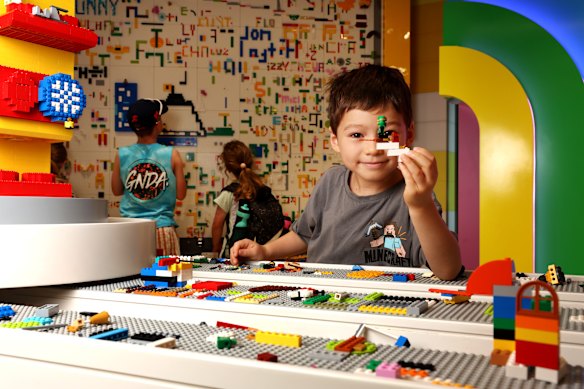
Phoenix Gye, six, is building a jet for two brothers bound for Africa, where they will relax at a hotel. He wants to be a Lego master builder when he grows up.Credit: Louise Kennerley
Search results will also slowly disappear. Instead of receiving thousands of hits for a “blue dress”, online shoppers will describe the product they want and why, before AI spits out about five recommendations.
Loading
“Supermarkets will become smaller. They will be predominantly fresh, and your dry groceries, your nappies, baby formula, and toilet paper will become an automated purchase,” Mortimer says.
Committee for Sydney chief executive Eamon Waterford has a similar prediction.
“I don’t think travel agents are going to be very common in Sydney in 10 years. Travel will be booked online,” he says, forecasting a further distancing between the types of shopping people will do exclusively online on what they will do in store.
“There will be many goods that people will happily get delivered by Amazon Prime because it’ll arrive the next day, and they don’t need to leave the house,” he says.
But Waterford predicts speciality stores such as Clarence Street’s Kings Comics, with its rows of glossy magazines depicting sensual female protagonists, Star Wars figures and heroes wrestling monsters, will see a resurgence.
“People are not just looking for a comic book, because they could just buy that comic book and get it delivered. They’re looking for a conversation with a comic book store staff member. They’re looking for recommendations ... connection, community.”
For more than three decades, David Johnson has visited Kings Comics on his lunch break.
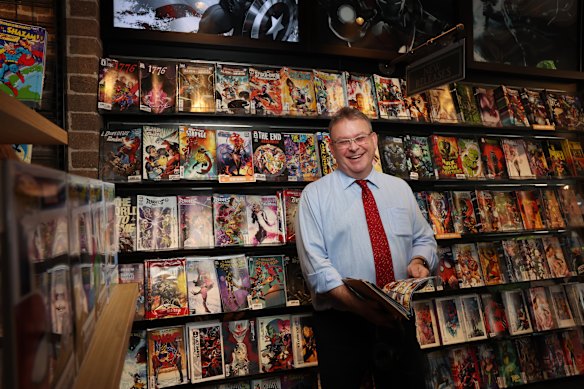
David Johnson shopping at Kings Comics store in Sydney CBD. Credit: Louise Kennerley
“I grew up reading fiction as a kid and the comics in newsagencies. That expanded to Kings once I started getting an income,” the 59-year-old collector of Daredevil, Batman and Superman comics said.
Johnson says shopping in-store is a visceral experience.
“There could be a rack of stuff here that I may never have heard of before,” he said. “It’s like a sugar hit. Also, the people, the community around pop culture and comic collecting – it’s supportive and inclusive.”
According to Waterford, high streets, which have enjoyed a post-pandemic resurgence, will also remain as “critical places” for community.
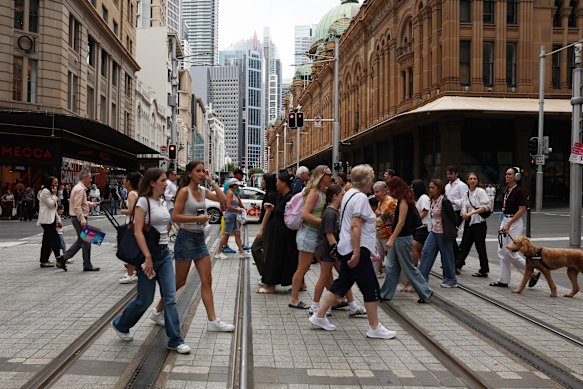
Pedestrians at the corner of George and Market streets, Sydney.Credit: Louise Kennerley
“People spent so long in lockdown that they fell in love with their local high street,” he says.
On one Sydney high street, 16-year-old Tori Gearside is shopping for a new ’fit.
She picks two combinations off the racks at So Familia, a vintage and Y2K-inspired store on Newtown’s King Street: a muted green T-shirt with a back that has been sliced and braided with a soft-pink plaid midi skirt, and a slouchy brown and orange blouse with a pair of brown micro-ruffle shorts.
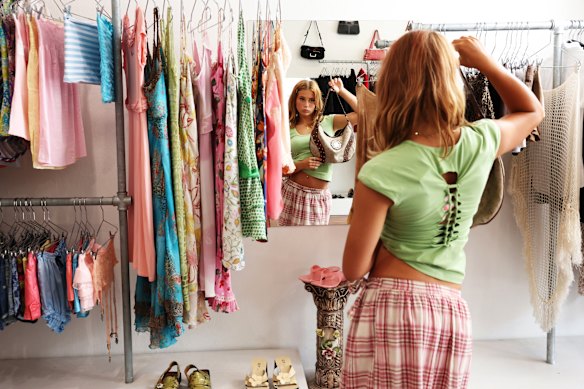
Tori Gearside, 16, goes shopping with the Herald for some new ’fits.Credit: Louise Kennerley
Surveying a glass table of racy calendars, metal necklaces warped into a chunky chain of bows, stars and jewels, and a rotating tower of sunglasses, Tori picks up a gunmetal chain belt with orange gems and a dusty-grey cap. These will go with the second outfit, she says, selecting a brown bag off the wall to complete both looks.
So Familia co-owner Bella Coleman says the second-hand clothing scene has exploded because consumers are becoming more attuned to sustainability. They’re also more willing to dig for a “golden piece” of clothing.
“In the next 10 years, there will be more second-hand, sustainable, local brands, and more knowledge about the brands,” Coleman says. “We merge small, independent designers with the vintage in store, and people love to know that so-and-so has made this top in Marrickville, and it’s sustainable.”
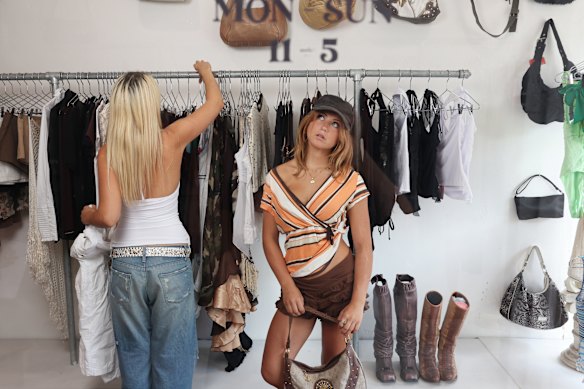
Tori Gearside says she chooses outfits based on whether the tones are harmonious.Credit: Louise Kennerley
But she suspects there will also be a major shift in the second-hand scene, with apps such as Whatnot, a reselling platform that allows users to livestream while potential buyers ask questions.
Loading
Third spaces – stores where people can freely linger, like bookshops and relaxed clothing stores – will be key to retail success, Mortimer says.
“We had awful terrorist events that happened at Bondi, increasing inflation, challenges with rental accommodation, a housing crisis – people just want to find some peace in their lives, to go to shopping centres and retailers to have that time,” he says.
Start the day with a summary of the day’s most important and interesting stories, analysis and insights. Sign up for our Morning Edition newsletter.