3 months ago
39
3 months ago
39
Opinion
January 16, 2026 — 5.00am
January 16, 2026 — 5.00am
And now the cracks appear. Having called for the Albanese government to introduce tougher hate-speech laws, the Ley opposition considers the version currently proposed “unsalvageable”. The Coalition, in turn, is divided among its various factions on what their objections are. Sussan Ley is arguing stridently against the bill’s “religious text” exemption, which would save people from prosecutions for quoting scripture, insisting that it provides an unacceptable loophole. Meanwhile, Andrew Hastie says he’s “unlikely to support the bill because of its impact on freedom of speech and religion”, which sounds more an opposite concern to Ley’s.
The Nationals apparently share Hastie’s objections: Matt Canavan describing the bill as “the greatest attack on free speech since Robert Menzies tried to ban the Australian Communist Party”. Canavan is especially worried that expanding the concept of racist hate speech will be a “Trojan horse” to limit speech on “immigration, integration [and] assimilation”.
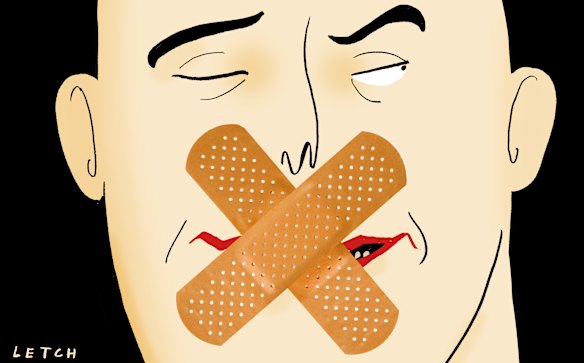
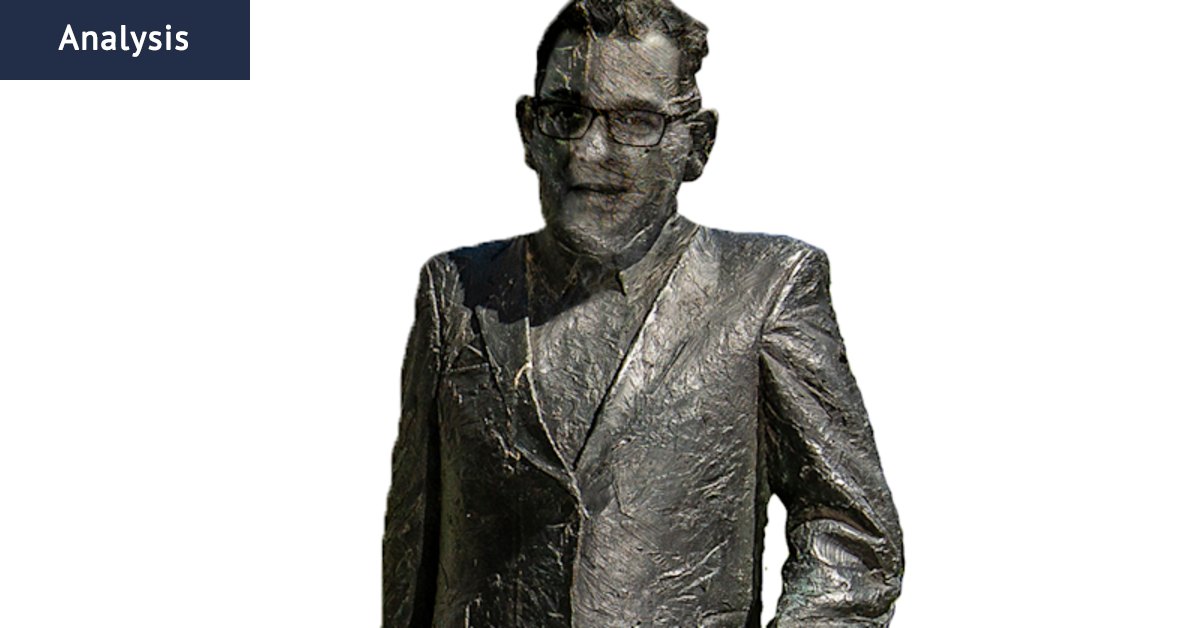
Illustration by Simon Letch
The problem is this whole endeavour sits across several contradictory philosophical fault lines. The stridency of Ley’s demands that the government toughen up on hate speech obscured the fact that the Coalition has always been sceptical of such laws. That is not to say it is insincere when it wants to police antisemitic rhetoric, especially from radical Muslim preachers. But indications are it wants to police nothing else. Elsewhere, its instincts remain to expand free speech.
Hitherto, the Coalition has resolved this tension by insisting antisemitism is the real issue, to the exclusion of other forms of hate, and especially Islamophobia. And to some extent, the government’s bill reflects that view, punishing hate speech only when directed against groups distinguished by their “race, colour or national or ethnic origin”. This would protect Jews, but not Muslims. That’s not, I hasten to add, at the behest of Jewish groups like the Executive Council of Australian Jewry, who have said they’d be happy to see the bill’s terms expanded to cover religious groups, as well as people distinguished by their sexuality or disability.
Loading
Leading the political charge on that is teal independent Allegra Spender, whose seat encompasses Bondi, and whose lead the Greens have followed. The Coalition voices no such objection, and given its exclusive focus on antisemitism, and the divisions already evident within its ranks, it’s hard to imagine it would support such expanded legislation.
That’s not yet a problem at the level of political argument. In the aftermath of something as horrific as Bondi, the urgency of antisemitism is self-evident. Similarly, Islamist radicalisation looms as the major threat, which is why Ley can demand the legislation use the phrase “radical Islam”, even though it’s unclear what that would achieve legally, and it would be a bizarre way for the bill to be drafted. Legislation is not a press conference. It has to anticipate future situations and be coherent 20 years hence.
Ultimately, then, legislation of this kind demands some consistent theory of the relationship between hate speech and violence. If violence against a group is the outcome of hate speech, then excluding any group from hate speech protections becomes akin to saying violence against its members is of little consequence. Perhaps that works for as long as that violence is theoretical, or simply fails to register.
As if to illustrate the point, just this week, around the time the government released a draft of its bill, police charged two men with assaulting the imam of Melbourne’s Noble Park mosque and his wife, describing it as a hate crime. The couple’s alleged assailants forced them off the road with their car, then – all allegedly – proceeded to smash the vehicle’s side mirror, threatened to stab the wife, and then when the imam got out of the car, punched him in the face, all while yelling Islamophobic abuse before some Good Samaritans intervened. It’s not an isolated case.
Loading
Such stories don’t yet inform federal politics, especially because they are nowhere near on Bondi’s scale. But if the theory is to draw a line that connects hate speech to smaller acts of hate through to the most devastating ones, they could easily begin to register once the impending vote on this legislation sharpens the debate. At which point both government and opposition might have to explain the bill’s narrow focus as a matter of principle.
The government’s answer seems to be that it is open to broadening the bill, but only after this version passes. It’s a strained argument because it doesn’t explain why anyone who would be standing in the way of a broader law now would change that position at a future time of less urgency. If the government thinks the opposition would be the main barrier, it has two problems. First, it might have to find a way to pass these laws without the Coalition, anyway. And second, there would be no clear political reason for the Coalition to support a later amendment.
The “religious texts” exemption perhaps illustrates this most starkly. Currently, the Coalition is full throated in attacking that, because it fears it will allow Muslim preachers to get away with demonising Jews. But would its feelings change if, under a broader law, it could also apply to, say, a Christian preacher quoting scripture about homosexuality? The Australian Christian Lobby, a significant Coalition constituent, is already nervous about this bill. Imagine its response to an amendment like that. Against that background, would the Coalition be most likely to avoid that whole scenario by opposing any amendment?
My sense is that Hastie, Canavan and Spender have grasped this, albeit from opposite political directions. And that’s a fair summary of this bill’s thorniness. It invites liberal and nationalist objections; progressive and conservative ones. It’s trying for a hugely complicated, fraught expansion of state power, in the space of a week. The government might have thought the intensity of Bondi, and the political pressure it exerts would be enough to fuse the cracks together. What it’s discovering instead is that this same pressure can cause cracks to become chasms.
Waleed Aly is a broadcaster, author, academic and regular columnist.
The Opinion newsletter is a weekly wrap of views that will challenge, champion and inform your own. Sign up here.
Most Viewed in National
Loading