3 months ago
19
3 months ago
19
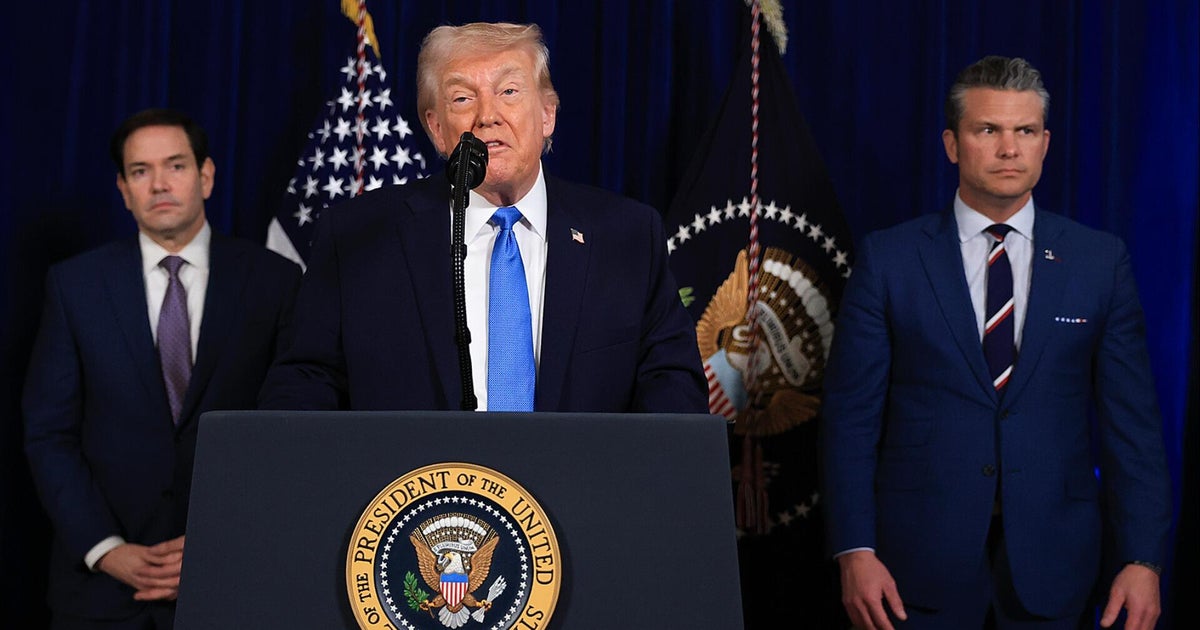
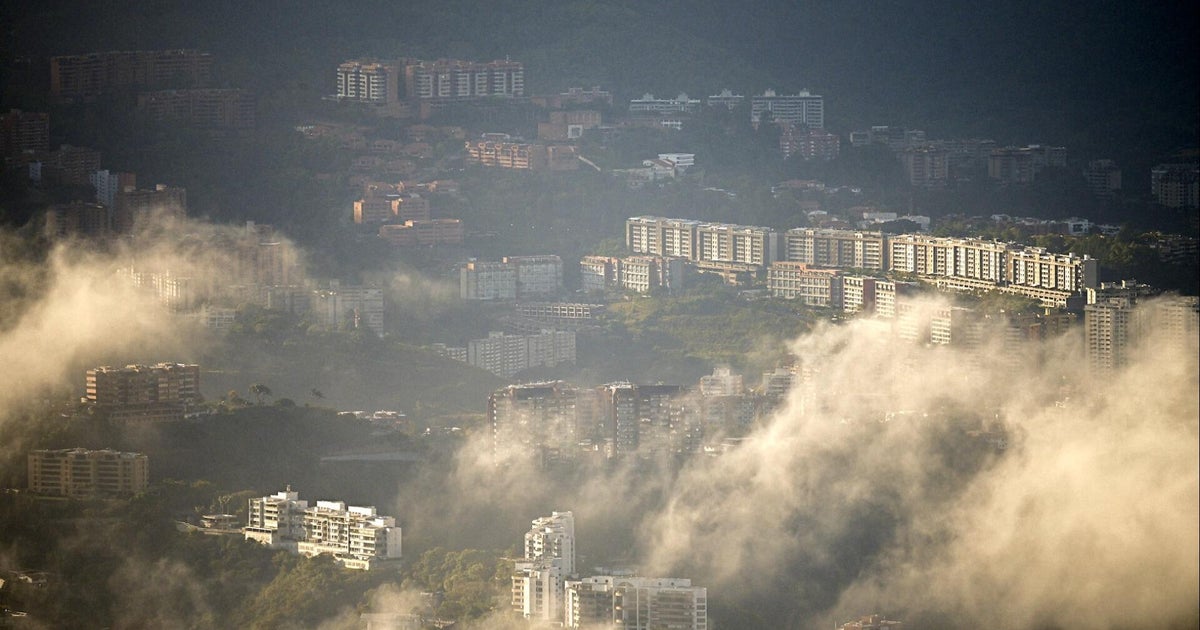
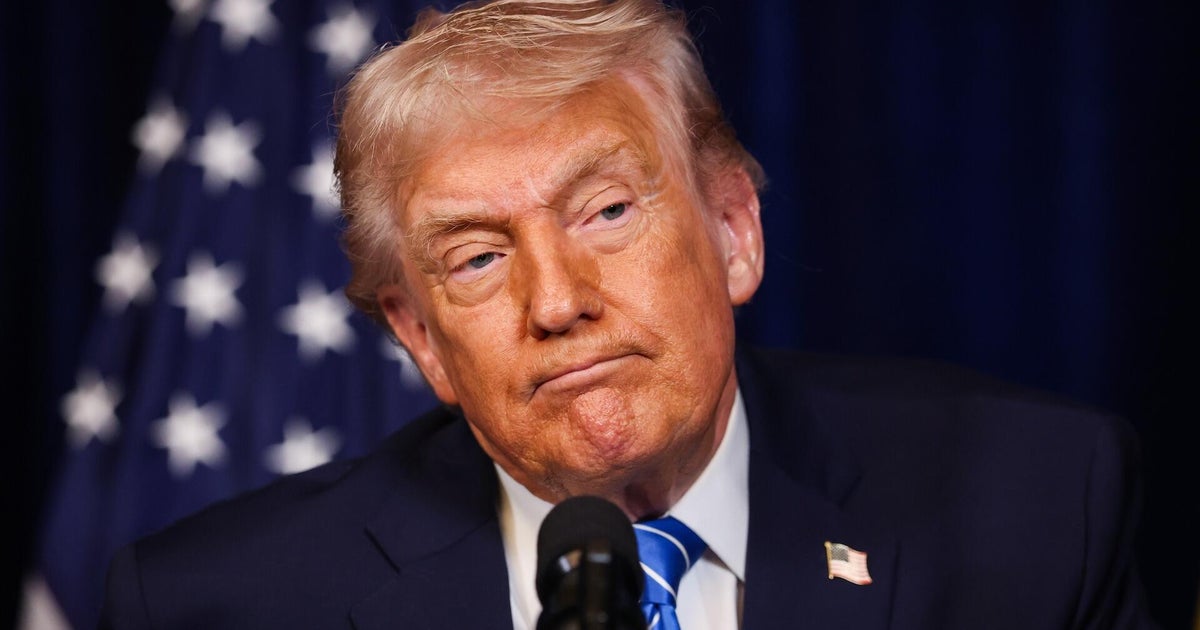
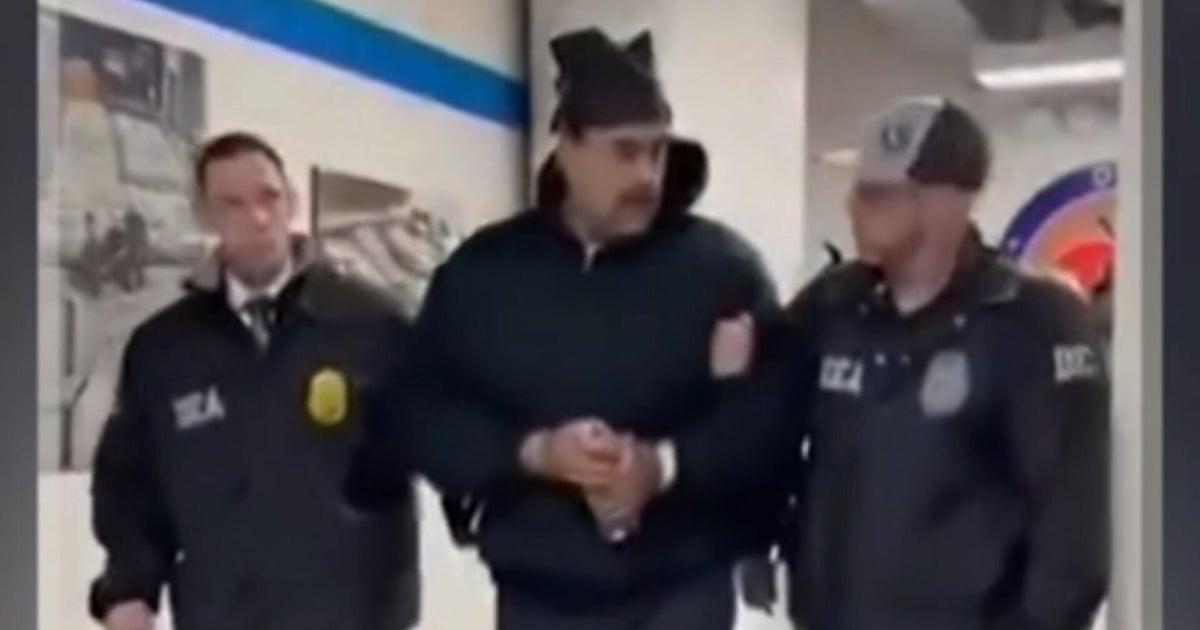
What exactly is this? It’s not regime change because, having unleashed a military raid to snatch Venezuela’s president from his bed, US President Donald Trump has left the rest of the regime in place. Nicolás Maduro’s deputy, Delcy Rodriguez, has inherited the presidency, just as Maduro did from Hugo Chavez, and the Venezuelan government remains Chavistas all the way down. And whatever Trump means when he asserts the US is now “running” the country, he apparently envisages no transition to democracy.
Not only has he barely mentioned democracy during this episode, he has dismissed the opposition leader, (and Nobel Peace Prize winner) Maria Corina Machado as someone who “doesn’t have the support within or the respect within the country”. This despite the fact her approved candidate handsomely won the 2024 election which Maduro immediately stole.
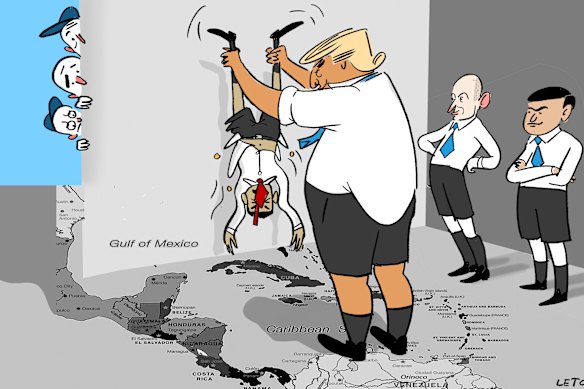
Illustration by Simon Letch
This doesn’t make much sense as a war on drugs, either. America’s current crisis is with fentanyl, and Venezuela does cocaine. Even in this, it is something of a minnow, well behind Colombia. And even then the Venezuelan boats carrying drugs through the Caribbean, some of which the US has been bombing since September, are mostly bound for Europe, not America. Meanwhile, Trump has gone out of his way to pardon the former Honduran president, Juan Orlando Hernandez, whom a US court convicted and sentenced to 45 years in prison on similar drug-trafficking charges to the ones Maduro now faces.
Oil? Trump has bluntly threatened Venezuela with further military strikes if it fails to give American companies “total access” to its oil industry, from which Chavez’s nationalisation program effectively excluded them. Now he has announced that Venezuela will “turn over” 30 to 50 million barrels of oil to the US. It’s true that Venezuelan oil is useful to America, because its heavy crude is the perfect type for American refineries, which currently import it from the Gulf states via a pipeline from Canada. Adding Venezuelan oil could be very useful for Trump’s reindustrialisation agenda.
But the shoe doesn’t quite fit as comfortably as all this implies. Partly that’s because oil is now cheap. It’s far from clear American companies are keen to pour the huge investment into Venezuela required to resuscitate its slumped industry, in an unpredictable environment, for potentially very little profit. But mostly it’s because Maduro had already offered Trump a deal in which American companies would be given access to all oil and gold projects and get preferential treatment for contracts. Maduro even offered to switch oil exports from China to the US, and reduce Venezuela’s energy and mining contracts with China, Iran and Russia. The Trump administration rejected this, cut off diplomatic ties, and ultimately bombed Venezuela. It wanted to do this.
Loading
Is this therefore some kind of military expansionism? Here, note the administration’s foreshadowing of possible military force against Colombia, Iran, and especially Greenland. But for now at least, Trump’s actions have been less expansionist than they might feel. He has stunned the world with two military strikes – in Iran and now Venezuela – which share a peculiar feature: they have been single operations that have not sparked a war because they have targeted weak or compromised regimes who had no real prospect of fighting back. Trump struck Iran at Israel’s behest after Israel had taken out most of its missile defence system, then declared the matter closed. Venezuela’s military threat is weaker still. Trump has shown no inclination – yet – to pick on someone his own size.
Perhaps the key to this puzzle is to remember that, like any administration, Trump’s is made up of divergent factions. When it does something, it is either because one has prevailed, or because it is something on which they can agree. So, with tariffs, Trump’s fiercely pro-tariff trade adviser Peter Navarro helped launch “Liberation Day” before the president’s more moderate commerce and treasury secretaries convinced him to pause them. Similarly in the Venezuela case, we can discern two divergent approaches embodied in two dominant figures: Trump’s deputy chief of staff, Stephen Miller, and Secretary of State Marco Rubio.
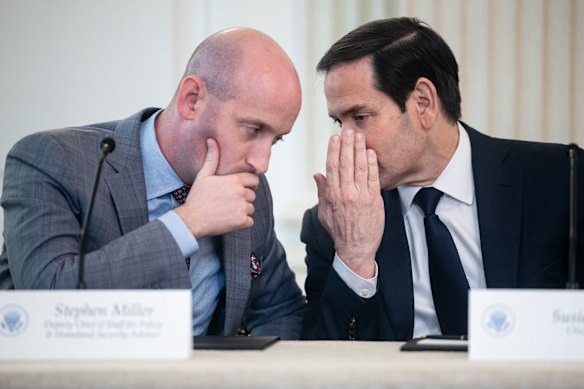
Stephen Miller, deputy White House chief of staff for policy and homeland security adviser, (left) and Secretary of State Marco Rubio pictured late last year.Credit: Bloomberg
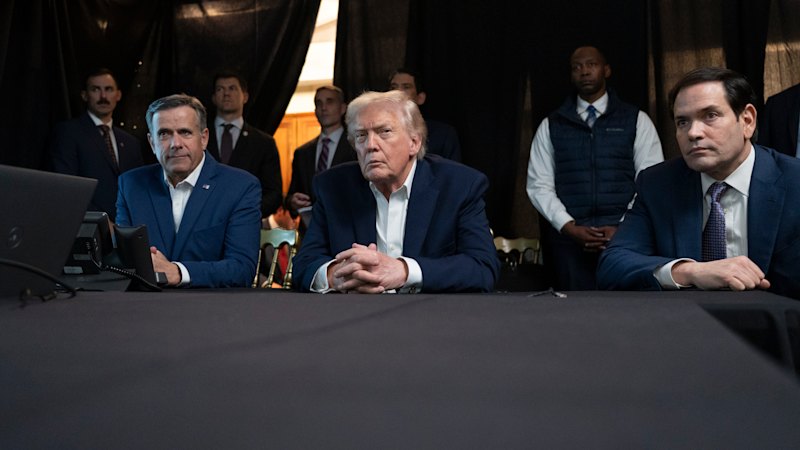
For Miller, who represents MAGA’s most aggressive, Christian nationalist pose, this is all about raw, unapologetically imperialist American power: he has the US overthrowing governments, taking territory and plundering resources as suits it. Rubio represents a more traditional view among Cuban-American Republicans, which is hawkish towards the communist dictatorships of Latin America. Naturally enough, the ultimate focus is Cuba. But Cuba has also been a staunch supporter of Maduro, fearing that a more pro-US Venezuelan leader would threaten the Cuban regime’s own survival. Rubio apparently agrees, and has long agitated for Maduro’s removal: the first domino in a theory that ends in Havana. He has been lobbying Trump on this since early in his first presidency.
Venezuela sits in the overlap between these approaches. Miller originally wanted to bomb fentanyl labs in Mexico, but this risked losing the Mexican government’s co-operation on immigration and drugs. So, he looked for other cartels to bomb. Eventually, that crystallised into a plan to bomb Venezuelan boats, and ultimately capture Maduro: where Rubio would more than happily meet him. But even here, Rubio calls this a law and order operation, while Miller insists it’s a military one.
Loading
Viewed this way, all the pieces seem to fit. Venezuela becomes the target despite its tenuous connection to America’s drug problems. Trump pardons the former Honduran president because, as a member of a right-leaning party, he has nothing to do with the communist alliances in Latin America, and is opposed to the Cuban government. The Trump administration rejects Maduro’s offer of American access to oil – and reduced trade with China, Iran and Russia – because it doesn’t offer something it’s really after: the ousting of Maduro himself. And, having concluded only military force will achieve this, Trump deploys it.
This makes the matter of Greenland a true watershed. Unsurprisingly, Miller is the one talking up the possibility of sending in American troops to annex it, declaring boldly that Europe wouldn’t dare stop America doing as it pleases. Rubio is downplaying this, saying Trump aims to buy it. Any military campaign there would therefore not only mean Trump has courted a complex foreign entanglement far beyond anything he’s done so far. It would suggest the Stephen Miller view of the world has won. And that is a world in which the Trump of today might look positively restrained.
Waleed Aly is a broadcaster, author, academic and regular columnist.
The Opinion newsletter is a weekly wrap of views that will challenge, champion and inform your own. Sign up here.
Most Viewed in National
Loading