3 months ago
42
3 months ago
42

 Carlos Bocos
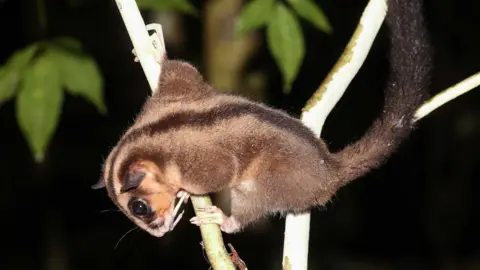
The pygmy long-fingered possum was thought to have been extinct for 6,000 years
A tiny possum with one extra-long finger on each hand is one of two species thought to have been extinct that have been discovered in West Papua, in what's been called an "exceptional" scientific discovery.
The other is a a ring-tailed glider with a tail that can grasp branches. Both have been found living in remote rainforests after they were thought to have disappeared 6,000 years ago.
Finding living examples of a lost species is rare, but discovering two is "remarkable," say scientists who published their findings in the Records of the Australian Museum journal on Friday.
Such discoveries are known as "lazarus taxon", a term inspired by a biblical figure who was raised from the dead.
"The discovery of one lazarus taxon... is an exceptional discovery," said Prof Tim Flannery, a prominent Australian scientist best known for his 2005 The Weather Makers book about climate change.
"But the discovery of two species, thought to have been extinct for thousands of years, is remarkable."
 Arman Muharmansyah
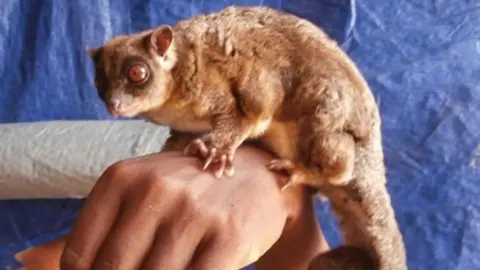
The newly discovered ring-tailed glider, which lives in the hollows of tall trees
The first rediscovered species was the pygmy long-fingered possum, a striped marsupial weighing about 200g, which is understood to have vanished from Australia during the Ice Age.
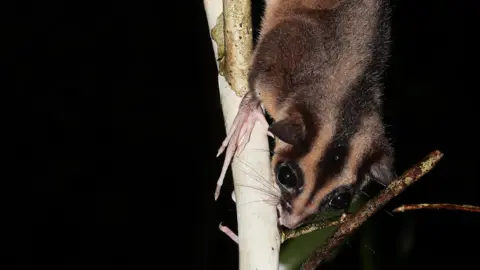
A distinguishing feature is that on each hand, the possum's fourth finger is twice the length of other digits, which scientists say help it dig out wood-boring insect larvae, it's main source of food.
The second species is the ring-tailed glider, and just like its Australian cousin the greater glider, it lives in the hollows of tall trees.
The discoveries were made by piecing together parts of a puzzle with scientists combing through decades-old fossils, rare photos and old specimens to gather clues before making visits to remote New Guinea locations.
 Carlos Bocos
The pygmy long-fingered possum uses its elongated finger to dig out wood-boring insect larvae
Flannery, along with another of the paper's co-authors Prof Kris Helgen and researchers from the University of Papau, spoke with local elders from the Tambrauw and Maybrat clans - some of whom have only had contact with the modern world since the 1960s.
Identification of the species would not have been possible without their help, according to Rika Korain, a Maybrat woman and another co-author.
"They're very traditional people," Flannery added, and regard the glider as so sacred that "not only won't they hunt it, they won't mention its name".
But the gliders habitat was increasingly coming under threat from logging in the area, Flannery said.
This, in part, has prompted efforts by scientists and wildlife groups to try secure native title for the forests to ensure logging cannot be carried out without consent from locals, he said.