3 months ago
16
3 months ago
16
Marnie-Claire Hilton had learnt to coexist with many mysterious symptoms for years before she finally got an explanation – the right one, at least.
Her periods were irregular; sometimes three weeks apart, sometimes eight. They were light some months, very heavy and painful on others. She lived with dragging tiredness and constant, uncomfortable bloating.

It took seven to eight years for Marnie-Claire Hilton to get a correct diagnosis for what was really going on in her body.Credit: Chris Hopkins
She believed everyone must experience pain during sex, but no one talked about it. “I thought, ‘Maybe sex isn’t all it’s cracked up to be’,” she says.
The doctor in her family’s small country town placed Hilton on the pill as a teen, which regulated her cycle but didn’t touch the pain or fatigue.
It took seven to eight years until Hilton finally got an accurate diagnosis of endometriosis – having first been diagnosed and treated by a specialist for a condition she didn’t have.
Loading
Endometriosis is a chronic, inflammatory condition in which tissue similar to the womb lining grows outside it in the pelvis, often attaching to other organs and causing crippling pain.
It is notoriously challenging to see on a traditional ultrasound, and has only recently been understood to be a disease with different types, not a single condition.
Long delays until diagnosis – during which many women endure huge medical expenses, missed work, uncertainty and often the torment of having their pain dismissed – have been typical, until now.
But an Australian-developed breakthrough could transform testing for the disease that affects an estimated one in seven women aged between 45 and 49, cutting the delay from years to weeks.
Loading
The ArelisENDO urine test is so promising, it could “change everything: it could be truly revolutionary”, says expert researcher Professor Jason Abbott (who is not a stakeholder in the project).
The test analyses waste products in urine, and if its effectiveness is proven, it could mean women whose disease is found much earlier can learn what type of the disease they have, and whether it might affect their fertility – providing vital information for the one in three women with the condition who struggle to fall pregnant.
It may also spare the one in three women who are given laparoscopies, but whose pelvic pain turns out not to be because of endometriosis, from having the invasive procedure at all.
Abbott, chair of the National Endometriosis Clinical and Scientific Trials Network and member of the government’s endometriosis advisory group, says earlier diagnosis could change women’s lives: “If you get a diagnosis before you might see it on ultrasound, it might substantially change what we do and open up pathways for interventions that could alter the course of a woman’s life.
“There are a lot of horror stories with endometriosis, people with severe pelvic pain from an unknown cause, but it’s actually a very difficult disease to diagnose.”

Tori Fox (left) hopes women with endometriosis such as Marnie-Claire Hilton (right) will be able to get far quicker and cheaper diagnosis thanks to the new urine test she is helping get to market.Credit: Chris Hopkins
As clinical director of the world-leading Ainsworth Endometriosis Research Institute (AERI) at the University of New South Wales, he is helping to trial and validate the test created by a Melbourne-based women’s health firm consisting of the two scientists who invented it and the former theatre nurse-turned-businesswoman steering it to market, Tori Fox.
Preliminary testing on more than 900 women shows ArelisENDO to be “incredibly effective at picking up early-stage disease”, Fox says. If the data is validated by the AERI trials, she is confident it will be in the hands of patients in 2027.
“What we’re really excited to be doing is also looking at how we can stage the disease, which is incredibly important,” she says.
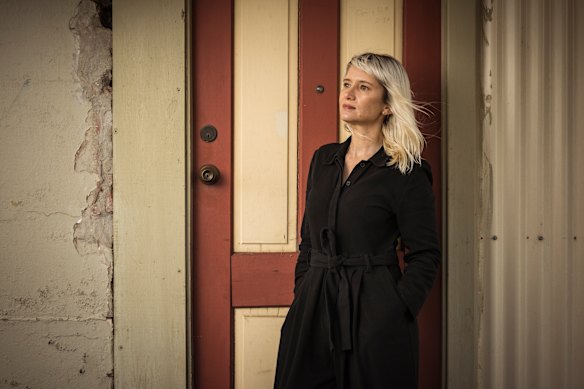
Tori Fox was a theatre nurse before she switched to the business of helping improve women’s lives through health innovations, including the new urine test for endometriosis.Credit: Chris Hopkins
The test was pioneered by professors Maneesh Singh, a gynaecologist, and Francis Martin, an expert in biospectroscopy, which uses light to analyse the chemical (or spectral) fingerprint of biological samples. They formed a group with Fox, who founded Arelis through UNSW’s Health 10X accelerator program.
Monica Forlano, chair of Endometriosis Australia, said it would be a “genuine game changer” if the test’s effectiveness is demonstrated through the trial.
“Currently, diagnosis takes between six and eight years on average – years spent in pain, being dismissed by healthcare providers and unable to access treatment,” she said. “A simple urine test could compress this to weeks, finally providing the validation patients desperately need after being told their pain is ‘normal’ or ‘all in their head’.”
The economic cost of the disease to the Australian economy is $9.7 billion annually, she said, and women spent an average $30,000 managing the condition for its duration.
Loading
The urine test is the second Australian innovation in development promising faster identification of one of the most common female diseases. Melbourne University professor of women’s health research Peter Rogers has led creation of a blood test which would also work by identifying biomarkers.
Rogers was co-author on a paper published in the international journal Human Reproduction showing the effectiveness of the endometriosis blood test pioneered by Perth-based medical technology company Proteomics International, collaborating with the Royal Women’s Hospital and Melbourne University.
The researchers demonstrated “strong predictive accuracy” of the test, which is also undergoing validation.
For women such as Hilton, earlier diagnosis could perhaps have allowed her to have a larger family. She and her partner decided they were ready to start trying for their first baby in Hilton’s late 20s, but after years of no success she sought specialist care.
She was diagnosed incorrectly with polycystic ovary syndrome (PCOS) and treated for it, but fertility treatment was still unsuccessful.
A second IVF specialist finally performed a laparoscopy. “After I woke up, he said: ‘You were riddled with endometriosis – we got as much out as we could’,” Hilton says. “Twelve months later, I had my daughter.”
Hilton is thrilled to have her adored little girl, but wanted more kids: “I would have had five if we could. We tried again and tried again … but by the time I had her I was 36.
“We lost a good seven or eight years when we could have been trying.”
Rogers hopes and believes the tests on the way could mean this kind of journey is curtailed for generations to come after Hilton and her thousands of peers.
“It will almost certainly be better for their daughters,” he says. “But I would hope it happens much quicker than that.”
The Examine newsletter explains and analyses science with a rigorous focus on the evidence. Sign up to get it each week.
Most Viewed in National
Loading