3 months ago
39
3 months ago
39
If you were to randomly land on an episode of Paradise with no idea what it was about, it might take a while to realise this is a post-apocalyptic thriller. It’s a decidedly low-fi take on sci-fi, a vision of a future that looks a hell of a lot like our present.
“I feel like our show started off as low-fi sci-fi – we were telling a story that was taking place in the future – and suddenly, it has caught up with the moment we’re in,” says Julianne Nicholson, who stars as Sinatra, the tech billionaire who funds the construction of a subterranean bunker that houses 25,000 survivors of the ecological and nuclear catastrophe that wipes out much of the outside world.
“It just hits in a different way when you feel the connections to things that are happening on your screen,” she adds.
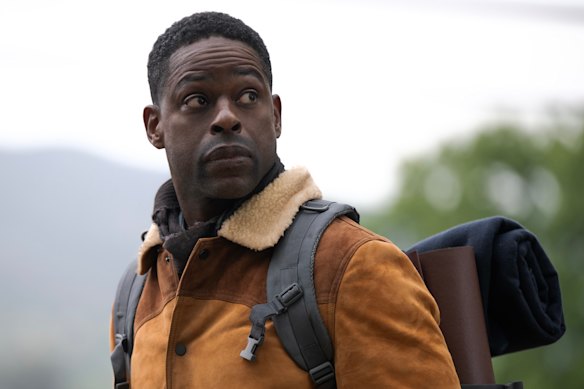
Paradise was created by Dan Fogelman (This Is Us), who wrote the character of Xavier, chief security officer to the president in this micro-America bunker, with Sterling K. Brown in mind. And it was always clear that he was more interested in the interactions between people than he was in the landscape of a post-apocalyptic world.
“I think Dan’s intention was to create something not so far removed from our world, so we could recognise parallels to the time and place we’re living right now,” says Brown. “I think he’s interested in what a post-apocalyptic world does to human connection, what it does to human interaction, how some of us become more self-contained, and how some of us learn to trust and believe in other people.”
That said, in the show’s second season, streaming now on Disney+, the action is split between the world of the bunker, where Sinatra is consolidating her power and tipping the community of Paradise ever closer towards fascism, and the outside world into which Xavier has ventured searching for his wife, whom he believes to be alive three years after Doomsday.
Fogelman began work on the show “10 or 12 years ago”, says Nicholson, at a time when some of its ideas probably looked more fanciful than they do today.
“Even when we filmed the first season, in mid-2024, there was a moment where we stopped and asked ourselves, ‘Can Sinatra even be in the Oval Office? She’s not an elected official. Would that even work?’ It was our imagination still, it was playing with the ideas of power and money and government.”
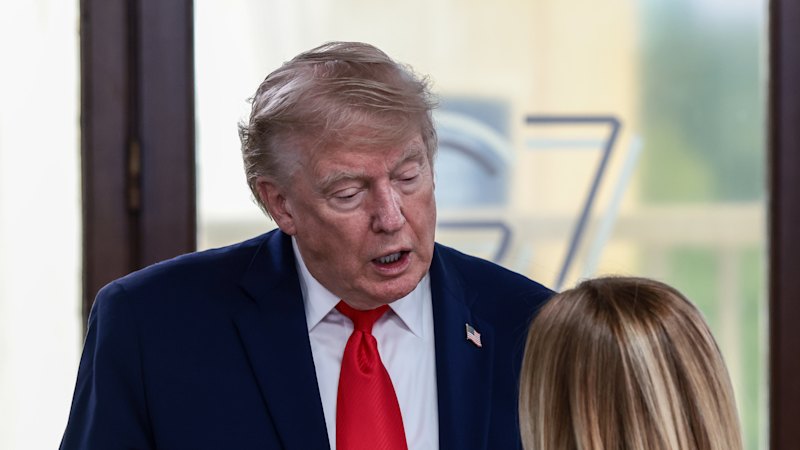
And then, “a short few months later”, Donald Trump was re-elected, and Elon Musk was appointed his government efficiency chief. With tech billionaires cosying up, suddenly those scenes played very differently.
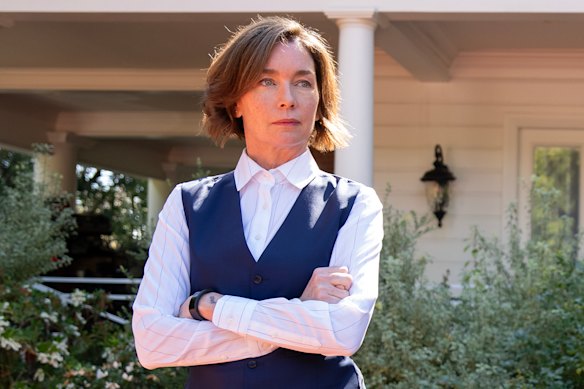
“With each passing day, what we’re seeing with the 1 per cent and people in power and technology and AI, it’s just going in one direction,” Nicholson says.
Paradise is no Severance, though. In many ways, the series, which was made for Hulu in the US, plays like an old-fashioned network drama – albeit at the higher end, rather than a high-concept streaming proposition.
‘It’s like, what if Lost knew where it was going to end … We knew exactly, from the outset, where [Paradise] is going.’
Sterling K. Brown on the eventual ending of Paradise“The show Dan will compare it to most directly is Lost,” says Brown. “A lot of people say Lost lost its way at some point in time. And I think he’s like, ‘Well, what if Lost knew where it was going to end, how could they have made that a more satisfying experience?’ Dan’s trying to do that with Paradise.”
Does that mean he has known how and where the show was going to end from the beginning?
“We knew exactly, from the outset, where it’s going,” confirms Brown.
“By ‘we’ he means him and Dan,” Nicholson chips in, laughing.
You’re not in on the secret?
“Some of us are outside that little pairing,” she says. “That’s all good. I like a little mystery.”
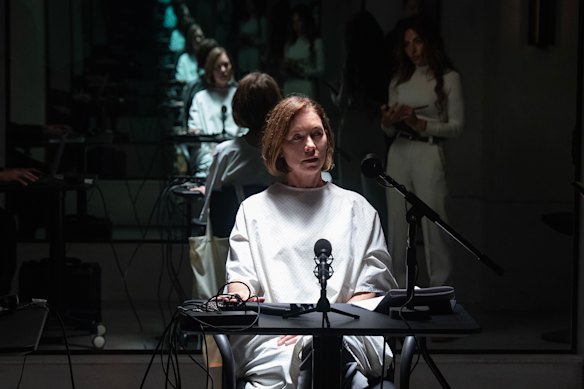
She is fond of a little complexity, too. And Sinatra has that in spades. As the character repeatedly tells anyone who will listen, she’s not a monster. But boy, does she do some monstrous things.
Nicholson is an extraordinary actor. Her performance in season one earned her an Emmy nomination in 2025. It was one of two for that year: she also won her second Emmy (after Mare of Easttown) for a memorable guest role in Hacks. And she says she “knew who this woman was” from the moment she read the first script.
Everything Sinatra does is driven by the loss of her child, a sense of the fragility of life, and a compelling need to “protect her family and this world that she’s created”. But it’s coupled with so much unchecked power that corruption is inevitable.
Her greatest power, of course, lies in the knowledge of what’s coming and the ability to decide who gets to survive it. The bunker is a kind of Noah’s Ark, and there’s even a sense of pairs being selected to sail into the brave new world: two assassins, two leaders, and so on.
“I actually find that so creepy, when I start really thinking about who was selected and why, and who wasn’t selected and why,” Nicholson says. “It really makes me uncomfortable.”
Asking for a friend: do you think any journalists made the cut?
“We need journalists,” says Brown. “You need an independent press, for sure. But probably none.”
“Who’s going to allow an independent press?” asks Nicholson. “Not Sinatra.”
But what about you – would you want a spot in the bunker?
“If I get to be with my family all together, I’ll take the bunker,” says Brown. “There would be relatively little I would need outside of the people that I love. I would take the bunker because it’s safe, secure, there’s all this planning that’s going into it or whatnot. But I guess then you have to ask yourself, do I trust the people who are running it?”
“This is where it gets a little tricky,” says Nicholson. “I guess, truth be told, I would want to keep my people safe, quite honestly. But it is that thing of, ‘OK, what is freedom? What is freedom worth? How do we live?’
“I feel like my answer changes with the day.”
Paradise is streaming now on Disney+, with new episodes each Monday.
Find out the next TV, streaming series and movies to add to your must-sees. Get The Watchlist delivered every Thursday.