3 months ago
30
3 months ago
30
Opinion
January 10, 2026 — 5.01am
January 10, 2026 — 5.01am
There are plenty of unusual things people buy with the expectation that they will be able to sell them for more in the future. Among these “alternative investments” are artworks, rare wines and vintage cars or watches.
Sure, there are more “traditional” investments such as shares, bonds, or just stashing money into a savings account. But as prices across many economies have surged over the past few years, eating away at the return on many of these investments, people have looked to branch out to less conventional — and seemingly more lucrative — markets.
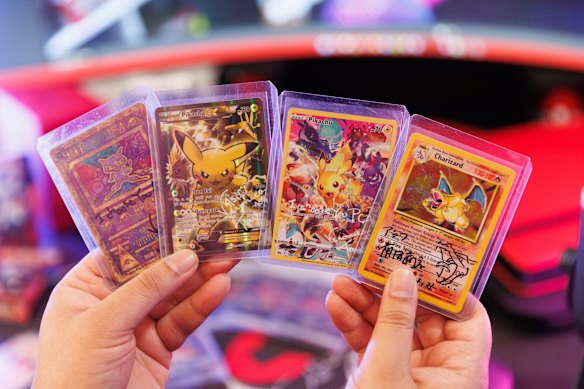
Pokémon cards are a lucrative business, with one card alone selling for $7.9 million three years ago.Credit: Max Mason-Hubers
What if I told you there was a resale market where the value of the assets has climbed more than 3800 per cent (about 23 times more than the Australian sharemarket) since 2004? Well, if your first thought was about the Pokémon card market – currently valued at nearly $US20 billion ($30 billion) – you’d be right.
Nineties kids, their parents and grandparents might remember the popularity of Pokémon trading cards. They were first released in 1996 in Japan, featuring dozens of creatures (or “Pocket Monsters”), and took off in popularity in the late 1990s and early 2000s, becoming a global phenomenon.
Like most things, the craze died down, eventually, with only a minority of the population continuing to enthusiastically trade and collect the cards. Few people at this time would have predicted that one day, a single Pokémon card would sell for nearly $US5.3 million ($7.9 million) – but more on that later.
So, why did Pokémon cards surge in popularity again? How did they become such a valuable commodity? And will they continue to climb in value?
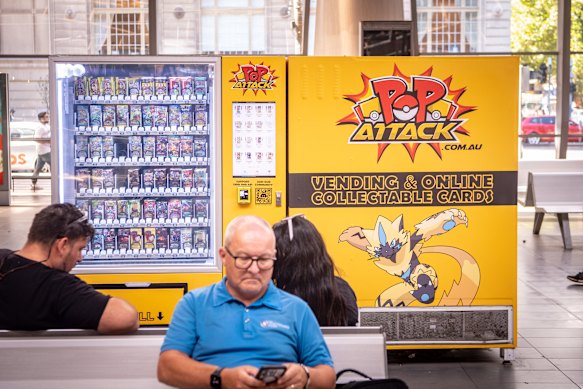
Pokemon cards have become a popular “alternative investment”.Credit: Justin McManus
In 2016, American software developer Niantic released an augmented reality mobile game called Pokémon Go. Those who weren’t familiar with the original Pokémon Game Boy and trading card games would quickly have gained an awareness of the franchise when they saw hordes of people walking around cities, streets and parks, glued to their phones and trying to catch, train and battle Pokémon.
This not only captured a totally new audience for the Pokémon franchise (including those who were not yet born during the initial craze), but also tapped into the nostalgia of many Millennials and older gamers who grew up playing the game.
Nostalgia can be a powerful driver of consumer and investor behaviour. For most people who played Pokémon growing up, the game probably reminds them of happy memories and rekindles positive feelings of escape, excitement and comfort.
Many of these people, who used to save up pocket money for Pokémon cards, are now working full-time and have access to more money – and the ability to spend this money, fuelling the market.
Like almost all things, it’s scarcity that drives the perceived value of some Pokémon cards.
Meanwhile, new releases and versions of Pokémon in more recent years cater to changing preferences, expand choice for buyers and add novelty for those who have been following the franchise over time.
Spending on Pokémon is also driven by the “mystery” element of purchasing cards. While some people only buy specific cards that they want, many enjoy the rush of buying sealed packs of cards where the outcome is uncertain.
It’s a form of gambling, with many buyers hoping they will hit the jackpot: pocketing rare cards or drawing ones that will help them complete their collection. It’s part of what has made other collectibles, such as Labubus which come in sealed blind boxes, popular as well.
Loading
But like almost all things, it’s scarcity that drives the perceived value of some Pokémon cards.
The one that sold for nearly $US5.3 million, for example, was among the rarest Pokémon cards in the world: one of 39 “Pikachu Illustrator” cards given out to winners of an illustration contest in 1998. It was also graded a perfect “10″ by the Professional Sports Authenticator (PSA), meaning it was in almost perfect condition.
The card, purchased by YouTuber Logan Paul in 2022, is now up for sale in an online auction, which, at the time of writing, had reached $US2.1 million and received 25 bids.
Like many vintage items, it’s generally older, rarer and iconic cards in good condition that fetch the highest prices.
Social media has also fuelled the frenzy of spending on Pokémon cards with content creators such as Paul uploading videos of themselves opening card packs and boxes, capturing the attention of viewers – including many young people – around the world.
While it is mostly Millennials and Gen Z taking an interest in, and making a buck out of, investing in Pokémon cards, there are also younger people trading cards with an awareness of their financial values.
Anthony Neo, owner of Pokémon card shop Poke Stop Cafe in Perth says it was his primary-school-aged son who got him interested in Pokémon cards. “My son knows more about Pokémon than me,” he says, including the value of many of the cards.
While his son is mostly interested in collecting cards for himself and trading with friends, Neo says many kids camp out at shopping centres ahead of a new release of Pokémon cards in the hopes of buying them from a store, then selling them at a higher price.
It’s a form of scalping, but also a way through which some people – including younger generations – are betting and trading on the value of Pokémon cards.
While the surge in inflation and slowdown in economic growth in recent times have put pressure on household finances, the growth in spending on goods such as Pokémon cards has steadily increased.

Graded Pokémon cards can fetch up to tens of thousands of dollars in online markets.Credit: Joe Armao
That’s probably because buying Pokémon cards has been a decent way for people to “hedge” or protect the value of their money. Instead of storing their cash in a savings account or shares, which might have only climbed in value modestly when accounting for inflation, some Pokémon cards might have grown in value more strongly, helping to offset and outpace the growth in overall prices.
Of course, the key caveat here is “some”: the growth in value of Pokémon cards continues to be driven largely by a select few cards which are especially rare and sought-after.
People also tend to splash cash on “small comforts” such as Pokémon cards, even during times of economic hardship. While they might cut back on things like travel (especially during a pandemic) or high-end luxury goods, relatively smaller “treats” they can consume at home can remain popular.
There’s no guarantee – as with any investment – that Pokémon cards will continue to grow in value at the scale they have. But for those feeding their childhood dreams and nostalgia, Pokémon cards might present value beyond financial return or a hedge against inflation, especially if they take to heart the slogan that you “gotta catch ’em all”.
The Business Briefing newsletter delivers major stories, exclusive coverage and expert opinion. Sign up to get it every weekday morning.
Most Viewed in Business
Loading