3 months ago
5
3 months ago
5
Opinion
November 11, 2025 — 11.36am
November 11, 2025 — 11.36am
For years, the mantra around aged care and the family home was simple: think twice before you sell. But in a post-November 1 world with changing rules and financial implications that reach well beyond emotional ties, that advice has shifted to think three times.
Many people believe selling the family home is the only way to fund aged care, particularly when faced with the Refundable Accommodation Deposit (RAD) that is normally hundreds of thousands of dollars.
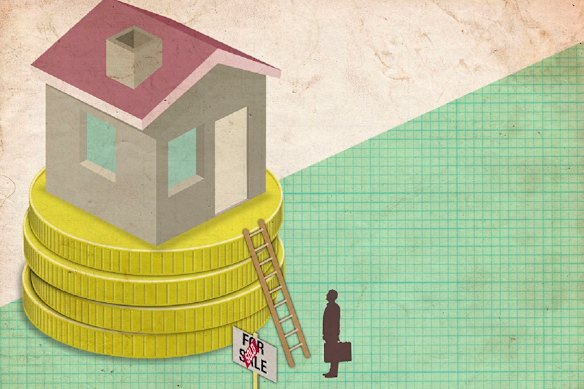
Whether you choose to sell your home to pay for your aged care is totally up to you.Credit: Simon Bosch
The fact that any unpaid RAD incurs interest at 7.61 per cent per annum can make it seem like a no-brainer – after all, a $750,000 RAD equates to $57,075 a year. The numbers are big and selling the house feels like a simple way to make it all work.
But in numerous instances, keeping your home can provide significant financial advantages, ones you can’t get from any other asset.
One of the biggest misconceptions is that the family home is fully assessed for aged care fees. It’s not. When you move into aged care, the value of your home is only counted in the means test up to a capped value of $210,555. This cap can make a dramatic difference.
Most homes are worth substantially more than the cap. If you have a $1.2 million home then the cap effectively exempts $1 million of it. If you sell the home and pay the RAD, all the money you put into the RAD is included in your aged care assets and any money left over counts towards your aged care and pension means tests.
Selling the family home can feel like the simplest solution – but simple isn’t always smart.
There’s a second consideration: your RAD is exempt from your pension assets test. If you keep your home, it’s not counted towards the pension assets test for two years after you move into aged care. If you are a couple, the clock only starts ticking when the second person leaves.
However, there is a new piece of the puzzle – the exit fee on your RAD. Before November 1, paying a Refundable Accommodation Deposit meant exactly that: all of your money was refunded when you left. Now, there is an exit fee of up to 10 per cent if you stay for five years or more.
Paying by RAD could see a significant portion of your capital disappear; on a $750,000 RAD you would lose $75,000 after five years. While there are certainly no guarantees, keeping your home could preserve the value of your capital and potentially grow it.
Loading
Keeping the home isn’t free and doesn’t suit everyone, but the point is, you have options. And it’s worth seeking advice to work out which one is best for you. Selling the family home can feel like the simplest solution – but simple isn’t always smart. The capped value for aged care, two-year pension exemption, and new RAD exit fees mean the financial scales have shifted.
In such a complex environment, it’s literally a case of thinking three times before you act.
Rachel Lane is the author of Downsizing Made Simple, a book and website aimed at demystifying downsizing.
- Advice given in this article is general in nature and not intended to influence readers’ decisions about investing or financial products. They should always seek their own professional advice that takes into account their own personal circumstances before making any financial decisions.
Expert tips on how to save, invest and make the most of your money delivered to your inbox every Sunday. Sign up for our Real Money newsletter.
Most Viewed in Money
Loading