3 months ago
40
3 months ago
40
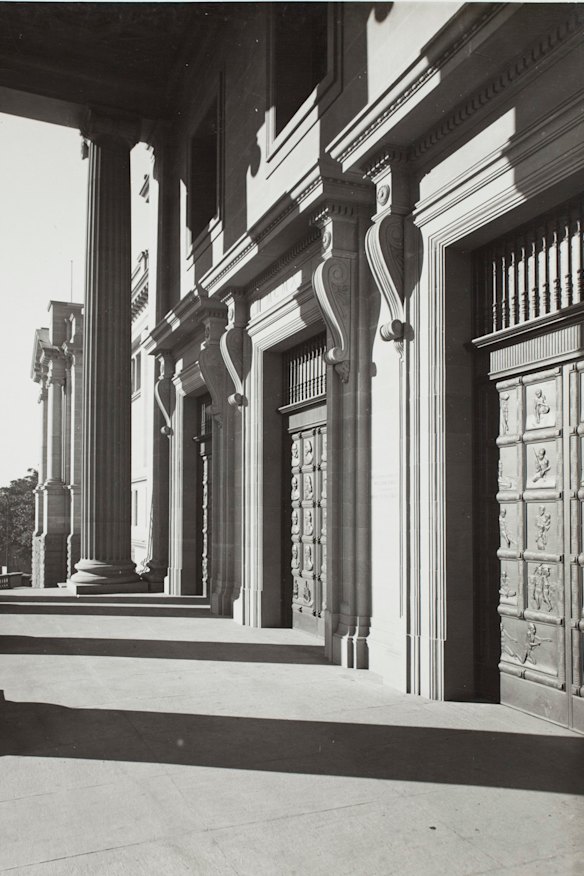
The massive bronze doors guarding the entrance to the State Library’s Mitchell building seem like timeless sentinels of history and culture, yet have only stood since 1942.
Pressed into their metallic surface are dozens of images of Aboriginal people, many drawn from the library’s photographic collections. These figures have silently witnessed millions of visitors passing over the Library’s threshold, but how many have noticed them?
Despite their imposing size and intricate detail, the doors seem to vanish when they are open. They fade into the shadows of the grand entrance hall. This perhaps explains why their complex and troubling history has remained relatively unknown.
My discomfort with the bronze doors as an Aboriginal man has prevented me from engaging with them deeply until now, but in the lead-up to the library’s 200-year anniversary, I began to delve into the stories behind the creation of the doors and the individuals immortalised in bronze.
The Mitchell building’s bronze portico doors were one of many ambitious projects spearheaded by the notoriously zealous William Herbert Ifould, who was principal librarian from 1912 to 1942. Ifould oversaw major renovations during the Second World War of the Public Library’s Mitchell building, which had opened in 1910.
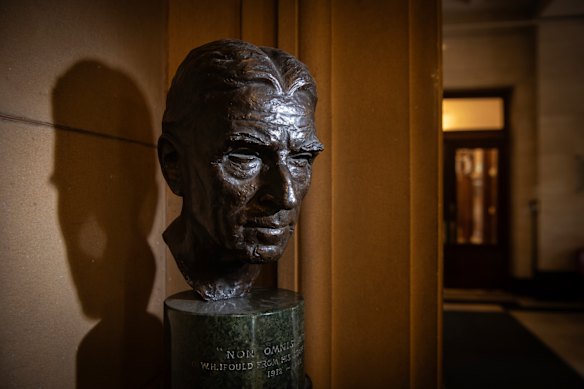
Ifould left an indelible mark on the library, particularly in its layout and design. His involvement in every detail of the building works was remarkable, as were his infamous and public feuds with artists, architects, colleagues and government officials.
In one particularly biting letter, the Minister for Education politely requested that the principal librarian not “hurl too many abstruse Latin phrases at him” if they were to work together and questioned “whether it was by a spirit of diplomacy, (or is it pugnacity?) which characterises your approach to these things?”
As a man of his time, Ifould had an affinity for European culture, history and art. He believed the library’s appearance should echo those grand traditions. Given this preoccupation, it seems a curious anomaly to depict Aboriginal people on the decorative doors.
The Minister for Education politely requested that the principal librarian not “hurl too many abstruse Latin phrases at him”.
Even more intriguing is Ifould’s determination to include them when it was unprecedented to feature images of Aboriginal people on a major public building. One letter to The Daily Telegraph in October 1940 asked, “But why must we have aborigine [sic] figures upon the doors of the new Public library?” The writer suggested “the Governors who brought learning to Australia” would be more appropriate.
Ifould secured funding for the doors in a characteristically unorthodox manner. In July 1934, he invited Sir William Dixson, one of the library’s major benefactors, for a round of golf in the north shore suburb of Killara. After Ifould strategically missed a six-inch putt, Dixson emerged victorious on the green. They had the “usual whisky and soda”, and the principal librarian “took advantage of the opportunity and [Dixson’s] mood to broach the subject [of the portico doors],” he wrote in a report to the library. Dixson readily agreed.
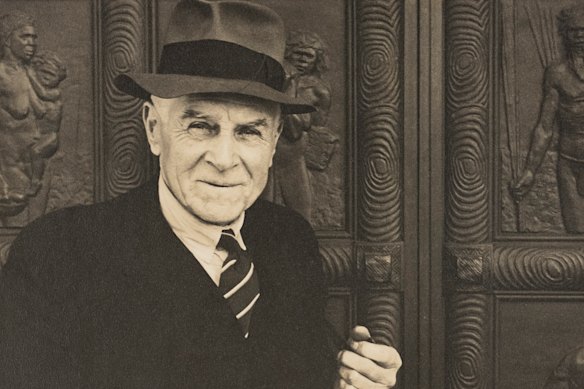
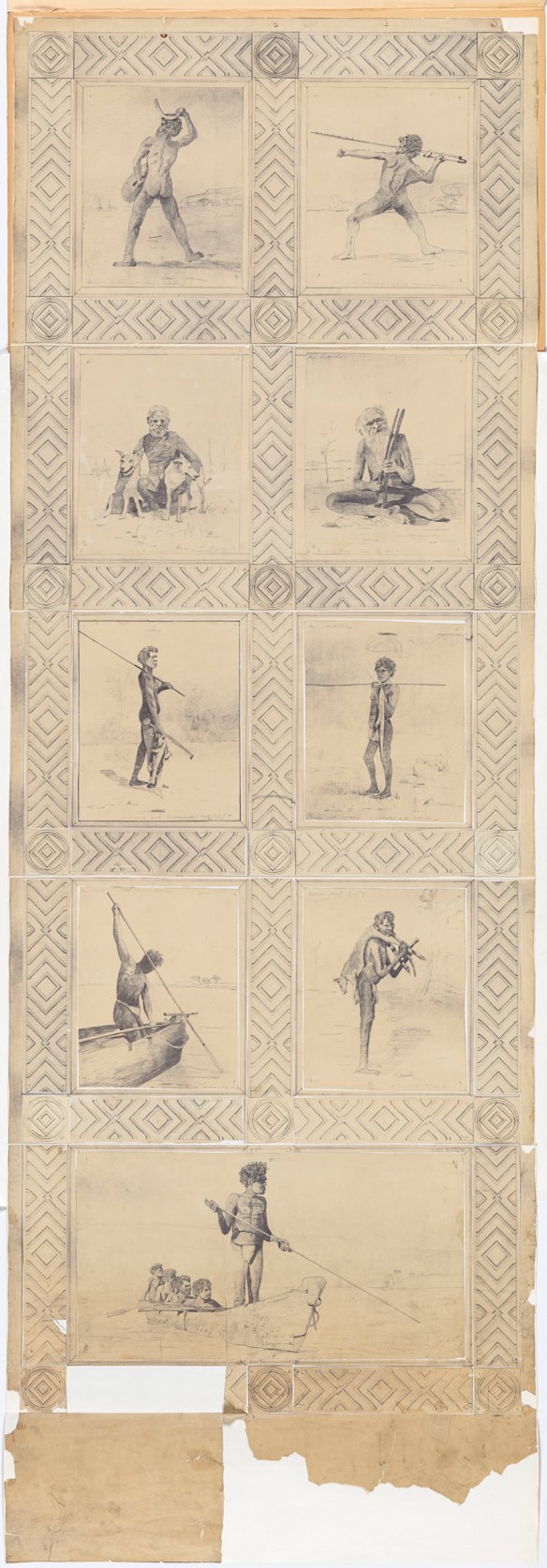
In the initial concept for the Mitchell doors, heroes of “Australian exploratory navigation” were to be depicted with their ships on the central panel. Flanking them on either side would be “allegorical figures, the eastern ones representing the arts of poetry, drama, music and sculpture, and the western ones philosophy, history, science and architecture”.
When – or why – this plan changed isn’t entirely clear, but in August 1939, Dixson approved Ifould’s idea of including Aboriginal people in the designs for the western and eastern doors. “Americans have displayed the American Indian in bronze,” Ifould stated ahead of the building’s opening, “and it is time we did the same for the aboriginal [sic], the most interesting native in the world.”
Wherever possible, Ifould tried to use the library’s collections as the source of images of Aboriginal people to be depicted on the doors. He tasked his crack team of reference librarians, led by Nita Kibble – who in 1899, had become the very first woman employed by the library – with the responsibility of identifying suitable images of Aboriginal people. But he soon broadened his search and made use of his extensive network of contacts within the academic and scientific community. His letters from this period reveal his keen interest in what he perceived as “authentic” Aboriginal culture, with depictions of desert mobs and ceremonial activity taking precedence over Aboriginal people from NSW.
In 1940, an exasperated Ifould wrote to figures including Frank Hurley, Frank Clune, Michael Sawtell and Norman Tindale requesting copies of their photographs or films of Aboriginal people for him to use in the designs.
Ifould’s insistence on excluding images of Aboriginal people from the Sydney region highlights the paternalistic approach to Aboriginal rights so pervasive among non-Aboriginal people at the time. The assumption in letters between Ifould, Clune and others is a common one: that the last of the “real Aborigines” were dying out. Admittedly, they show a discernible sense of grief over this tragedy, but this outrage over our treatment did not extend to empathy for Aboriginal people who were suffering the ongoing traumas of colonisation.
“You must have a large number of photographs of the aborigines in the wild state,” Ifould wrote to the president of the Committee for Aboriginal Citizenship, Michael Sawtell. He asked to borrow them. “Believe me, I am just as anxious as you are to represent the aborigines well … because after all this is the first time the aborigines have been dealt with so fully as sculptural subjects, and it is exceedingly important that we should represent them well whilst avoiding the poor depressed creatures who too frequently have not been assisted by our so-called civilisation.” Ifould reassured Sawtell that the selection of images and depictions was extremely deliberate and focused on “wild” Aboriginal people from outside of NSW.
This omission is particularly jarring when we consider the historical context. In 1938, just a few blocks from the library, Aboriginal activists held the Day of Mourning protest, a powerful demonstration against the injustices and ongoing dispossession they faced. Many other protests and campaigns for land rights and recognition were taking place around Sydney at this time. Pamphlets describing anti-slavery and pro-Aboriginal rights meetings and protests can be found among the letters and plans for the Mitchell doors. Ifould was certainly aware of these events and their organisers. Yet, instead of engaging with the experiences of Aboriginal people in Sydney, he looked further afield, perpetuating a romanticised and ethnographic portrayal of Aboriginal peoples and cultures.
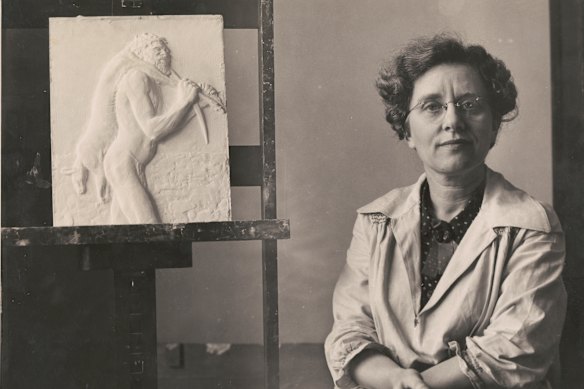
Renowned sculptor Daphne Mayo, one of Australia’s pioneering women artists from the 20th century, was commissioned to create the bronze reliefs for the eastern doors. Correspondence between Mayo and Ifould reveals a terse working relationship, with Ifould frequently demanding changes to Mayo’s designs.
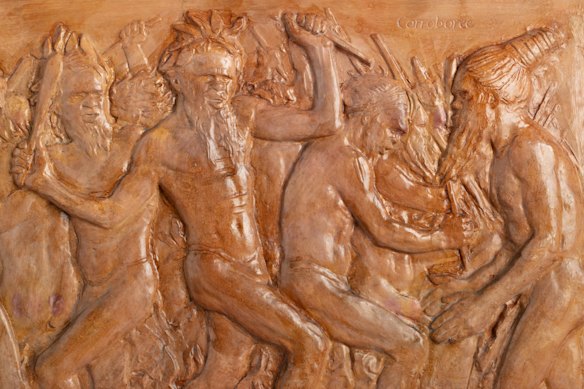
Initially, Mayo had envisioned a more dynamic design, with figures breaking free from the confines of their photographic origins and flowing across the entire surface of the doors. This strange design brings to mind hieroglyphics, and has a curiously prominent palm tree, which is at odds with the central desert cultures depicted in the relief. Ifould quickly rejected her approach, insisting that the reliefs adhere more closely to his chosen photographs. He granted Mayo some creative freedom over the bottom left-hand panel, which depicts a corroboree scene, which raises further questions about authenticity and the potential for cultural appropriation.
Most of the panels on the western doors, also based on photographs supplied by Ifould, were completed by sculptor Ralph T. Walker, with two others contributed by Frank Lynch and JE Lenegen, while Arthur Fleischmann created all of the panels in the central doors that depict European and Anglo explorers and navigators.
Even at the time, anthropologists like Fred McCarthy from the Australian Museum expressed concerns about inaccuracies and misrepresentations in the final reliefs. If these issues were evident in 1942, they should be even more apparent to us today, prompting a critical re-evaluation of the doors and their legacy.
I embarked on a journey to reconstruct the research process behind the creation of the doors. I particularly wanted to find the images that were given to the sculptors for reference. It is perhaps fortunate, though not entirely coincidental, that many of these photographs are part of the State Library’s own collection, acquired long before the doors were conceived.
My search led me to a collection of photographs taken by the South Australian anthropologist Herbert Basedow in the 1920s and 30s that had been acquired by the library in 1934. Taken through an ethnographic lens, at a time before the concept of informed consent existed, these images raise ethical concerns about the exploitation and objectification of Aboriginal subjects. I was acutely aware that these photographs might contain sensitive cultural material, including depictions of sacred ceremonies and rituals. Furthermore, the collection had not been indexed or catalogued with any cultural sensitivity and remained largely as Basedow had described and arranged it, filling me with no small amount of trepidation. With this in mind, I ventured into the library’s stacks, where the Basedow collection was stored in a dimly lit corner. Six folders filled with assorted envelopes and plastic sheets contained the photographs.
By chance, I stumbled upon the first match: a photograph of a young Aboriginal mother, her gaze fixed on the camera, tenderly holding her baby. Taken in 1923, the image exudes a quiet dignity and beauty that is diminished in its bronze translation. The discovery came with a disturbing revelation. Despite Ifould’s claims of seeking authenticity, the picture had been altered to conform to Western notions of modesty. In the final bronze relief, the young mother wears a “pubic cover”, a garment that was not present in the original photograph. Letters reveal discussions between Ifould, Mayo and others about covering the subjects’ genitalia. This act of censorship, however well-intentioned, highlights the biases and paternalistic attitudes that underpinned the project. It is unsettling to remember that when the doors were unveiled in 1942, the baby in this photograph would have just celebrated their 18th birthday.
At this point, the significance of the bronze doors struck me with renewed force. These were not merely symbolic representations or idealised figures; they were recreations of photographs of people who had lived and breathed, who had families and stories of their own. These people had never been consulted about their inclusion in this grand artistic endeavour, nor had they been informed that their images would be immortalised in bronze and displayed for generations to come. It is conceivable that they would have been proud to have their culture and ancestors represented in the design of the library, but the lack of consultation and informed consent casts a long
shadow over this gesture. The central doors, adorned with the names and faces of explorers and prominent figures of European descent, stand in stark contrast to the two flanking sets of doors. In these, real Aboriginal people are depicted anonymously, their individuality subsumed by their activities. It is a clear demarcation between those deemed worthy of recognition and those relegated to the status of mere decoration.
My search led me deeper into the hushed part of the stacks, where the Basedow photographs are housed. I knew the risks. For an Aboriginal person, venturing into these archives is like walking through a minefield. You never know what you might see – what sacred, secret or private knowledge might be exposed, including knowledge that could make you sick if it is seen without the proper authority.
As I sifted through the third folder of images, the connection became undeniable: many of the photographs ... were here.
Even when these types of images aren’t present, the heaviness of reading racist descriptions and poring through the attitudes of the times weighs on you. Processing violent and heartbreaking images takes a toll. The initial thrill of discovery and the knowledge that these folders likely held more matches quickly dissipated. As I sifted through the third folder of images, the connection became undeniable: many of the photographs that inspired Ifould’s bronze reliefs were here. It was equally clear that no Aboriginal hand had guided the curation of this collection. Interspersed with images of young children suffering from leprosy were pictures of opened graves, people’s genitalia (taken for syphilis research), sacred sites and detailed documentation of gendered initiation ceremonies. Privacy, protocol, respect – each was absent. These were not images meant for public consumption, let alone to become permanent fixtures on the front of a building.
The work became slow and agonising as the cumulative weight of the images became heavier and heavier. The dark isolation of the stacks amplified the growing sense of dread, so I began bringing small selections of images into the staff workroom. The following week I had identified three more photographs, and finished reviewing the Basedow collection.
My colleague Melissa Jackson gave me a reprint of Basedow’s 1925 ethnographic monograph, The Australian Aboriginal. It featured many photographs I had already seen in the library collection but reproduced the images with much more cultural context. I matched several more images to the bronze reliefs.
The final image I identified through this work appears in a panel created by sculptor Ralph T. Walker at the bottom right of the western set of doors. From the bronze relief it appears to be three older men squatting and talking, perhaps painting each other for ceremony. Basedow’s photo shows two men, so it would seem that cultural elements of these photographs of deeply private and sacred men’s business have been merged or edited, perhaps in the name of “artistic balance”.
Once I saw the original photograph it was clear that the men are collecting blood to create ceremonial and deeply significant ceremonial tools and items. In most Aboriginal cultural traditions the use of blood in ceremony or law/lore is gendered and highly controlled, belonging to a suite of initiations, milestones and knowledges which are not intended for everyone. Basedow reproduces these images in The Australian Aboriginal and describes it as “ceremonial venesection” – revealing in great detail knowledge which was not his to share.
While it may not be apparent in the final bronze what is being depicted, once you have this knowledge it is difficult to parse. These photographs would not even meet our criteria for being displayed online or in the catalogue, so it is bewildering that they have been imagined into permanent bronze by a white artist for the front door of the building. In fact, I no longer walk through those particular doors with Elders, instead opting for the slightly less problematic doors on the eastern side.
It is clear that something needs to change. At the very least, several of these depictions are not appropriate and violate decades-long best practice around cultural safety and Aboriginal cultural and intellectual property. Does their artistic merit warrant this violation? Is taking them down hiding history rather than facing the truth? Should we celebrate a clumsy attempt at reconciliation from the 1940s? There are no easy answers to these questions and research into the people and communities behind the photographs that inspired these bronze doors is ongoing.
To my mind, the library’s 200 anniversary is a point to stop and reflect. To think about what we have inherited and what we want to pass on. The library is not a passive receptacle for the past but a moving feast of curiosity, bias, power and stories. We must reckon with our role in not simply inheriting the past and its problems, but also our historical and ongoing role in actively supporting incomplete history.
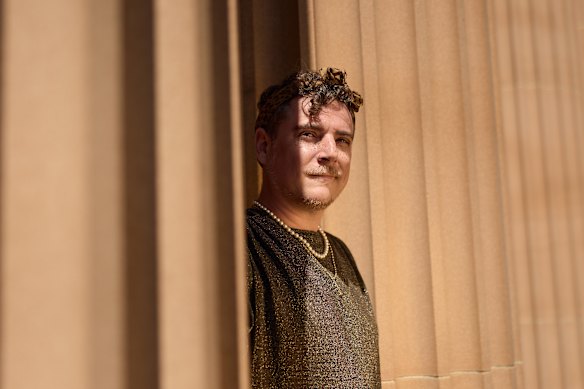
Damien Webb is the manager of the library’s Indigenous Engagement branch.
This is an edited extract of his essay written for The Library That Made Me, published to commemorate the 200th anniversary of State Library of NSW, out now.
All images published in this story have been approved for use by the State Library of NSW.