2 months ago
15
2 months ago
15
Andrew Browne feels fortunate that his pancreatic tumour grew where it did. Perched at the edge of his pancreas, it pressed on his bile duct, causing his skin to turn yellow with jaundice. It was a clue that led to his cancer being spotted in time to give him a good chance of survival. But that’s not a typical story with pancreatic cancer, now the third most common cause of cancer death in Australia.
By the time most pancreatic cancers are found, they’ve already spread.
“Four months earlier, I’d had stomach pains and lost my appetite – it’s possible that these symptoms were early signs too but CT scans came back clear and the doctor diagnosed diverticulitis instead,” says the 47-year-old sales rep from Western Australia. “I’m very lucky – I went on a clinical trial of a drug that boosts the effect of chemotherapy. It’s shrunk the tumour by about 70 per cent and I’m now waiting to have surgery.”
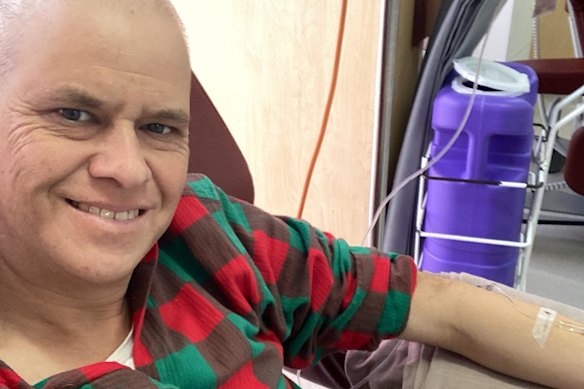
Andrew Brown’s pancreatic cancer was caught in its early stages.
For Alex Neville, a former psychologist from Tasmania, diagnosis wasn’t so simple. When she mentioned symptoms such as erratic periods, heavy bleeding and clotting in 2019 when she was 49, her GP said they were probably due to perimenopause. But when the bleeding lingered, a second GP referred her to a gynaecologist and a biopsy discovered early uterine cancer. It seemed a hysterectomy would be the answer, but after surgery she learned she had a small tumour on her ovary too, and radiation and chemotherapy followed. Then in 2023, tests confirmed the original cancer had spread and was incurable.
Loading
When silent cancers sneak up on younger people
These stories highlighting issues with cancer detection and treatment should grab our attention. Many cancers, including uterine and pancreatic, can be “silent”, sometimes with no obvious symptoms until the disease is advanced – and more of them are appearing in younger people under 50.
With uterine cancer, the fastest growing women’s cancer, there’s a 54 per cent increase in women aged 25 to 34, and a 68 per cent increase in 35 to 44 year-olds according to the Australia New Zealand Gynaecology Oncology Group (ANZGOG), while with pancreatic cancer, now the third leading cause of cancer death in Australia, there’s been a 200 per cent increase in 30 to 39 year-olds between 2000 and 2024 according to Cancer Australia.
“But the awareness of pancreatic cancer is still low even though it’s now classed as a common cancer,” says Michelle Stewart, CEO and executive director of Pankind, which advocates for people with pancreatic cancer and raises funds for research.
Pancreatic and uterine cancers aren’t outliers either. In those same 24 years, there’s been an increase in diagnoses of nine other cancers in 30 to 39-year-olds too – early-onset liver cancer increased by 150 per cent, for example, kidney cancer by 85 per cent, and colon cancer by 173 per cent. Early-onset prostate cancer increased by 500 per cent.

Prostate cancer is the most common cancer among men in Australia and cases are on the rise. The MRI is a useful tool for diagnosing cancer.Credit: Getty Images
In lieu of early detection tests, focus on a cure
Without more reliable tests to find more cancers earlier, the next best thing is a better chance of a cure, which is where molecular profiling comes in, says Professor Clare Scott, Chair of ANZGOG.
“It analyses the genetic make-up of a tumour so it can be matched to the best possible treatment or a clinical trial,” she says. “It can help extend and improve lives in a number of cancers, including some female cancers such as uterine and ovarian cancer. ”
“If I’d had molecular profiling back in 2020, it could have been a different story – they would have known the make-up of the tumours, known I was at a higher risk of it returning. I’d have had more rigorous surveillance. It could even have opened the door to different treatments which might have made all the difference. Instead, by the time the recurrence was found, it was inoperable,” says Alex Neville, who is on trial of a drug combination that has kept her cancer stable for 12 months. “I have a good quality of life and it’s giving me time to do things that are important to me.”
Loading
When Kristin Young from Sydney was diagnosed with ovarian cancer in 2009, it had already reached stage three – and the only clue that something might be wrong were the swollen lymph nodes she’d had in her groin for months. She had surgery and chemotherapy but the cancer returned five years later. But because she carried a variant of the BRCA gene (which ups the risk of ovarian and breast cancer), she was eligible for a new targeted treatment, first only available in clinical trials but now approved to treat women with the right genetic profile.
“I’m living proof that research and clinical trials can make a real difference to women with ovarian cancer,” says Young, also a psychologist.
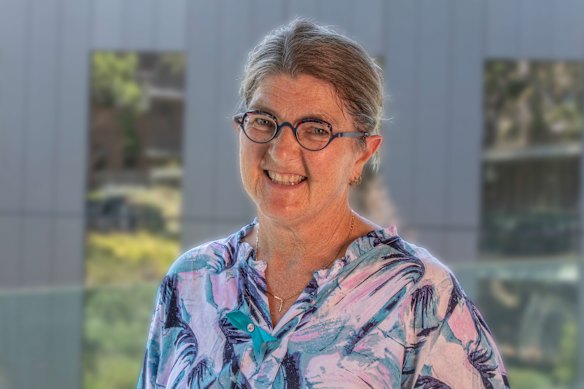
Kristin Young’s ovarian cancer returned after five years but she says she is living proof that molecular profiling works.
Is this normal or the sign of something worrying?
Around 1800 Australian women learn they have ovarian cancer each year, and it’s another “silent” cancer with vague symptoms such as abdominal bloating, abdominal pain, feeling full after eating a small amount, and needing to urinate often or urgently. By the time they’re found, 70 per cent of these cancers have spread. Although, like most cancers, it’s more common in older women, 20 per cent of ovarian cancers occur in women under 50 and 10 per cent in women under 40, according to the Chris O’Brien Lifehouse, the Sydney-based cancer centre.
“It can be difficult for women to know whether what they’re feeling is a sign of something worrying or part of everyday life,” says Ovarian Cancer Australia’s Acting Chief, Support and Advocacy, Bridget Bradhurst. “Even when they see a doctor, the non-specific nature of the symptoms can make it hard to pinpoint ovarian cancer.”
“There’s also a strong narrative with ovarian cancer that doctors are failing women or that women aren’t listening to their bodies,” adds Young. “Anything that conveys blame isn’t helpful – diagnosing this cancer is complicated. It’s deep inside the body and its symptoms can be like a whisper. What we need is a better understanding and that comes through science.”
Seeking early detection and prevention
Most Viewed in Lifestyle
Loading