3 months ago
26
3 months ago
26
Wyatt Thompson was locked out of YouTube once Australia’s landmark under-16s social media ban was activated on December 10, but the 11-year-old from Broken Hill has not been forced offline.
“It hasn’t helped me stop using my electronics … I still use them the same amount, but I just go on to Netflix or listen to stuff on Spotify now,” Wyatt says.
His YouTube account was one of the 4.7 million accounts deactivated by eight tech giants in the purge mandated by the Albanese government a month ago, when Australia became the first nation to ban children under 16 from holding or creating accounts on 10 age-restricted platforms.
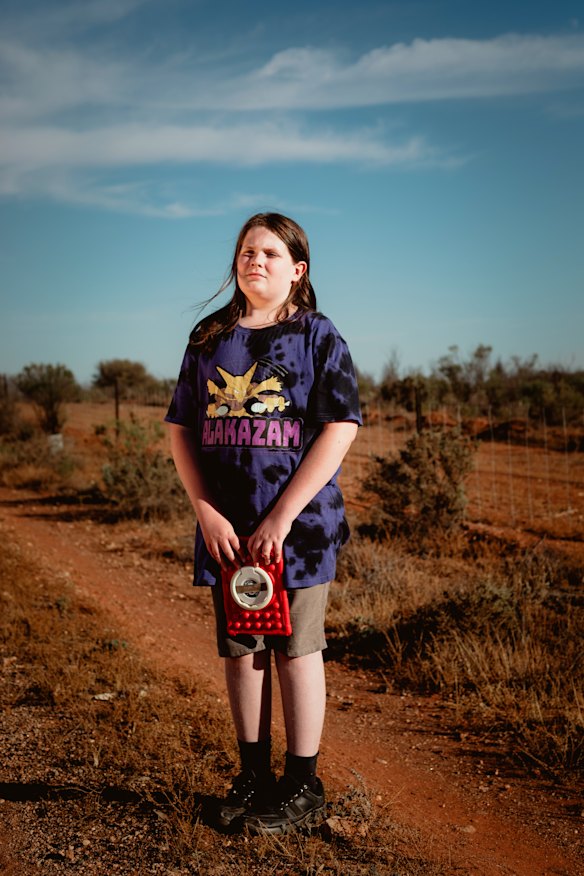
Wyatt Thompson, 11, lives in Broken Hill, and has lost access to YouTube. He says he spends the same amount of time online despite the ban. Credit: Em Jensen
The government’s social media watchdog, eSafety, has declined to release a breakdown of the figures, and only Meta has provided its own numbers: 544,052 accounts on Facebook, Instagram and Threads understood to belong to under 16s were shut down between December 4 and December 11.
Loading
The government estimates that 95 per cent of teens under 16 and 84 per cent of children aged eight to 12 – about 2.3 million users – had accounts in late 2024, and it was common to have logins for several social media sites, so it is not known what proportion of under-age users have been locked out.
“ESafety is aware of reports some under-16 accounts remain active and encourages the public to report them directly to platforms concerned,” an eSafety spokesperson said in a statement. “This will help improve the accuracy and efficacy of their age-assurance tools.”
Prime Minister Anthony Albanese said: “Change doesn’t happen overnight. But these early signs show it’s important we’ve acted to make this change. We want our kids to have a childhood and parents to know we have their backs.”
The rollout of age-assurance measures was always going to be messy, eSafety Commissioner Julie Inman Grant has emphasised repeatedly. On December 10, Inman Grant told Nine’s Today that technology teething issues were anticipated.
Enforcement would “target systemic failures, after rigorous investigation”, an eSafety spokesperson said last week. It is expected that “isolated cases of teenage creativity” will continue to circumvent the ban for a little while.
Loading
“We know there’s more work to do, and the eSafety Commissioner is looking closely at this data to determine what it shows in terms of individual platforms’ compliance,” Communications Minister Anika Wells said in a statement released with the topline figures.
“We’ve said from the beginning that we weren’t expecting perfection straight away – but early figures are showing this law is making a real, meaningful difference.”
Fifteen-year-old Bella, from regional Victoria, had already signed up to Facebook, Instagram and TikTok with a fake age, and was waiting to be sprung.
“I was just going to wait and see what happened and see if I needed to do any workarounds. But … I was never kicked off,” she said.
Bella withheld her surname from this story, worried her accounts would be deactivated. She communicates with her close friends through text messages, but some of her wider circle have had their social media accounts deactivated. She doesn’t have their phone numbers, so they’ve lost contact.
Fourteen-year-old Elliott, from Sydney, was kicked off Snapchat on December 10. Most of his friends aged under 16, he claims, weren’t asked by the platform to verify their age. They could still access it, and all the group chats he was booted from.
“It’s harder to make plans to go out with other friends that you don’t have their numbers,” Elliott said. Though, he did start to spend more time outdoors, fishing and hanging out with the close friends whose phone numbers he did have.
After a month, he claims, he was able to sign up to Snapchat again with a new email address.
Platforms included in Australia’s under-16s social media ban
- Meta: Facebook, Instagram, Threads
- Google: YouTube
- Kick
- Snapchat
- TikTok
- Twitch
- X (formerly Twitter)
In early December, Melbourne mother Michelle Stamper discovered a “flurry of activity” during a routine check of her 13-year-old’s text messages: teens sending their phone numbers to one another for the first time.
But, as it turns out, Stamper’s daughter and her friends did not need to exchange numbers. Many of them fooled Snapchat’s facial age estimation scans – an age-assurance method known to be faulty – and could still use the popular platform.
Stamper is annoyed that she had been obliged to report her daughter’s still-live account to Snapchat, which deactivated the account weeks later after it was contacted by this masthead. (Stamper says her daughter was back on the platform within 24 hours.)
“I’m miffed,” she says. “I was relying on the government to clean it up for the kids.”
If you or anyone you know needs support, call Lifeline on 13 11 14, Beyond Blue on 1800 512 348, Kids Helpline on 1800 55 1800.
Start the day with a summary of the day’s most important and interesting stories, analysis and insights. Sign up for our Morning Edition newsletter.
Most Viewed in Politics
Loading