3 months ago
17
3 months ago
17
For your instructions on ragu alla Bolognese, you just have to consider the name. This is ragu in the style of Bologna. The place to order this dish, therefore, is Bologna.
If you decide to eat ragu alla Bolognese elsewhere in Italy, particularly outside the region of Emilia-Romagna, you will not be getting the best.
You will probably be getting food that has been created with tourists in mind, cooked by people with little connection to the dish.
Bolognese is an interesting one: a dish that has gone global, available basically everywhere, and yet one that is particular to a certain city, and in Italy at least, that’s the only place you should eat it.
It’s not a national dish. It’s a city’s dish. And it’s not the only one. Around the world, you will find dishes that might be well known but which hail from one certain place, and it’s that one place you will need to visit to try it.
You have to eat tacos al pastor in Mexico City; you have to sample bunny chow in Durban; you must eat vada pav in Mumbai.
These dishes are specific to their place of origin, and they’re also deeply loved and fiercely protected. They don’t form part of a national culinary identity, but rather that of one small place, and the locals will be only too happy to let you know it.
If you love food, and you want to taste iconic, city-specific dishes in the right place, then these are your new dream destinations. (You can also add Bologna.)
Pasta carbonara… Rome, Italy
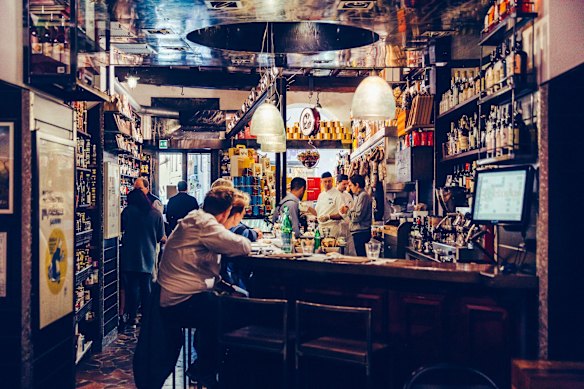
The backstory There’s some argument over the history of this much-loved dish. Was carbonara created by an Italian chef during World War II to feed US troops? Maybe. Or was it – more likely – the natural meeting of two established Roman dishes, gricia (pasta with guanciale and cheese) and cacio e uova (pasta with cheese and egg)? Whatever the truth, carbonara was popularised in the mid-20th century, and most agree it took place in Rome.
Why try it There are four quintessential Roman pasta dishes – cacio e pepe, gricia, amatriciana and carbonara – and this is arguably the best. To eat carbonara in Rome is to dine at a typical trattoria surrounded by local people. The perfect deep-dive.
Where to eat it Though it’s become extremely popular, Salumeria Roscioli (salumeriaroscioli.com) still does one of Rome’s best carbonaras.
Vada pav… Mumbai, India
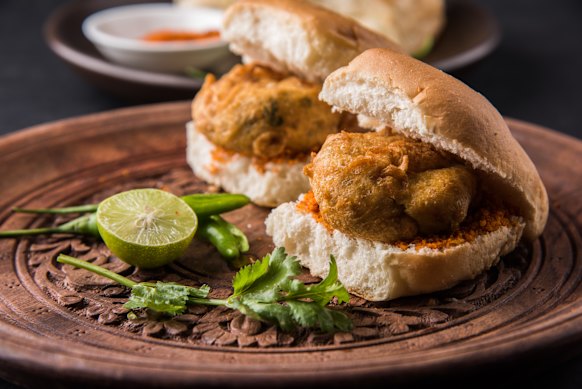
The backstory Here is another glorious meeting of cultures and flavours. Vada pav is a classic Mumbai street food snack, a bread roll filled with deep-fried, spiced mashed potatoes, topped with chutney and a green chilli. Vada pav originated in central Mumbai around the 1960s, when it became a popular snack for the working class. The cultural blend comes from the use of the bread roll (the “pav”), which was taken from Portuguese colonists (whose bread was “pao”). The idea was that, unlike a chapatti, the bread roll would make the snack easy to eat on the go.
Why try it Mumbai has more than 20,000 vada pav vendors, such is its popularity. It’s also incredibly tasty and cheap.
Where to eat it Just outside Mumbai’s main railway station, the historic Chhatrapati Shivaji Terminus, Aram Vada Pav is justifiably famous (no website).
The Reuben… New York City, US
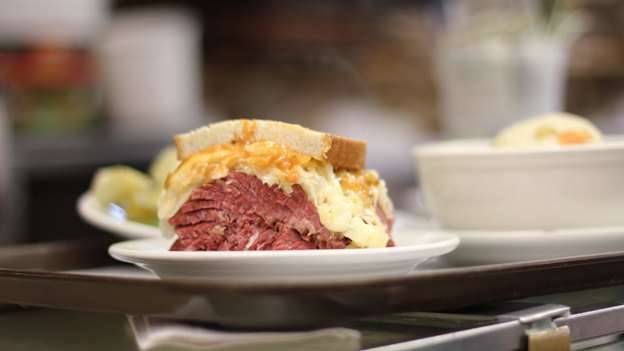
The backstory There are a few strange things to consider when it comes to New York’s famous Reuben. One, is it even New York’s? Because although this sandwich is associated with and cherished by those in New York, there’s a claim the Reuben was invented in Nebraska. And though most agree the Reuben was created by the Jewish-American diaspora, this sandwich of corned beef, sauerkraut, Swiss cheese and Thousand Island dressing is not Kosher, as it mixes meat with dairy.
Why try it Have you even been to New York if you haven’t feasted on a classic Reuben? This sandwich is an icon, and you can’t say that for many dishes.
Where to eat it It’s incredibly busy, it’s touristy, and some would say its sandwiches aren’t even that good. But Katz’s Deli (katzsdelicatessen.com) is a must-try.
Soup curry… Sapporo, Japan
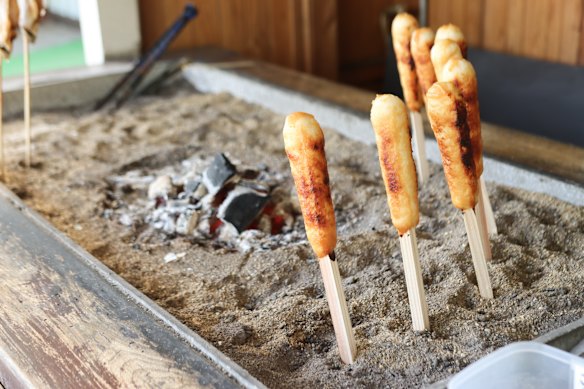
The backstory Japan is a wonderland for city-specific cuisine. Check out okonomiyaki (distinct versions from Osaka and Hiroshima), kiritanpo in Akita, and regional ramen variations. In Sapporo, you have soup curry, a variation of Japanese-style curry, this one served as a thin broth packed with vegetables, plus chicken, with a bowl of rice on the side. Soup curry was invented in the early 1970s, an adaptation of ideas from across Asia, and one that works perfectly as a warming antidote to Sapporo’s winters.
Why try it When it’s cold outside – and even when it’s not – this is the meal you want, a pleasantly spicy, filling, vegetable-rich dish that will have you ready to take on the world.
Where to eat it The classic Sapporo restaurant is definitely Soup Curry Garaku (s-garaku.com), which is deserving of its popularity.
Zanzibar pizza… Zanzibar, Tanzania
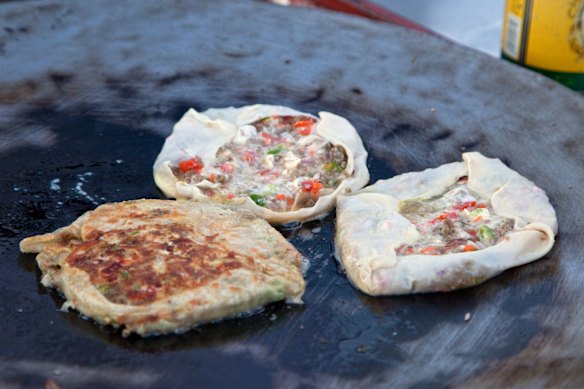
The backstory Consider the history of Zanzibar, and the cultural melange that is its pizza becomes easier to understand. This island, off the coast of Tanzania, has been settled by Swahili people, colonised by the Portuguese, ruled by the Sultanate of Oman, settled by Indians, and conquered by the British. Today in its capital, Stone Town, locals sell pizza that is not pizza at all. This dish begins with a thin dough similar to Indian murtabak, topped with minced meat, onions, capsicum, tomatoes and Laughing Cow cheese. An egg is cracked over the top, then it’s folded and fried on a griddle.
Why try it On a sultry night in Stone Town, there’s nothing better than wandering through Forodhani Night Market and settling down with a fresh Zanzibar pizza.
Where to eat it As mentioned, Forodhani Night Market (zanzibar.com), on the waterfront, is the place to be.
Gilda… San Sebastian, Spain
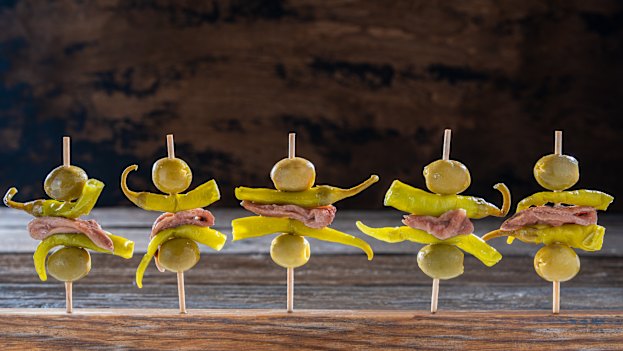
The backstory Legend has it that this simple but perfect skewer of salt-cured anchovy, green olive and guindilla pepper was invented in the 1940s by a patron at Bar Casa Valles in San Sebastian. That hungry customer grabbed a toothpick, leaned over the bar and jabbed the three ingredients he was closest to. The owners of the bar, meanwhile – brothers Blas and Antxon Valles – claim the invention was theirs. The name relates to American actor Rita Hayworth, whose 1946 film Gilda made her, too, seem a little spicy.
Why try it This is a perfect snack, spicy, salty and briny, not too filling, and works perfectly with any drink. The Gilda has gone global now, but there’s nothing to compare to the original.
Where to eat it Bar Casa Valles (barvalles.com) still operates, about a 10-minute walk south of the Old Town.
Calcots… Barcelona, Spain
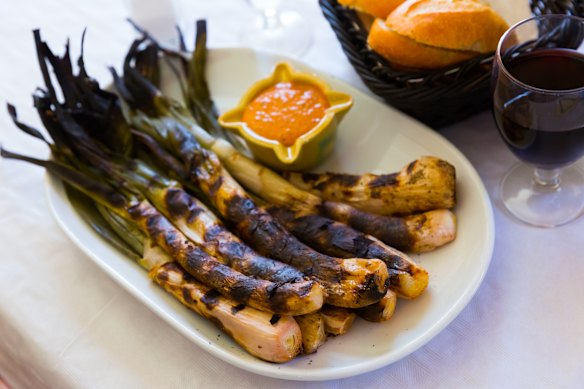
The backstory This dish is not only limited to one region, Catalonia, but also to one season, winter, when calcots are ready to harvest. A calcot is a long, sweet onion that legend has it was first cultivated by farmer Xat de Benaiges in the town of Valls around the early 20th century. Calcots now are eaten at calcotadas, day-long celebrations where the onions are roasted over vine wood, then steamed in newspaper, and served with a nutty salbitxada sauce.
Why try it A calcotada is one of the great culinary celebrations of the world, a richly cherished tradition that involves a lot of eating, drinking and socialising. If you’re in Catalonia at the right time of year you should not miss this.
Where to eat it Though plenty of restaurants in Barcelona serve calcots, for the true experience, get outside the city to a dedicated restaurant such as Cal Ganxo (calganxo.com).
Tacos al pastor… Mexico City, Mexico
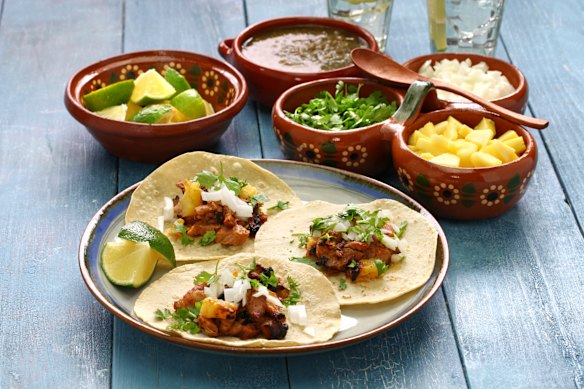
The backstory Take one look at tacos al pastor being made, and you will get an inkling of its history. It’s the upright spit that all the meat is loaded onto, as it would be for a Lebanese shawarma. Mexico City’s favourite taco is a fusion, influenced by Lebanese migrants who arrived around the late-19th century. The mix of Middle Eastern cooking techniques and Mexican flavours proved a hit, and though the dish is now available in much of the country, in Mexico City it’s an obsession.
Why try it For the blend of cultures and traditions; even though, when you’re tucking into a sweet, spicy, porky taco, they will be the last thing on your mind.
Where to eat it Pretty much every taqueria in Mexico City serves this staple, but you will find some of the best at Tacos los Gueros (no website).
Bunny chow… Durban, South Africa
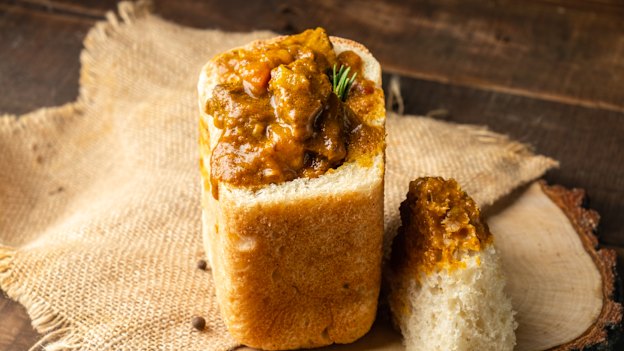
The backstory There’s precious little bunny chow in Cape Town, almost none in Johannesburg. Those cities don’t have the same history of migration as Durban, the coastal metropolis with a huge Indian diaspora, and consequently some interesting takes on cuisine. The best of those is bunny chow, a simple idea but a great one, in which a loaf of white bread is hollowed out and filled with curry. This dish originated in the 1940s, when Indian workers invented a simple and filling way to carry their lunches.
Why try it Because it’s so good. It will also leave you wondering, as you tear off pieces of bread and wrap them around hunks of spiced meat, why this hasn’t caught on globally.
Where to eat it In Durban’s Glenwood neighbourhood, Canecutters (canecutters.com) does an excellent bunny chow, while its name pays homage to those original workers.
Cassoulet… Toulouse, France
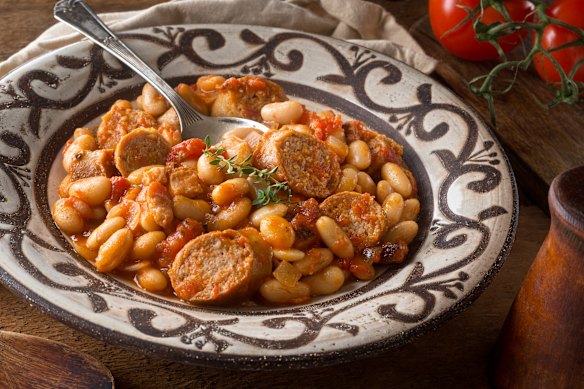
The backstory There’s a great story about the creation of cassoulet, which probably isn’t true. This hearty stew from the Languedoc region was supposed to have been invented in 1355 by French troops under siege by the English in Castelnaudary. Great story, except white beans, a key component, hadn’t been introduced to France from the Americas by then. What’s more likely is that this dish evolved over centuries, born in peasant kitchens and making its way onto restaurant tables. In Toulouse, a classic cassoulet has duck confit, Toulouse sausage and a crust of breadcrumbs.
Why try it Cassoulet in Toulouse is a thing of beauty, a hearty, delicious meal that pairs perfectly with a Languedoc red.
Where to eat it Toulouse has no shortage of restaurants serving the city’s famous dish. Our pick is Le Genty Magre (legentymagre.com).
Conti roll… Perth, Australia
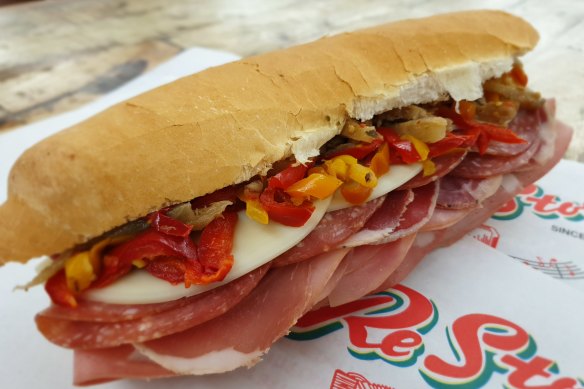
The backstory Try to order a conti roll in Brisbane and see what happens. Or try it in Sydney, Melbourne, Adelaide or Darwin: no one will have any idea what you’re talking about. That’s because this is a distinctly Perth dish. In the 1950s, two Perth grocery stores run by Italian migrants – The Re Store, and Di Chiera Brothers – began selling bread rolls packed with “continental” ingredients such as deli meats, cheese and preserved vegetables. And the continental, or conti, roll was born.
Why try it Australia offers few opportunities to sample truly regional cuisine, which makes the conti roll a cultural quirk worth experiencing.
Where to eat it You can still grab an original conti roll from the Re Store (the-re-store.com.au), open since 1936.
Chorrillana… Valparaiso, Chile
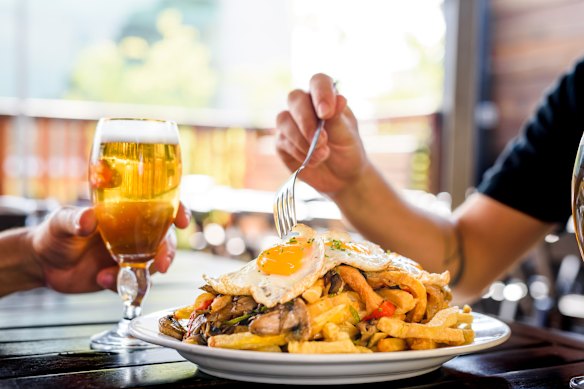
The backstory This is a dish designed to fill stomachs, not win awards. Born in the colourful port city of Valparaiso, chorrillana is named after the Peruvian town of Chorrillos – either, as Chileans say, in honour of troops who fought there in 1881, or, as Peruvians say, because they stole the idea there. Anyway, the dish is a heaving beast of fried potatoes topped with shredded meat and sometimes sausage, plus gravy and a fried egg.
Why try it You’re hungry and want to eat something local. You don’t want to spend much money. Chorrillana is your friend.
Where to eat it Restaurante J Cruz M (jcruz.cl) is a character-filled diner in central Valparaiso, its walls lined with memorabilia and its owner prone to picking up the guitar and strumming folk songs while everyone else eats.
Arroz con pato… Chiclayo, Peru
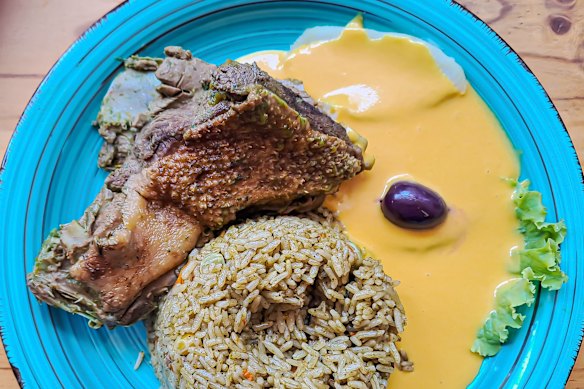
The backstory Here again we have a glorious meeting of outside influences and local ingredients. Arroz con pato is Spanish for “rice with duck”, and its home is Chiclayo, a city of about 800,000 people on the northern coast of Peru. That rice was popularised by Chinese migrants, who spawned an entire “chifa” cuisine featuring many rice-heavy dishes. One of those emerged in Chiclayo, where local duck was macerated in garlic and vinegar and confited, then placed atop rice cooked with aji amarillo (yellow chillies), Peruvian squash and dark beer.
Why try it Though this dish is available in some “nortena” restaurants around Peru, the best versions are served in Chiclayo.
Where to eat it Head to Restaurante Fiesta (restaurantefiestagourmet.com) for a reliably great arroz con pato in Chiclayo.
Xiao long bao… Shanghai, China
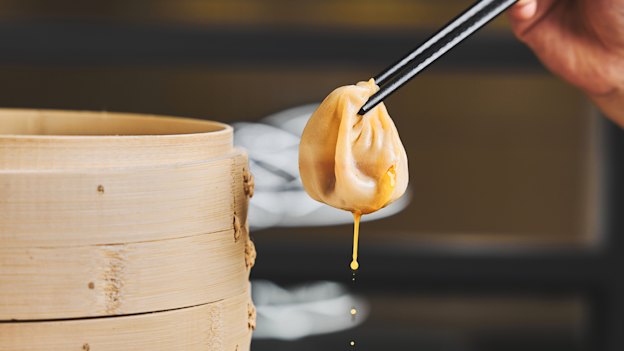
The backstory The fame of these soupy dumplings may have spread around the world, but xiao long bao are distinctive to Shanghai. There are multiple stories to their creation: one has it that xiao long bao were invented in the Shanghai district of Nanxiang in the 1870s by Huang Mingxian; another legend claims Emperor Qianlong, who died in 1799, discovered the dumplings in Wuxi. Cookbook author Fuchsia Dunlop says XLBs were developed by shops around Nanxiang’s Guyi Gardens. You can take whichever story you like, as long as you’re heading to Shanghai for a feast.
Why try it There’s a good chance you have tried xiao long bao before. However, nothing compares with sampling them in their homeland.
Where to eat it In Shanghai, check out Jia Jia Tang Bao, which is a chain store but still does exceptionally good dumplings (no website).
Origins unknown: five disputed dishes from around the world
Baklava
Depending on who you talk to, baklava – layered pastry with nuts and sweet syrup – either came from Mesopotamia almost 5000 years ago, the Assyrian Empire about 3000 years ago, Ancient Greece or the Roman Empire about 2000 years ago, from a Persian recipe 1000 years ago, or was first served during the Ottoman Empire, 500 or so years ago. Simple, huh?
Arepas
We have the history of arepas – grilled corn-dough flatbreads – down to two possible countries: Ecuador or Colombia. Both are fierce in their claim for this dish, and both have evidence of corn production from about 3000 years ago. But there’s no winner, as it is likely that this dish was developed in the mountains shared by Ecuador and Colombia in a time before national borders were drawn.
Hummus
This is another ancient dish with a murky history that pre-dates modern borders. This chickpea and tahini dip is first mentioned in a Syrian cookbook, closely followed by one in Egypt. However, hummus also has deep roots in Lebanon, Jordan and Palestine. It’s also consumed in Turkey and Greece. Shall we just say the Middle East?
Falafel
This cherished dish, fried balls of chickpeas or fava beans, is claimed by Egypt as a recipe that might even go back to the days of the pharaohs. And though that long history might be disputed, most people agree this dish is Egyptian in origin. There is a claim, however, that falafel was developed separately in regions of the Levant.
Pavlova
We know Kiwis love to claim inventions when they have no right to. Don’t forget the flat white, which New Zealanders claim they created, even though that was almost certainly done in Sydney. And then there’s pavlova, which Kiwis lay a more believable claim to. Australians also consider this a national dish. And, awkwardly, there’s evidence that one or both countries just knocked off a recipe from Austria.