2 months ago
20
2 months ago
20
Banks, insurance companies and miners are tipped to be among key winners on the ASX if the Reserve Bank raises official interest rates next year, a scenario money markets have priced in after higher-than-expected inflation figures.
As the Reserve Bank prepares to hold its final board meeting of 2025 on Tuesday, markets are predicting the current cash rate of 3.6 per cent will not change this year, with some betting on an increase in rates in 2026.
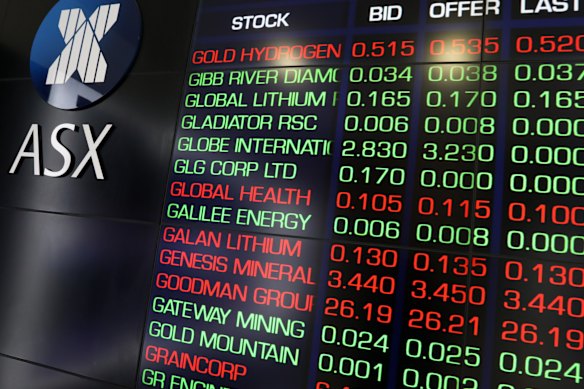
Markets are predicting the current cash rate of 3.6 per cent will not change this year.Credit: Getty Images
Experts said that any such increase in interest rates could help to widen banks’ profit margins, while insurance companies also tend to make higher returns from their investment portfolios when interest rates rise.
Miners could also be viewed more favourably in an environment of rising rates, market watchers said, while adding that real estate stocks and infrastructure were more likely to struggle.
Michael McCarthy, a market strategist at online share trading platform Moomoo, said he thought interest rates would be kept on hold on Tuesday and rise early in the new year, and that banks and companies with lower debt or clean balance sheets would be best positioned.
Loading
“The political environment at the moment may not be conducive to it, but banks are the traditional beneficiaries of interest rate movements because they give them an opportunity to increase their margins,” he said.
Meanwhile, companies that tend to rely on more borrowing, such as those in infrastructure and real estate investment trusts, will probably feel the squeeze as interest rates rise or stay higher, McCarthy said.
Financial markets have priced in one RBA rate rise over 2026 after the monthly consumer price index showed inflation rose to 3.8 per cent in the year to October, up from 3.6 per cent in September. The RBA targets inflation of 2 to 3 per cent, and various bank economists have recently changed their forecasts, no longer predicting cuts from the RBA.
Atlas Funds Management chief investment officer Hugh Dive said banks and insurers generally did well when interest rates rose, while listed property trusts tended to suffer when rates rose because of their high gearing. “Generally, the banks do OK in a rising rate environment,” Dive said, though he added that he expected rates to stay flat, rather than rise, next year.
While markets generally view interest rate hikes as bad news for shares, UBS strategist Richard Schellbach said the prospect of higher interest rates was not necessarily a negative because it was an indication that the economy was stronger than expected.

Experts say that any increase in interest rates would help widen the profit margins of our banks.Credit: Dominic Lorrimer
Schellbach said there could be a period of policy “divergence” between the RBA and the US Federal Reserve, which is expected to cut rates further, and this could be good news for the Aussie dollar.
“Periods of a strong Aussie dollar have historically been associated with periods of strong Aussie equity market performance,” he said.
Schellbach said a higher Aussie dollar was often correlated with strong performances by commodity prices, and a “risk-on-global growth environment” that was also good news for miners. He said that corporate profit margins also had room to expand when the Aussie dollar was rising because most companies’ import costs were in US dollars.
Loading
Shaw and Partners senior investment adviser Craig Sidney also said that relative interest rates – especially differences between Australian and US interest rates – could play a big part in market movements.
“The expectation is for Australian interest rates to stay on hold and rise in the second half of next year, while US interest rates are expected to be cut,” he said. “That would put more upward pressure on the Australian dollar.”
Sidney said that this would put healthcare firms such as Resmed and CSL – which make large portions of their earnings in US dollars – and companies such as QBE with investments in US bonds, under more pressure.
On the other hand, Sidney said that many resources stocks, including mining giant BHP, were likely to benefit, and that coal companies such as Whitehaven may gain momentum after having been out of favour for some time.
The Business Briefing newsletter delivers major stories, exclusive coverage and expert opinion. Sign up to get it every weekday morning.
Most Viewed in Business
Loading