3 months ago
7
3 months ago
7
Kellie Richardson knows the value of maintaining a good relationship with her teenage children.
The Melbourne mum of three including Bailey, 20, Oliver, 17, and Abigail, 15, says being in tune with her children’s emotions is critical to her positive relationship with them.
“Working out and reading my children to see where they’re at emotionally and mentally is really important,” she says. “At night-time, I go in and sit on their bed and talk to them, or talk to my daughter in the car after school, where she debriefs about her day.”
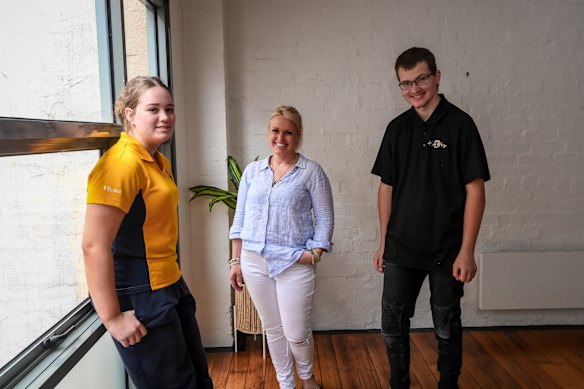
Kellie Richardson (centre) says good communication is key to strong relationships with her daughter, Abigail, and son, Bailey.Credit: Justin McManus
Teenagers are notorious for pushing parental buttons but can your parenting style actually influence your teen? A new Australian study says it does – it can even change their brain.
The Tuning into Teens’ Brains (TINT-B) Study found that the eight-week parenting program of the same name, aimed at helping teens regulate emotions, has been linked to changes in the way a teen’s brain functions.
“The transition from childhood to adolescence is a time when many young people experience more frequent and intense feelings of depression and anxiety, what we call ‘internalising symptoms’,” says PhD candidate and project manager of the study, Sylvia Lin.
“In this study, we aimed to examine whether parents can help reduce internalising symptoms in their teens.”
Brain changing
The randomised controlled trial involved 70 mothers and their daughters, with half participating in a program that focuses on strengthening the emotional connection between parents and their teenage children, while the other half did not.
Teens completed magnetic resonance imaging at the start of the study and again six months later.
“We found that teens whose mothers took part in the program showed a decreased activation in the ventrolateral prefrontal cortex when they were asked to regulate emotions in the MRI, while the other group did not,” explains Lin.
“Importantly, this decreased brain activity was associated with a reduction of internalising symptoms [symptoms of depression and anxiety, as well as somatic complaints including headaches, stomach pains and fatigue], suggesting that the parenting intervention can lead to adaptive changes in teens’ brains.”
Lin says the results show that parenting naturally influences brain function, and that parents recognising emotions in their teens, viewing them as opportunities to connect, as well as accepting, validating, and helping them label emotions effectively, is key to building a strong relationship with your teenager.
Loading
While the teenage years can see kids wanting more independence from their families, Raising Children Network director Derek McCormack says teens need parent and family support as much as they did when they were younger.
“Parents remain a source of care, emotional support, security and safety for teens, as well as practical and financial help, [and] teens still want parents to be involved in their life – even though their attitude or behaviour might sometimes send a different message.”
And key to this is communication, says Christabel Walkley, parent coach team leader at ReachOut.
“A great place to start when building a strong relationship with your teen is open communication on an ongoing basis,” she says.
“This can help your teen feel heard and also help them to feel safe to open up to you when they need support.”
Walkley says that this can often be best undertaken in casual settings like car rides or doing something together, such as cooking, because these settings help them feel more comfortable and at ease.
Additionally, being non-judgmental is also important.
Loading
“Taking a curious and non-judgemental approach to conversations can increase your teens’ feeling of safety in these conversations, which may mean they open up to you more often,” Walkley says.
Mum Kellie Richardson agrees.
“I think that you’ve got to have a very open mind,” she says. “Yes, there are a lot of things that they will tell you that will shock the absolute daylights out of you, and you wish you had never known. But I think you’ve just got to have a very open mind, be quite understanding, nurturing and also guide them to make positive choices.”
For Richardson’s daughter, Abigail, her mum’s non-judgmental approach makes her feel comfortable sharing what is happening in her life.
“She’s very loving and understanding. She’s the first person I ring or message,” Abigail says.
“I tell her everything that is happening at school, cheerleading and in my friendship groups. We talk all the time, and I tell her everything that I’m feeling because she listens to what I have to say and doesn’t judge.”
Abigail says that her mum validating her emotions and supporting her helps her problem-solve any issues occurring in her life.
“My mum helps me with any concerns and problems I have. She gives me advice and helps me to have the confidence to say something if I’m not happy.”

Teens whose mothers participated in the study were better able to regulate their emotions, including internalised symptoms such as anxiety and depression.Credit: iStock
This approach can be especially helpful to support teens as they go through some of the common challenges inherent to the stage of life, like friendship issues, romantic relationships, curfews and screen time, says Dr Luke Martin, clinical spokesperson for Beyond Blue.
Martin also says that as a parent, having a grasp of your own emotions through these sometimes tension-filled times is important.
“These are the spots where a teen’s need for independence can clash with a parent’s instinct to keep them safe,” he explains. “It’s tricky territory, but the first step is to regulate your own emotions before you respond. When you’re calm, you can approach with curiosity instead of control – and that changes the whole tone of the interaction.”
Loading
While Richardson says there haven’t been too many major challenges she has had to help her teens overcome, she is confident that because of how strong her relationships are with her three kids, they can overcome anything.
“I always say to my kids, we’re in this together. No matter what, I’m always going to be your mum and I’m always going to be there for you.”
Make the most of your health, relationships, fitness and nutrition with our Live Well newsletter. Get it in your inbox every Monday.
Most Viewed in Lifestyle
Loading