3 months ago
17
3 months ago
17
The WA government is asking whether cannabis should be legalised. Will it listen?
The West Australian government’s Mental Health Commission is surveying people on whether they would like to see cannabis legalised.
The commission asked the question as part of its 2025’s Drug Attitudes survey, which collects information on West Australians categorise their drug use, their drugs of choice and the availability of help services.
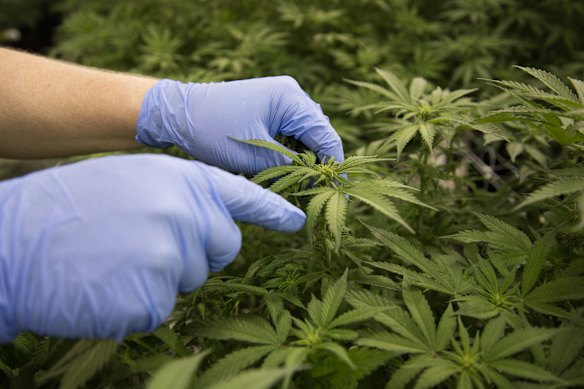
There have been big developments in the medicinal cannabis space since it was legalised in Australia in 2016.Credit: Marta Pascual Juanola
In it, the commission explicitly asked those taking the survey whether they believe cannabis should be legalised, if pill-testing should be adopted, and if safe-injecting services should be widened.
And while it’s not the first time the question has been asked of taxpayers, there has been a marked shift in sentiment around its legalisation in recent years.
In the United States, 49 states and three US territories have legalised cannabis recreationally, and closer to home, and the Australian Greens continue to push for legalisation.
Loading
In March, independent costings found legalising recreational cannabis could generate $700 million annually for the Australian economy.
However, the Greens policy continues to be voted down by the two major parties.
A spokeswoman for the Mental Health Commission said the research was part of determining what WA’s broader community needed.
“To inform this work, the Mental Health Commission conducts research to provide a regular measure of knowledge, beliefs, attitudes, intentions and behaviours in relation to alcohol and other drug-use among Western Australians,” she said.
“The Drug Attitudes Survey asks participants to indicate the extent to which they agree or disagree with a range of policy measures aimed at reducing harm from drugs.”
She said the commission has previously asked whether West Australians would be open to legalising cannabis.
“Questions assessing the level of public support or opposition to examples of national and international policy measures regarding cannabis and other drugs are included in previous iterations of the survey,” the spokeswoman said.
“Survey responses help inform the Mental Health Commission’s work by tracking population-wide changes in key indicators, emerging issues and guiding the development of government programs, and public education initiatives.”
Despite being one of the most commonly used drugs in the country, cannabis was ultimately made illegal in the 1950s, and states worked to criminalise drug possession throughout the 1970s.

Brian Walker, West Australian MP for Legalise Cannabis.
However, in 2016, the federal parliament passed new laws to legalise medical cannabis products.
WA’s Legalise Cannabis Party’s Dr Brian Walker said despite the commission repeatedly asking West Australians how they felt about drug legalisation, it rarely listened to the outcomes.
“The reality is that public consultation on drug laws in Western Australia is largely performative,” Walker said.
“While the Mental Health Commission garners valuable community insights, real legislative progress on issues like cannabis has lagged badly behind public sentiment.
“Despite recurring survey results and national data showing rising support for cannabis decriminalisation and legalisation, including as much as 80 per cent support for law reform in some polls, WA’s laws remain among the most punitive in the country.”
According to the National Drug Strategy Household Survey 2022–2023, about 83 per cent of WA locals said possessing or using cannabis for personal use should not be a criminal offence.
About half said it should be legalised, which is a 15 per cent jump from the 2010 survey.
Walker said the current policy around drug use in WA was out of step with what residents have repeatedly told the state government.
“The government has shown a shameful disregard for its own citizens’ views, with drug policies that remain rooted in fear, stigma and outdated ideology, not in consultation, science or common sense,” he said.
Loading
“If government ignores the overwhelming feedback, especially regarding cannabis, the process risks being little more than a box-ticking exercise.
“Western Australians have spoken through surveys, petitions and through the ballot box: public opinion supports reform.
“Until meaningful change follows, asking the public without acting, risks breeding cynicism and undermining trust.”
Most Viewed in National
Loading