3 months ago
49
3 months ago
49
In NSW, Law 101 rolls along something like this. Imagine a rugby league competition where the head coaches make up the rules, appoint the referees, preside with authority in the video bunker and also sit on the judiciary to pass judgment on all misconduct cases.
There’d be nothing at all improper about that, would there? Yeah, nah.
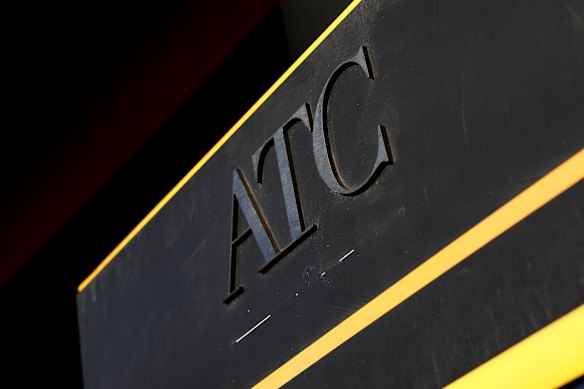
The Australian Turf Club runs Sydney’s four major racetracks.Credit: Sam Mooy
Because what I’ve described is precisely what the doctrine of the separation of powers exists to prevent. Not in the sporting sense, but in the far weightier theatre of democratic governance.
Law doesn’t just arrive like a genie from a bottle. The legislature crafts the laws and enacts them. The executive arm of government administers those laws. The courts interpret them and make orders concerning those laws.
Nobody is supposed to don multiple hats.
In Australia, the separation is only partially entrenched. The legislative and executive arms remain inextricably and deliberately intertwined, as the Westminster tradition demands. But the judicial arm? That stands resolutely separate. At the federal level, Australia’s constitution quarantines the judiciary from political interference.
Take from this, though, that the executive can’t exercise a legal power that hasn’t been conferred on it by lawmakers.
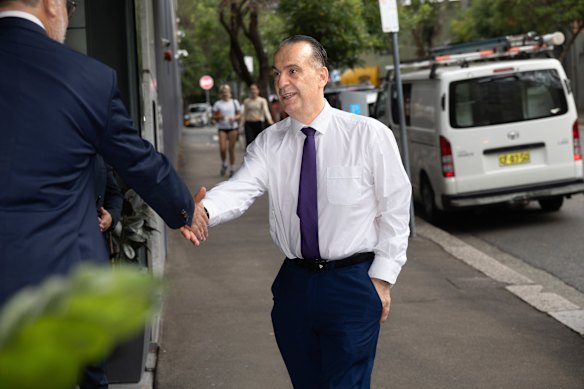
Racing NSW chief executive Peter V’landys.Credit: Sitthixay Ditthavong
Next in this (brief) Law 101 lesson to end all lessons, and before I get to why I’m even boring you senseless with all this, it’s necessary to consider the doctrine of ultra vires.
Deploying another sporting analogy, I expect every thoroughbred trainer knows the feeling: the jockey of a 200/1 shot ignoring instructions and instead riding like they’re on Sunline, before exploding with exhaustion before passing the furlong post. The hoop was, to borrow the Latin, ultra vires – acting beyond her or his powers; operating outside their sanctioned authority, infected with hubris.
The doctrine, transplanted from the racetrack to administrative and corporate law, isn’t really any more complicated than that. An act by a minister or statutory body conferred with legal authority is ultra vires when the person, body, or organisation doing the act has simply no legal authority to do so in the first place.
In the realm of administrative law, ultra vires operates to strike down decisions made without statutory foundation: the regulator that overreaches; the tribunal that strays beyond its prescribed jurisdiction. In a corporate law sense, the ultra vires doctrine can operate to void the acts of a company that ventures spectacularly beyond its constitutionally permitted objects.
All of this may or may not be of interest to readers, but explaining some basics of administrative law has a purpose in explaining what the NSW Supreme Court’s judgment, handed down on Wednesday in the case between the Australian Turf Club and Racing NSW, is about. And what the case was never about.
That ruling was followed on Friday by Racing NSW announcing that it would proceed to appeal Wednesday’s judgment in the NSW Court of Appeal, as is Racing NSW’s right.
The court ruling that Racing NSW’s function was to control, supervise and regulate “the racing of galloping horses” rather than the off-track issues it had raised about the club’s management and financial health will be challenged.
For transparency, I’m a member of the ATC. Nothing turns on that fact, but it would be remiss of me not to mention it.
The case, now under appeal, wasn’t about whether the ATC is a magnificently run corporate enterprise, or the alternative.The case wasn’t about whether the ATC is properly funded and financially liquid, or on the precipice of financial Armageddon.
And the case wasn’t about whether Racing NSW properly has legitimate concerns about the future of the ATC, such that it’s warranted for the regulator to impose an administrator to stand in the shoes of the ATC’s directors, or instead about whether there is some other entirely political imperative for squeezing the trigger.
One can’t cloak oneself with power. Power must be conferred from above. In this instance, the relevant power hasn’t been conferred, and it never was.
Instead, what the case and the resulting judgment is concerned with is the question of what powers the NSW Parliament conferred on Racing NSW under the Thoroughbred Racing Act 1996 (NSW), and whether those statutory powers are sufficient to empower Racing NSW to appoint an administrator to take control of the ATC on the basis it sought to.
That is no insignificant question. In its 2025 annual report, the ATC’s income was $374 million, its expenditure a marginally greater sum and its net assets $300 million. As astutely observed by Justice Francois Kunc in his decision:
“This case has highlighted that RNSW’s power to appoint an administrator is a drastic one which can have a very real impact on hundreds, if not thousands, of people. It represents a decisive intrusion into the affairs of a race club, in this case a very substantial one, which is run by a board whose majority is democratically elected by its members, and which otherwise operates in accordance with the well-developed body of law that applies to companies … ”
It doesn’t appear to be a matter of any serious controversy that Racing NSW is desirous of having – and considers itself to have – broad powers to regulate thoroughbred racing and the broad array of actors and activities that relate to horse racing, including the more than 140 race clubs that exist in NSW and the ACT.
The actuality, though, seems to be different. What the judgment points to is that the NSW Parliament has not actually conferred that breadth of power to Racing NSW. Instead, Racing NSW has been given the function of controlling, supervising and regulating the sport of horse racing, as distinct from the registered race clubs and the corporate vehicles through which those clubs are conducted.
Framed differently, Racing NSW doesn’t derive its powers and jurisdiction from any source other than its enabling legislation. Section 13(1)(b) of the Thoroughbred Racing Act says that one of Racing NSW’s functions is to control, supervise and regulate, in NSW, “horse racing”, where that term is further defined to mean “the racing of galloping horses as referred to in the Australian Rules of Racing”.
At least two matters flow from there. First, Racing NSW can’t, intra vires (that is, within its powers; the opposite of ultra vires) issue to the ATC a show-cause notice detailing a litany of concerns about corporate governance, insolvency and directors duties issues, and thereafter take steps to install an administrator to usurp the powers of the ATC’s directors in office because the ATC did not sufficiently show cause as to why that shouldn’t happen.
The legislature hasn’t empowered Racing NSW to do those things.
The second consequence, however, is this: the Supreme Court’s judgment confirms that Racing NSW does have legitimate step-in rights – including the power to appoint an administrator – where the regulator exercises its powers in accordance with its functions, and the statutory duties of Racing NSW’s members, in relation to the regulation of horse racing.
Loading
If anything, the judgment operates as a road map for what Racing NSW should do. If Racing NSW also harbours legitimate and justifiable concerns about how the ATC was organising and conducting the sport of horse racing, as opposed to the myriad other apparent concerns it has sought to move in respect of during the past six months, then Racing NSW very likely does have the requisite power to withstand the application of the legal blowtorch.
Whether those legitimate and justifiable concerns are genuinely harboured or not can’t be known. Seemingly, Racing NSW chose not to articulate any such concerns when its show-cause notice was issued six months ago.
One can’t cloak oneself with power. Power must be conferred from above. In this instance, the relevant power has not been conferred, and it never was.
The author has acted as a solicitor for clients in matters before Racing NSW’s stewards and the Racing Appeals Panel.
Most Viewed in Sport
Loading