2 months ago
7
2 months ago
7
The state government wanted mid-rise housing. Here’s what it will look like in your suburb
Almost a year after the state’s mid-rise planning reforms came into effect, the first detailed development applications have been revealed – shedding light on the scale and density of housing set to reshape the suburban skyline across swathes of Greater Sydney, the Central Coast, Newcastle and the Illawarra.
Figures obtained by this masthead have revealed 239 separate housing development proposals have been lodged with planning authorities since the NSW government enacted the state’s low and mid-rise housing controls in February last year.
The policy – which permits dual occupancies, terraces, townhouses, and apartment buildings up to six storeys tall within an 800-metre radius of 171 town centres and transport hubs – is a key pillar of the Minns government’s efforts to meet the National Housing Accord target of 377,000 new homes in NSW by July 2029.
Development applications lodged under the scheme show many of the housing projects will involve turning rows of suburban homes into multistorey towers in areas previously restricted to low-rise housing.
One of the largest developments under the scheme is a $123 million application to demolish 12 single and double-storey homes on Rangers Avenue in Mosman to make way for a seven-storey apartment block with 103 units.
The application came after the owners of the existing properties joined forces to sell their homes as an amalgamated mega-lot development site – a practice becoming popular in inner-city suburbs as home owners capitalise on a rise in land values triggered by the rezoning changes.
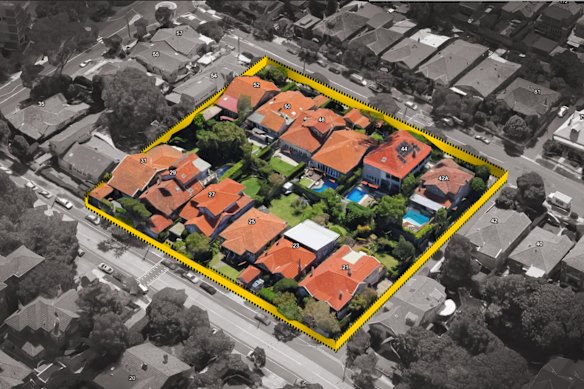
Twelve homes have been amalgamated into a single development site in Mosman.Credit: Matt Willis
In Rose Bay, there are three planning applications for mega-lot development sites including a 32-unit apartment project on the site of five homes on Wilberforce Avenue, a 41-unit development on the site of nine homes on Spencer Street and a 49-unit development on the site of five homes on Dover Road.
Department of Planning figures show the suburbs with the highest number of development applications under the policy have been Kogarah – in Premier Chris Minns’s electorate – followed by Baulkham Hills in Sydney’s north-west, St Ives and Mosman on the north shore, and Nelson Bay, north of Newcastle.
Planning applications show developers also capitalising on uplift bonuses included in the policy which grants a 20 to 30 per cent increase in floor space and building heights if at least 10 per cent of the gross floor area of new builds is dedicated to affordable housing for 15 years.
The surge in applications has sparked community opposition over the scale and speed of the density changes – including in Drummoyne where plans for a 55-unit eight-storey building on the site of five homes on St Georges Crescent have sparked 181 written submissions to Canada Bay Council and a petition opposing the project.
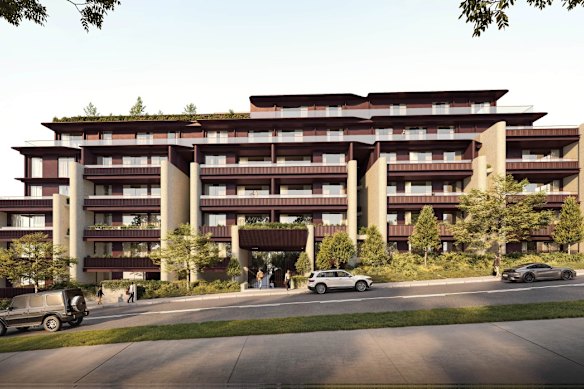
A concept image of the development planned at Rangers Avenue and Brierley Street in Mosman.
Drummoyne resident Simon Gatward said the height of the development was a “major departure” from the character of any other building in the residential street.
“It will cause huge consequences in terms of overshadowing all the houses surrounding it and to suggest a development boasting fantastic harbour views of the Parramatta River will offer low-cost affordable housing is spurious,” he said.
“The street is lined with one and two-storey Federation homes, and to put in an eight-storey development will be a complete eyesore in terms of its size. Regardless of its architectural merit, it’s going to stand out like dog’s balls.”
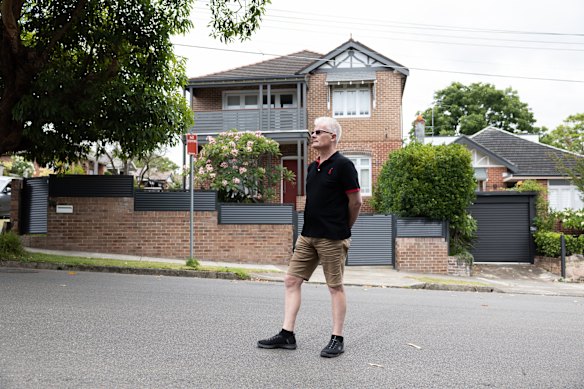
Drummoyne resident Simon Gatward pictured at the development site in Drummoyne.Credit: Louie Douvis
University of NSW City Futures Research Centre Professor of urban science Chris Pettit said the scale of new housing earmarked under the planning scheme was more akin to the level density of permitted in European cities such as Paris and represented a significant “step up from currently densities in many inner and middle suburbs of Sydney”.
Pettit said while the reforms may result in more dwellings located near services and amenities, the affordable housing mechanisms in the scheme which requires new builds to offer discounted rates for only 15 years – as opposed to affordable housing in perpetuity – may not present the long-term solutions required to ease Sydney’s housing affordability woes.
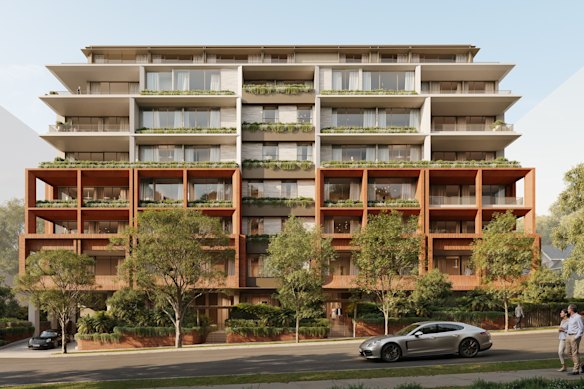
A concept image of the development at 12-18 Wilberforce Avenue, Rose Bay.
“This is likely to just kick the housing affordability can down the road and in fact, it may make matters worse in 15 years’ time when essential workers such as nurses, teachers and others who will be able to access this affordable housing will need to either stump up an additional 20 per cent rent or face finding new accommodation,” he said.
A NSW Department of Planning spokesman said the reforms had been “designed to reintroduce housing diversity into the market, increase the capacity for more new homes, and rebalance growth around key town centres and train stations across NSW.”
“We have already seen hundreds of development applications lodged and significant land amalgamation that will enable more new homes in the most feasible areas where the policy applies, including in Sydney’s eastern suburbs, Mosman, north shore and northern beaches,” he said.
“The policy provides a 15-to-20-year pipeline of housing, and we anticipate that uptake will increase substantially over time.”
Property Council of Australia NSW deputy executive director Anita Hugo said while reforms have presented “attractive options” for developers, she warned “persisting challenges” remain when it comes to turning housing approvals into completions.
“Feasibility of projects continues to be an issue affected by a number of factors including access to labour, rising construction costs and the cumulative impact of taxes and charges,” she said.
Loading
Some councils are currently in the process of developing their own housing schemes to present to the NSW government with the goal of using them to replace the low and mid-rise housing controls.
This includes Mosman Council which is spending $300,000 on a planning alternative that is expected to focus density along the Military Road corridor, protecting residential areas such as Balmoral from the worst of the density changes.
Mosman Mayor Ann Marie Kimber said she has repeatedly raised concerns about low and mid-rise controls with Planning Minister Paul Scully, including changes to Mosman’s “village character”, lack of infrastructure to support the increased level of density, and what she described as “disproportionate developer focus on Mosman”.
Most Viewed in National
Loading