2 months ago
7
2 months ago
7
A proposal to install handrails down the grand stairs of the Sydney Opera House has snowballed into a debate over how to preserve the city’s heritage landmarks while ensuring they also comply with modern building standards.
The Opera House is facing calls to reconsider its plan to erect handrails down the middle of the monumental steps due to concerns that the project could “mar” the grandeur of the sandstone walkway and clash with architect Jørn Utzon’s original vision.
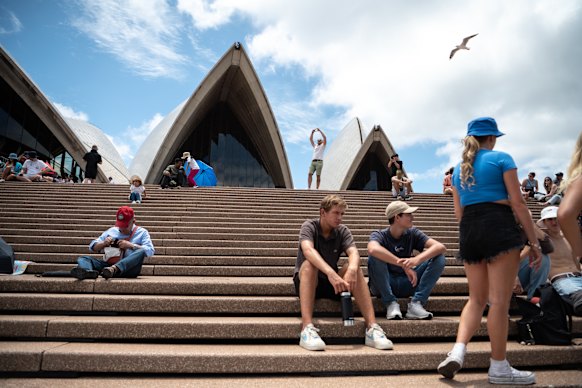
The proposed upgrade is part of accessibility improvements at the Sydney Opera House.Credit: Flavio Brancaleone
The proposal is part of broader accessibility upgrades aimed at improving safety and ease of access for the 10 million visitors to the site each year.
In a statement, an Opera House spokeswoman said the handrail would be trialled at “several locations towards the middle of the steps in different configurations, with the duration in each location still to be determined”.
“The Opera House takes seriously its responsibility to provide universal access to the building and is developing solutions that carefully balance the building’s heritage with its essential function as a public place accessible to all,” the spokeswoman said.
But while the upgrade has been welcomed by disability advocates, some leading historians and architects are actively opposing the development due to concerns about potential impacts on the UNESCO World Heritage-listed site.
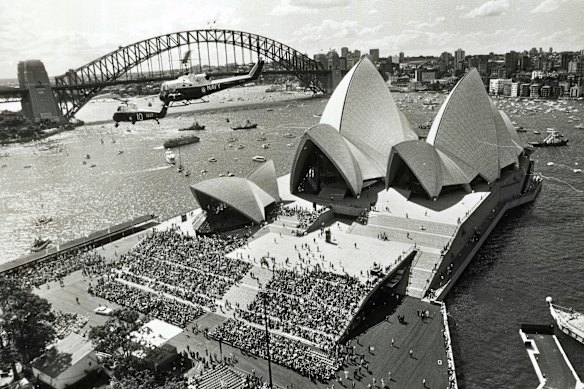
Critics fear the upgrade could clash with the original design of the Opera House, pictured at its 1973 opening.Credit: Russell McPhedran
At a meeting this month, the state’s peak heritage body – the NSW Heritage Council’s approval committee – voted to oppose the project due to potential impacts on the “exceptional” historical significance of the steps, which it noted had a “low tolerance” for change.
“[The handrails would] have adverse impacts on the exceptional significance of the monumental steps and the setting of the Sydney Opera House as an item of local, state, national and world heritage significance,” the committee stated in its reasons.
“The steps should be retained unaltered.”
Architect Andrew Andersons, who worked on the upgrade of Circular Quay and the Opera House forecourt in the 1980s, is also railing against the handrails, expressing concerns that they would undermine the building’s original design by Danish architect Utzon in 1957.
“The Opera House is arguably the most renowned 20th-century building in the world, and to put in handrails as some sort of tack-on is a complete contradiction of Utzon’s design,” Andersons said.
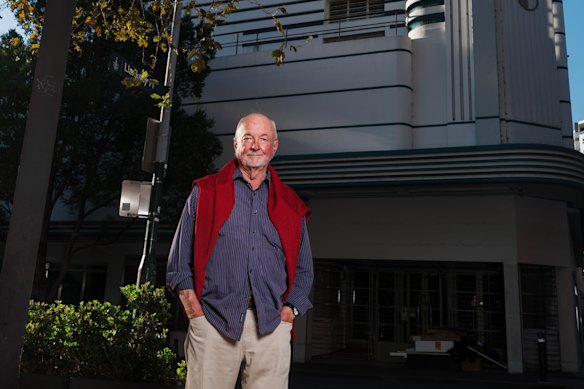
Sydney architect Andrew Andersons fears the project could undermine the grandeur of the House.Credit: James Brickwood
“When you think of other landmarks around the world – the Helsinki Cathedral, the Spanish Steps in Rome – they don’t have handrails. Why does the Opera House need them?
“I think it’s just another manifestation of Australia becoming a nanny state and part of our ideological problem of tinkering with everything in the name of ticking some sort of box.
“No matter how well you design or detail the handrails, they won’t be any good because they weren’t in the original design and don’t belong there.”
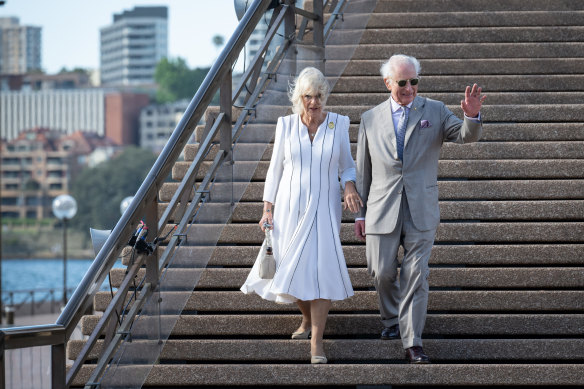
People to have climbed the steps include Queen Camilla and King Charles, pictured here during their royal visit in 2024.Credit: Wolter Peeters
The addition of handrails has been backed by the Australian Disability Network, whose spokeswoman said the project would ensure visitors of all mobility needs can safely navigate the 80 steps of the 100-metre-wide walkway.
“For venues like the Sydney Opera House with heritage considerations, installing handrails on the monumental steps is exactly this kind of pragmatic, achievable change that improves inclusion while respecting cultural significance,” the spokeswoman said.
Loading
Architect Philip Cox – whose work includes the Sydney Football Stadium, the Maritime Museum and King Street Wharf – said the debate surrounding the handrails was indicative of common difficulties involved in preserving the city’s architectural masterpieces while ensuring they comply with 21st century requirements.
Similar debate has surrounded accessibility upgrades of the Sydney Harbour Bridge, including the contentious addition of a bike ramp at the northern end of the bridge that could improve connectivity for cyclists.
“It’s very challenging for modern additions to be done in a way that are sympathetic with the original design of heritage buildings, and if they’re not done carefully, it can detract from the very reasons landmarks are so significant,” Cox said.
Architect Penelope Seidler, wife of the late Harry Seidler, who has been visiting the Opera House since its opening in the 1970s, said the steps were a “significant component” of Utzon’s design, which had drawn inspiration from Mayan temples and had “shown no handrails”.
“In my elderly opinion, the existing rails should be sensitively redesigned in bronze, but I don’t support down the middle of the steps because this would destroy their important visual impact,” she said.
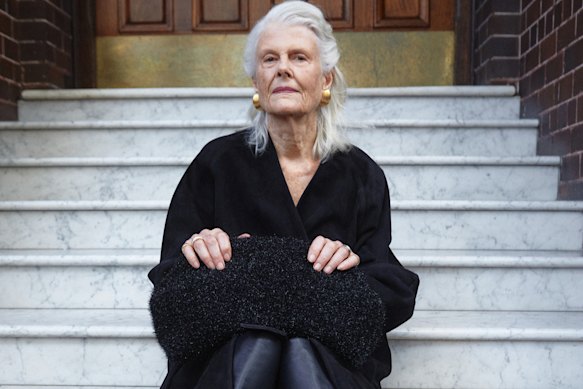
Architect Penelope Seidler has mixed thoughts about the proposal.Credit:
The Opera House spokeswoman said the handrails trial had been the subject of extensive consultation and reviews by the Opera House design advisory panel.
She said the Opera House would consider feedback from the NSW Heritage Council’s approval committee, which also called for the exploration of “non-intrusive” accessibility options.
Start the day with a summary of the day’s most important and interesting stories, analysis and insights. Sign up for our Morning Edition newsletter.
Most Viewed in National
Loading