3 months ago
29
3 months ago
29
By Gretchen Reynolds
January 6, 2026 — 5.00am
The Harry Potter audiobooks helped Katy Milkman make a foundational discovery about exercise behaviour.
A Harvard graduate student at the time, she was struggling to work out. Once a varsity tennis player, she no longer had teammates and a practice routine to motivate her, and she faced seemingly endless claims on her time.
But she had Harry and Voldemort. “I came up with this hack,” she said, “which was that I only got to listen to audio novels when I was exercising. This was life-changing for me. I’d rush home to change clothes and go exercise, so I could listen to Harry Potter and get a little break from reality.”
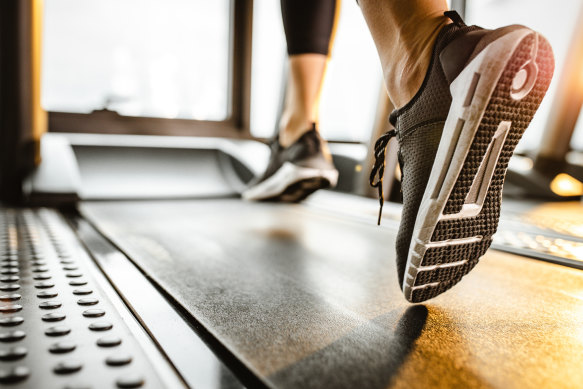
Creating a temptation bundle can completely reset your ability to stick to goals such as exercise.Credit: iStock
That hack became the focus of her early research, which centred on “temptation bundling,” the process by which we develop and reinforce desirable habits by coupling something we enjoy – an exciting audiobook, for instance – with something we might otherwise skip, such as 30 minutes on the treadmill.
Since then, Milkman has become one of academia’s top experts in behaviour change and how people can build or shed habits. A professor at the Wharton School at the University of Pennsylvania, she’s the author of the 2021 book How to Change, host of the podcast “Choiceology” and co-director of the Behavior Change for Good Initiative at Penn.
Loading
Today, her research delves into the science of how to change your life, from why some days seem to inspire us to start a new routine – which she calls the “Fresh Start Effect” – to how long it takes for fledgling habits to stick.
We checked in with Milkman about New Year’s resolutions, including her own, and how to set goals we can realistically achieve. Should our resolutions be sweeping or small? Should we get our friends involved? Would it help to pay ourselves? And what is she listening to or watching when she works out these days?
Our conversation centred on exercise, but the tips and advice apply to almost any health goals. The interview has been edited for length and clarity.
Are you still temptation bundling?
Yes, I’m still doing it, almost 20 or 21 years later. I temptation bundled this morning. Now I’m watching The Morning Show while I’m on my elliptical in my home. But it’s the same principle, and it works really well for me. It’s completely changed my relationship with exercising.
I started seeing ways to use it elsewhere in life, too, just to combine a chore with a temptation, so that the chore stops feeling like a chore. You start looking forward to it. And also, by the way, then the temptation is not a source of guilt.
You’ve researched and written often about the “Fresh Start Effect”. Can you explain?
The Fresh Start Effect is actually part of a pattern we see in human behaviour. We don’t generally think about our lives in a linear fashion. Instead, we tend to think about them like we’re characters in a novel and there are these chapter breaks. Some are big chapter breaks. A new job. A move. Having a child. Some are a lot smaller. Your birthday. Or a Monday. But they can all feel, psychologically, like a new chapter, a clean slate. Even when there’s literally nothing changing in your life, there’s still this weird psychology around Mondays and around birthdays. They present us with what feels like a fresh start, and that feeling can help motivate change.
And that’s true on New Year’s?
Absolutely. It’s the Black Friday of fresh starts. It’s become a cultural phenomenon. People feel pressured to make resolutions.
Which they stick with?
Loading
No, not for a lot of people. But that’s also true for goals that we set at other times. I love to talk about New Year’s as a great time for one-and-done goals. Instead of saying, I’m going to follow a better diet this year and then quitting within a week, you ask, “What’s my one-and-done thing that in this moment of motivation, I can check off my list and really make a difference?”
Can you give an example?
In terms of health, maybe you haven’t scheduled your annual physical, or a colonoscopy or mammogram. It’s great to use this temporary motivation for these one-and-done preventive care things. And then you could take the momentum of achieving this single thing and consider bigger, longer-term goals. But for that, you need structure and other scaffolding.

Exercising with a friend keeps you accountable, and more likely to stick to your routine.Credit: iStock
Such as?
A lot of the scaffolding is practical. Join a gym or sign up for classes that you pay for in advance. You now have a commitment device, because you’ve paid for it. It’s a sunk cost. Or set out a jar where you drop a dollar when you visit the gym but forfeit the money if you stop going. Even better, sign up with a friend. We have some research showing that when you’re rewarded for exercising with friends, you go 35 per cent more often than if you’re only rewarded when you go alone. Plus, if you and your friend sign up for classes and you don’t go, you’re going to feel like a jerk.
Suppose we do join the gym or set other big health goals. How long will it take for our new routines to become actual habits?
I love that question. A lot of people probably underestimate the time needed. We did this big analysis, using machine learning to try to model how quickly people form habits. We did it both with exercise, since we had data on gym members, and hand-washing by hospital caregivers. And we could watch how quickly they formed habits, which we defined as when their behaviours became predictable, when our model could guess with very high certainty whether they’d go to the gym or wash their hands or not. We tried to figure out, is there a magic number of days or months to form a habit?
There wasn’t. It’s quite different from one person to another and across these two contexts. For gym-going, the average was a couple of months for the habit to stabilise. With hand sanitising, it was weeks – so much faster. But that’s a behaviour repeated far more often than going to the gym, and we know repetition builds habit. I think the main takeaway is, don’t get discouraged if exercising doesn’t already feel like a habit after a month. Try to keep doing it in a consistent way. The more you repeat, the more habitual these things become.

The more often you do new activities, such as thorough handwashing, the more likely it is to become habit.Credit: iStock
What about your own exercise habits?
I’m a big believer in all the research that says minimise friction. I have an elliptical in my house and zero commute from my bedroom. I also have a nine-year-old son who I walk to the bus stop. The first thing I do when my alarm goes off is I put on my workout clothes, then other clothes go on top. That gives me no excuse. I drop my son at the bus, come back, take off the extra layers, get right on the elliptical and temptation bundle. I always have a show that I’m in the middle of, and I try to make sure it’s entertaining. I’m not learning about the science of anything. They’re just fun shows, and I’m sad when my 30 minutes are done. I also walk a half-hour each way to and from work.
Do you still make resolutions?
I do, though they’re not around exercise at this point because that’s pretty well solved in my life. But I do still set New Year’s resolutions because why wouldn’t I take advantage of this magical thing?
Washington Post
Make the most of your health, relationships, fitness and nutrition with our Live Well newsletter. Get it in your inbox every Monday.
Most Viewed in Lifestyle
Loading