3 months ago
25
3 months ago
25
Some of Australia’s most senior politicians have pocketed a collective $1.5 million in taxpayer-funded allowances to stay in their second homes in Canberra when they travel to the capital for work.
Since the 2022 election, the opposition’s leader in the Senate, Michaelia Cash, has claimed the $322 daily allowance designed to cover accommodation costs more than any other frontbencher who owns a second home in Canberra, claiming $123,978 over 40 months, or more than $3000 a month.
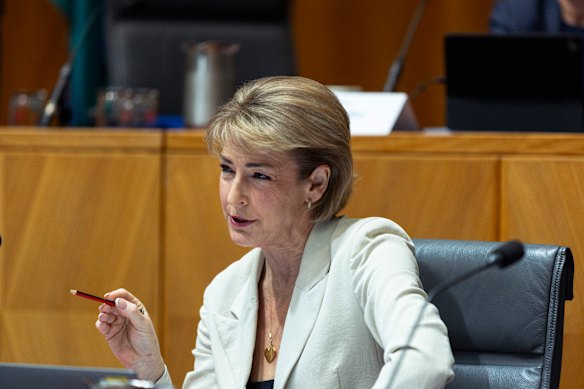
Liberal MP Michaelia Cash has claimed the travel allowance more frequently than any other senior politician.Credit: Dominic Lorrimer
She is followed by Nationals Senate leader Bridget McKenzie, who has claimed $103,939 for nights in her own Canberra home over 3½ years, while Treasurer Jim Chalmers has claimed the most of any Labor ministers, at $100,095.
All have declared a residence in Canberra on a compulsory register of interests.
The travel allowance for MPs themselves escaped proposed rule changes announced by Prime Minister Anthony Albanese last month after politicians’ use of travel perks came under heavy scrutiny, so MPs will continue to make this claim as they arrive in the capital in coming weeks for an urgent sitting of parliament following the Bondi Beach massacre.
McKenzie defended her use of the entitlement as within the rules.
“The [allowance] rate for members of parliament and staff in Canberra is a set figure irrespective of whether they stay in a garage, the Hyatt or an apartment. My claims comply with the rules,” she said.
Sport and Communications Minister Anika Wells’ spending habits made headlines late last year, triggering revelations about the travel claims of other MPs, including those of Attorney-General Michelle Rowland, who agreed to repay to taxpayers part of $22,000 claimed for a trip she took to Western Australia with her family.
Trade Minister Don Farrell was criticised for spending more than any other Labor MP on family travel – $116,000 since the 2022 election.
This masthead’s analysis of Independent Parliamentary Expenses Authority data from May 2022 to September last year reveals Farrell has claimed another $71,861 under the Canberra travel allowance in that time, while owning a residence in Canberra. Farrell, as special minister of state, has oversight of the MP travel entitlements legislation.
More recent travel claims have not been included because they have not yet been tabled.
‘The [allowance] rate for members of parliament ... is a set figure irrespective of whether they stay in a garage, the Hyatt or an apartment.’
Nationals senator Bridget McKenzieThis masthead has calculated the claims of 20 frontbenchers in the government and opposition. The analysis does not include the Greens – although nobody in the party’s leadership group has declared owning a home in Canberra – the crossbench, or backbenchers.
The claims, worth $1,508,911 since May 2022, are from just a snapshot of the number of politicians using the entitlement. Ministers are not the only ones who claim the allowance – about a quarter of the 226 elected representatives in federal parliament own a home in the capital. It is also common for MPs to share accommodation while in Canberra to keep costs down. The total figure across the years would be much higher.
Parliamentary guidelines say MPs are entitled to the allowance – which has been regularly bumped up from $291 in 2022 – to cover “accommodation, meals and incidental expenses for each overnight stay... that is not their home base”, but the rules do not account for those who pay a mortgage instead of out-of-pocket accommodation expenses.
MPs do not have to provide receipts for proof of spending to receive the payment.
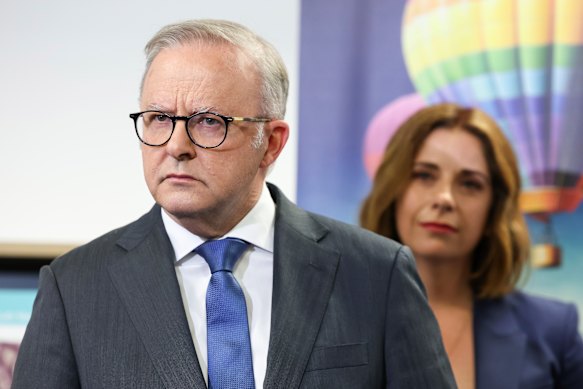
Prime Minister Anthony Albanese has made suggestions for tightening family travel rules after an expenses controversy triggered by Communications Minister Anika Wells.Credit: Alex Ellinghausen
Politicians are required to travel to the capital for the 16 to 18 sitting weeks a year, and ministers and their shadows in the opposition often need to spend more time in Canberra. Jim Chalmers, for example, has extra responsibilities such as deputy chair of cabinet’s expenditure review committee.
All frontbenchers examined by this masthead who own second homes in Canberra claim the allowance. This masthead contacted the 10 Labor ministers and 10 Coalition frontbenchers and none contested the figures.
Besides McKenzie, only opposition spokesman for skills and training Scott Buchholz responded, noting he paid for his Canberra property with his salary. The others declined to comment or provide answers to a detailed list of questions, including on whether the travel allowance was being used to pay down their mortgages.
Two days before Christmas, Albanese proposed changes to MPs’ taxpayer-funded family travel following the Wells saga, announcing he had asked the Remuneration Tribunal to consider limiting MPs’ taxpayer-funded family travel to economy class flights and restricting it to either Canberra or their electorates.
“I’m certainly hopeful that the changes that have been forwarded to the tribunal will ... are about restoring confidence in the system. I understand that there was genuine community and legitimate concern about these issues,” he said.
The opposition’s shadow special minister of state, James McGrath, said the changes would not go far enough to tackle the “rotten culture of entitlement and arrogance”.
“Tinkering with rules does not remove the need for a full and proper investigation by the Department of the Prime Minister and Cabinet into whether the ministerial code of conduct has been breached [by Wells and Rowland],” McGrath said.
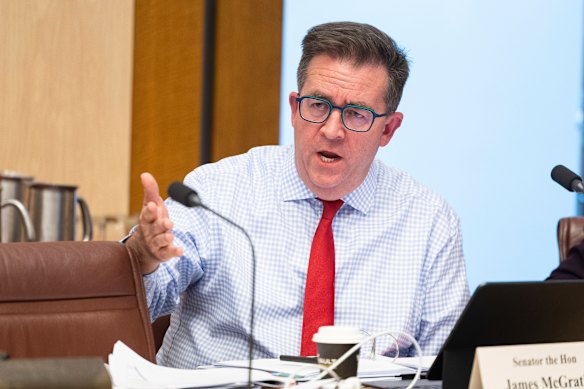
Liberal senator James McGrath said the proposed reforms did not go far enough.Credit: Alex Ellinghausen
Ministers are the highest-paid parliamentarians, earning about $400,000, depending on their role. Shadow frontbenchers earn about $300,000. MPs’ transport costs, including flights and private cars, are covered as work expenses.
Foreign Minister Penny Wong has claimed $68,006 since the 2022 election to stay in her Canberra residence, and Home Affairs Minister Tony Burke, who owns six properties including one in the capital, has recouped $43,494 through claims under the allowance.
For stays at their Canberra homes, Nationals leader David Littleproud has claimed $88,437 and his deputy, Kevin Hogan, has claimed $80,105.
Independent MP Andrew Wilkie, who does not own a home in Canberra and has pushed for family travel entitlements to be slashed, has called for a thorough inquiry.
Loading
“[I] call on the government to establish a genuinely independent inquiry into all aspects of parliamentarian travel, for that inquiry to be finalised within three months, and for the recommendations from that inquiry to be implemented no later than three months after that,” he said.
The MPs’ travel allowance can only be claimed in full for travel outside of Canberra if politicians stay in commercial accommodation. If they stay with family or a friend, they can only claim half, but that rule does not apply to travel to Canberra.
Independent MP David Pocock said that was just one example of the rules not being fit for purpose. The ACT senator is not entitled to the Canberra travel allowance because he lives in the capital permanently.
“I think people would be pretty shocked to know that [$1.5 million figure],” Pocock said.
“There should be a really broad look at all of these entitlements. It doesn’t make sense to me that ... you can claim 300 bucks a night to sleep in your own apartment or house in Canberra.”
Cut through the noise of federal politics with news, views and expert analysis. Subscribers can sign up to our weekly Inside Politics newsletter.
Most Viewed in Politics
Loading