3 months ago
19
3 months ago
19
More than two-thirds of voters in seats key to the Victorian Coalition’s chances of winning the next election don’t believe the opposition is aligned with their personal values or are in touch with modern Australia.
This snapshot of what Victorians think about the Coalition, based on responses to a national YouGov survey, illustrates the challenge new state Opposition Leader Jess Wilson confronts to convince enough voters that her team and policies are a credible alternative to another four years of Labor government.
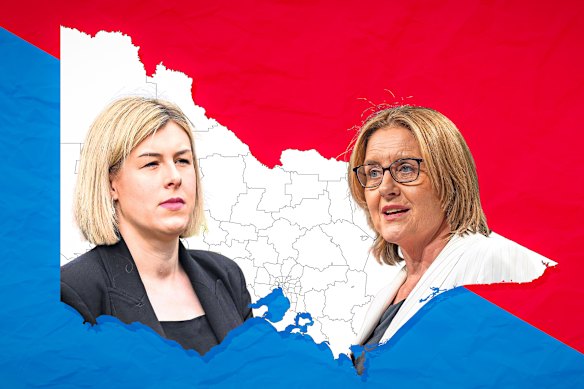
Victorian Opposition Leader Jess Wilson (left) and Premier Jacinta Allan will face off in a year’s time.Credit: Stephen Kiprillis
With one year to go until the November 28 state election, senior figures from both major parties privately agree that across Victoria, there is a mood for change. The decisive question is whether by then, the Victorian Liberals can present themselves as a viable electoral choice. “That is ultimately the story of the next 12 months,” one Labor strategist said.
The YouGov research, commissioned by Liberal-leaning think tank the Blueprint Institute, to assess national attitudes towards the Coalition, lays bare the gap the opposition must bridge between itself and what people are looking for in the state’s next government.
It is not a survey of voter intention but rather a seat-by-seat measure of the strength and appeal of the Liberal and National parties based on three threshold questions about the parties’ values and whether these align with the communities they seek to represent.
Only 25 per cent of respondents believe the Coalition is in touch with modern Australia, while 30 per cent agree that the opposition is aligned with their personal values and priorities.
In response to a further threshold question about climate change, 52 per cent of Victorian respondents agreed that for any party to be ready to govern, it must have credible policies to address climate change and its impacts.
The questions were originally framed in the context of federal politics and the data remodelled to provide insight into the Victorian electoral contest. YouGov director of public data Paul Smith said the results carried a clear message for the Victorian opposition and Wilson, who is expected to unveil her frontbench this weekend.
“Voters would normally be looking for a change from a 12-year-old government, but the Liberal national brand is repelling to most voters thinking of changing their vote,” Smith said.
“For the new opposition leader to succeed in the next election, she must develop a distinct Victorian Coalition brand that is credible on climate change, aligned with voter priorities and in touch with modern Australia.”
Wilson, a 35-year-old second-generation Liberal MP in her first term in parliament, faces her first acid test this weekend when she announces the shadow ministry she will take into the election year. The most contentious issues are who will serve as shadow treasurer, whether former leader John Pesutto will return to shadow cabinet and whether Wilson will find room for deposed leader Brad Battin and his chief backer, Richard Riordan.
Russel Howcroft, an advertising executive, broadcaster and expert in brand design, said the Liberals needed to re-establish a connection with voters through what he called the party’s “universal truths” – aspiration, individualism, private sector enterprise and economic growth.
“They have to be brave,” Howcroft said. “These are universal truths that are believable from the Liberal Party. If they just try to be better managers, then good luck – they won’t make one dint.”
Wilson broadly agreed, but said the Liberal Party’s values would resonate only if they were channelled into well-considered policies.
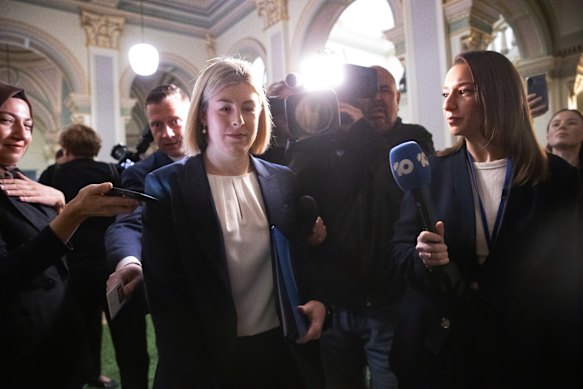
Wilson secured the Liberal Party leadership less than two weeks ago in a party room coup. Credit: Simon Schluter
“We need to be talking to Victorians and meeting Victorians where they are,” she said on Friday.
“I think the values of the Liberal Party are as relevant today as they were when the party was established. It is about how we translate those values into the polices that are going to make a difference in the lives of Victorians.”
There are limitations to the YouGov research. The data was gathered in July from a national survey of 5007 respondents, including 1251 from Victoria. The seat-by-seat analysis of Victorian state electorates, conducted in November, was achieved through a statistical modelling technique where poll responses were combined with census data about each electorate to estimate seat-specific results.
The numbers were crunched before Wilson replaced Battin as leader on November 18 and shifted the party’s message from a singular focus on crime to the state’s economy and rising debt. Respondents were not asked how they felt about Labor, which has been in power since 2014 and is backed by a well-resourced campaign machine.
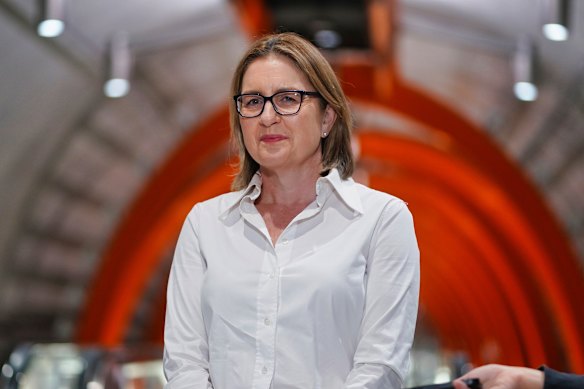
Allan’s seat of Bendigo East has a nominally safe margin, but a fierce challenge is expected from the Nationals.Credit: Luis Enrique Ascui
The results do not predict how people will vote a year from now. They provide a moment-in-time assessment of whether the state Coalition, having spent all but four years of this century on the opposition benches, are under consideration again. The blunt answer provided by this research is no.
Across the entire Victorian electoral map, a majority of voters in only six of 88 lower house seats see the Coalition as aligned with their values and priorities. In every electorate, most voters disagreed that the Coalition is in touch with modern Australia. The strongest result for the Coalition on this question was Gippsland East, the seat held by Nationals leader Danny O’Brien, where 34 per cent of people agreed.
The Coalition needs to gain 16 seats to form the next government. Its target list includes Pakenham, Hastings and Bass – all in Melbourne’s outer south-east and sitting on margins of less than 2 per cent – along with Werribee, Melton and Sunbury in the west and north-west; the sandbelt electorates of Bentleigh and Mordialloc; the eastern suburbs seats of Glen Waverley, Ashwood, Box Hill, Bayswater and Ringwood; and Premier Jacinta Allan’s nominally safe seat of Bendigo East, which she holds with a 10.85 per cent margin.
The Coalition must also defend its own inner-city marginal electorates of Prahran, Hawthorn, Caulfield and Wilson’s seat of Kew, and a further six regional and suburban seats held by either the Liberals or Nationals with margins of less than 5 per cent. These include the Nationals seats of Mildura and Morwell and mortgage belt electorates of Croydon and Rowville.
Shadow attorney-general James Newbury, one of the opposition’s most active political strategists, said the YouGov research offered no silver bullet for the Coalition.
“Political parties and their representatives must reflect their community in a modern way,” he said. “It’s even more important when you are in opposition because you are trying to convince voters that you are more aligned with community priorities than a sitting government.”
In the seats that matter most, the Coalition has considerable work to do.
In Bass, the second-most marginal electorate in Victoria, and Werribee, with a margin of less than 1 per cent after February’s byelection, only 32 per cent of voters believe the Coalition is aligned with their values and priorities. In the growth-area seats of Melton and Sunbury, the figure is 33 per cent.
In Prahran, which was this year poached from the Greens by the Liberals’ Rachel Westaway in a fierce byelection, only 24 per cent of voters think the Coalition is in touch with modern Australia and 65 per cent of voters agree that credible climate change policies are mandatory for any government. By this measure, Prahran is the third most climate-aware electorate in the state.
Westaway said her electorate was a demographic outlier from other Liberal seats due to its higher-than-average proportion of young women and higher-density living. Those are the demographics to which the Liberal Party must appeal to win government, she said.
“You have got to give them permission to vote,” Westaway told this masthead. “That is our job in the lead-up to the next election. We can’t be a party just for those aged between 18 and 35, but we should be a party with values those people can align with.”
Westaway believes any move by the state opposition to soften or jettison its support for reaching net zero carbon emissions by 2050 would be a deal-breaker in a seat like Prahran.
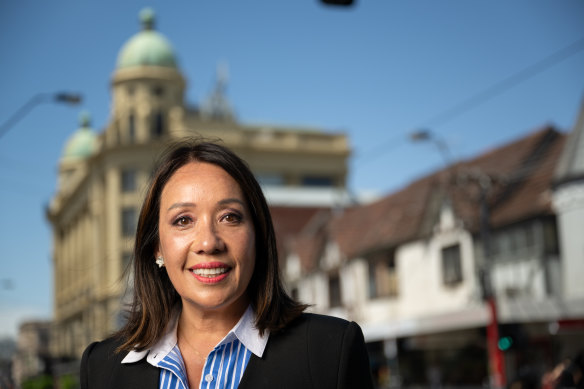
Prahran MP Rachel Westaway says the Liberals need to hold her seat to win next year’s election.Credit: Penny Stephens
“Young people don’t want to see us get rid of targets,” she said. “They want to know we are working towards something and there is hope for the future.
“What I say will not necessarily resonate with all of my other colleagues, but we need Prahran in order to win.”
These party tensions were on display on Thursday night in Westaway’s electorate. While the local MP attended an event with Liberal Pride, an organisation for LGBT Liberals, her parliamentary colleagues, Bev McArthur and Moira Deeming, were the guest speakers at the Conservative Political Action Committee Christmas party a few blocks away.
Start the day with a summary of the day’s most important and interesting stories, analysis and insights. Sign up for our Morning Edition newsletter.
Most Viewed in Politics
Loading