3 months ago
33
3 months ago
33
Almost two in five property sellers in Victoria who can’t get the price they want at auction are then setting their hopes even higher in their selling quest.
Data from Homer App shows 39 per cent of properties in Victoria that passed in at auction from last September through to the end of February, and were re-listed within two weeks, were advertised at higher than the top of their auction price guide.
Henry Pedersen, founder and chief executive at property research and tracking platform Homer, believes it shows owners and agents aren’t being honest about their expected price, and aren’t accepting what bidding on the day reveals about what the home is actually worth.
“You had a public auction. You went to it with a communicated price. You clearly haven’t achieved that price … so then you increase the price? It’s pretty odd behaviour,” he said.
“There’s this saying you hear from agents, ‘start low and watch it grow’... Ultimately, you can see in these data points that the [price] where they’re starting is actually nowhere near where they want to end up.”
Melbourne’s north west and south east regions had the highest proportion of pass-ins relisted for more money. The Mornington Peninsula, which had the highest proportion of homes relisted for lower than the price guide, still had 20 per cent of properties relisted for higher.
The data from Homer App, which launched this month, includes all suburbs where homes were passed in, the properties were relisted and the listing remained with a new price for over 24 hours, by the same agent. The relisting must have been on a major listings platform, not just the agent’s site. Properties sold on auction day are excluded.
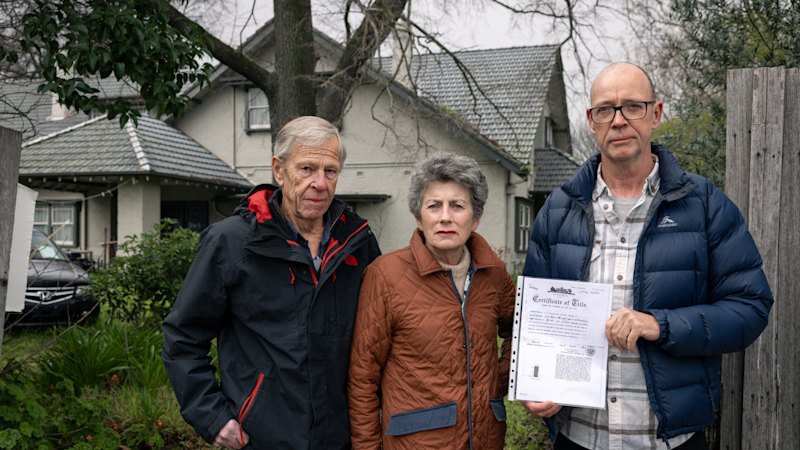
Tom Edney, 29, and his partner had been looking for a home since June. They bought in Ferntree Gully last month, after inspecting about 130 homes.
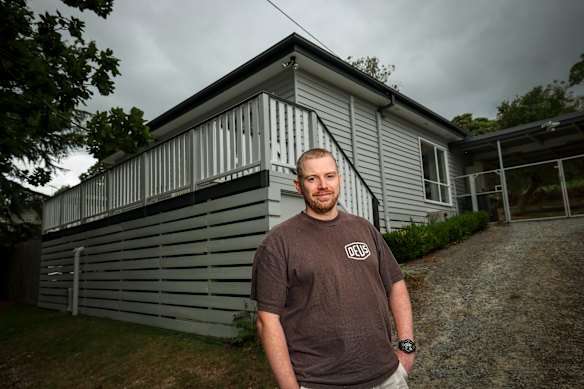
Tom Edney and his partner secured their new home after months of watching auctions fly past their price guides.Credit: Eddie Jim
“84 of them went for more than the listed price,” the advertising professional said.
Ferntree Gully was a rare pocket where over 80 per cent of homes were relisted for lower than the auction price guide. Kalkallo, in the outer north, took the crown for the highest share of homes listed for higher than the guide, at 88 per cent.
The pair were so worn out by the auction process that they felt there was no point attending any more.
“We bid at three or so and got out-bid pretty well straight away... I feel like they list them at a price that [seems] reasonable, and it gets a lot of people’s hopes up,” Edney said.
Loading
They made an offer on their home three days after it was advertised, and still paid almost $80,000 above the top of the guide. Their initial offer was $20,000 over.
Edney felt comfortable negotiating a higher offer because they knew a guide was no indication of vendor expectations.
Their mortgage broker, Kris Faife at Loan Market Rowville, encourages buyers to look at comparable sales instead.
“I think the biggest challenge for buyers right now isn’t necessarily the level of prices. It’s understanding the true market value of properties in a fast-moving and frankly volatile market,” he said.
Julie DeBondt-Barker, buyer’s agent and founding director at Property Home Base, was surprised that so many properties were relisted for more money.
“It could be a sign that the market is cooling down a bit,” she said. “And that agents aren’t communicating that clearly enough when they list the property. They may not know themselves.”
She said it made it harder, and “a waste of time” for buyers when vendors weren’t being transparent.
But she said it depends on the nature of the home and might be more likely when vendors are more invested in the property, emotionally and financially.
“You wouldn’t be seeing this in one-bedroom apartments. But you might with four-bedroom family homes,” she said.
The Victorian government’s proposed changes to auction laws, announced last November, would require sellers to publish their reserve seven days before auction.
“Underquoting isn’t fair and it’s young Victorians and families paying the price,” a Victorian government spokesperson said.
On Friday, the government announced it would introduce legislation in June that would require sold prices to be made public, rather than listed as “withheld” or “contact agent”, from 2027.
Real Estate Institute of Victoria chief executive Toby Balazs said while it’s an agent’s job to try to get a vendor to meet the market, it’s ultimately the vendor’s decision how much they want to sell for.
The REIV’s proposed solution to underquoting is to require sellers to confirm their reserve is within the advertised price guide three days pre-auction.
“No one’s complaining about underquoting or being misled when the property is called on the market in the advertised range,” he said. “It’s when it’s not on the market until significantly after that people get frustrated.”
Pedersen said the data reflects the peculiarity of housing as a market, where there is often no clear indication of a property’s true asking price.
“[It’s] incredibly anxiety driven. You, as a buyer, never really know if you’ve done the right thing.”
Most Viewed in Property
Loading