3 months ago
17
3 months ago
17
Ratepayers will be barred from speaking at council meetings and instead need to have their say one week before councillors debate and vote on local issues and ideas, among a raft of other changes every NSW council is adopting in 2026.
Monthly council meetings provide an opportunity for residents to attend council chambers in person and speak on issues they wish to raise before councillors vote on agenda items that same night.
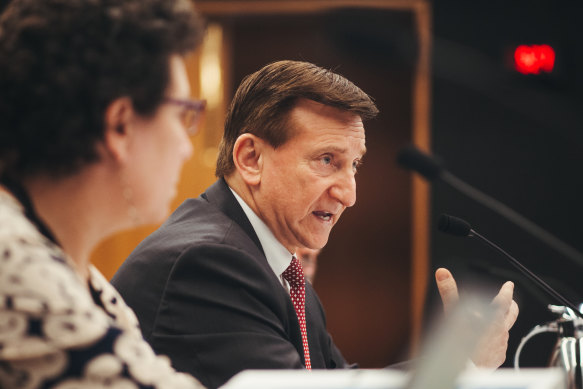
While some councils are opposed, NSW Local Government Minister Ron Hoenig said the reforms would “restore dignity and order to the council chamber”.Credit: Dion Georgopoulos
However, the government has made it mandatory for all 128 NSW councils to adopt tweaks to the uniform set of meeting rules, called the “Model Code of Meeting Practice”. In 2026, all public forums must be held separately from council meetings; the timing depends on each council but many are holding them a week beforehand.
The code describes council meetings as having purely decision-making purposes and, where possible, public forums where community members speak on agenda items should not be held as part of them.
NSW Greens spokesperson for local government Dr Amanda Cohn said splitting public forums and council meetings was “restrictive”, and pushed Local Government Minister Ron Hoenig to amend the code.
“This removes the immediacy of comments, and it also means not all of the councillors making a decision on the item may be in attendance to hear members of the community speak about it,” she said.
“The new mandatory provisions do not allow for questions between councillors and members of the public, and that limitation on discussion is restrictive.”
Hoenig said having a gap between public forums and council meetings would allow councillors more time to consider issues before voting, and would still allow for “genuine engagement with the community.
“It gives councils the flexibility to do it in a way that prevents councillors from being harassed or abused and meetings dragging on until one or two o’clock in the morning,” he said.
Under the changes, closed-door pre-meeting sessions briefing councillors on agenda items will also be scrapped. The Office of Local Government has described such sessions as “inconsistent with the principles of transparency, accountability and public participation”.
Loading
Hoenig said: “I want to ensure that decisions are made in the open, in council or committee meetings, in full view of the public and the press.”
Opposition local government spokesperson Chris Rath said the ban could slow down development application approvals and rezonings: “That could lead to a multitude of items being deferred. Decision-making could be slowed down and meeting times blown out.”
Another change, in line with the Independent Commission Against Corruption’s recommendations, requires information from closed meetings to be published once the council’s general manager deems it no longer confidential.
There are also new rules about when councillors and members of the public can be expelled from council chambers – for example, if they disrupt meetings, speak uninvited at meetings, or bring flags, signs, or protest symbols into council chambers.
Virtual meeting attendance has also been restricted, meaning councillors can only attend online if they are unwell or have unforeseen caring responsibilities.
Start the day with a summary of the day’s most important and interesting stories, analysis and insights. Sign up for our Morning Edition newsletter.
Most Viewed in National
Loading