3 months ago
21
3 months ago
21
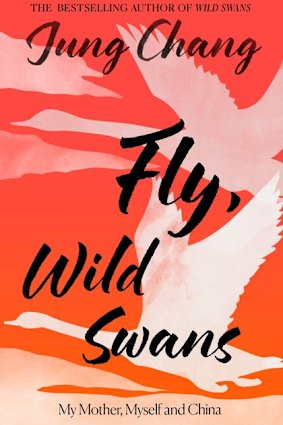
MEMOIR
Fly Wild Swans
Jung Chang
William Collins, $37.99
Anyone who read Jung Chang’s first book, Wild Swans, published almost 35 years ago, will remember its impact. Her account of the lives of three generations of Chinese women in the 20th century is eye-opening to say the least. Scarifying might be a better word. It begins with the description of the foot binding of Chang’s grandmother, Yu-fang, born in 1909. This was a merciless form of torture, involving weighing down the feet of a girl with rocks such that they broke and re-broke and broke again. It was to satisfy a male idea of beauty which happened at the same time to make it impossible for a woman to walk, let alone escape. Yu-fang then became the concubine of a warlord and the abuse continued.
Yet, that was hardly the worst atrocity in the book. Wild Swans covers Chinese domination by the Kuomintang and then by the communists, led by Mao Zedong. Mao’s crazy ideas killed tens of millions. Or were they crazy? Perhaps he knew exactly what it took to create a cult of personality so poisonous that people would destroy their families, themselves and their country to appease his monstrous ego. Jung Chang was among the first to bring a grassroots view of the Cultural Revolution to Western readers.
The deepest sorrow of that book was the remorseless exploitation of those who wanted to believe. I recall aching for Chang’s mother, Bao, as her husband, Wang Yu, a party official, puts ideology ahead of their relationship. Duty comes first, even when Bao is left alone during difficult births and horrendous treks. Watching his disillusionment, along with that of his daughter, is excruciating.
Decades later, ideology and the cult of personality continue to dehumanise the world. Wild Swans sheds light far beyond China.
So, too, does the sequel, which is equally fascinating but for different reasons. Here, Jung Chang describes what it took to write Wild Swans and then, even more significantly, what it took to write her biography, Mao: the unknown story, a work she co-authored with her husband, Jon Halliday.
Jung clearly inherited the courage of her mother and grandmother. Digging into the hidden story of Mao took guts. It created all kinds of problems, especially as her mother was dying in China and Jung’s attempts to visit her were either frustrated or kept under close watch. She had pointed out that the emperor had no clothes and those with a vested interest in his wardrobe were vicious.
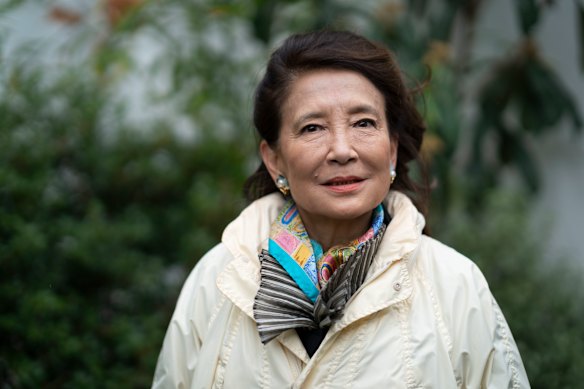
Author Jung Chang.Credit: Getty Images
Wild Swans ends with the death of Mao. Fly Wild Swans picks up the story when Chung is permitted, at the age of 26, to study in England. She is part of a group of 13 and kept under surveillance. A visit from her mother in 1988 creates a space for her mother to start sharing the stories she had kept secret. Thus, Chung begins a painstaking and meticulous journey of discovery, trying to separate truth from falsehood as she attempts to account for a century of pointless suffering. The lesson is that anyone who can create enough fear, and back it up with force, may do whatever they like, regardless of reality. How well we know.
Chung’s mother is an extraordinary source and guide, urging her daughter not to self-censor just to protect her. Chung had been hesitant to embark on Wild Swans because “I did not want to revisit any painful memories”. She was surprised that “my mother had, in fact, been longing to tell me about the life of my grandma and about her own life”.
Wild Swans’ vast international success led Chung to attempt a full-scale biography of Mao, the writing of which is the most intriguing part of Fly, Wild Swans. The Chinese government refused permission for her first work to be published in her country. Now it played all sorts of tricks to frustrate her and her husband unearthing inconvenient truths about the so-called great helmsman.
Loading
Chung’s determination and persistence is admirable. Her husband gets the bright idea of trying to access Russian archives and, sure enough, here they find a trove of material about Mao. The real work was finding surviving witnesses from the inner sanctum of the Cultural Revolution and convincing them to speak. They were helped by a family connection with Grandma Deng and Deng Xianfu, the stepmother and half-sister of Deng Xiaoping, who became the leader of China after Mao and initiated economic reforms. Bit by bit, an absorbing puzzle comes together.
Jung Chang is an unflappable writer, sharing her journey without a trace of self-pity. She writes with elan and a relentless belief that truth telling alone can build a future worthy of our dignity.
Michael McGirr is the mission facilitator of Caritas Australia.
The Booklist is a weekly newsletter for book lovers from Jason Steger. Get it delivered every Friday.
Most Viewed in Culture
Loading