3 months ago
12
3 months ago
12
To reflect means to grow. It allows us to look back on our experiences, and mistakes, so we can learn and understand how we might do things differently next time.
For six years now, we have asked three Australians to share a health habit they want to focus on and reflect on how they might cultivate it and deal with setbacks.
Here, a psychologist, doctor and exercise physiologist reveal what habit they’ve been struggling with and how they plan to make it work this year.
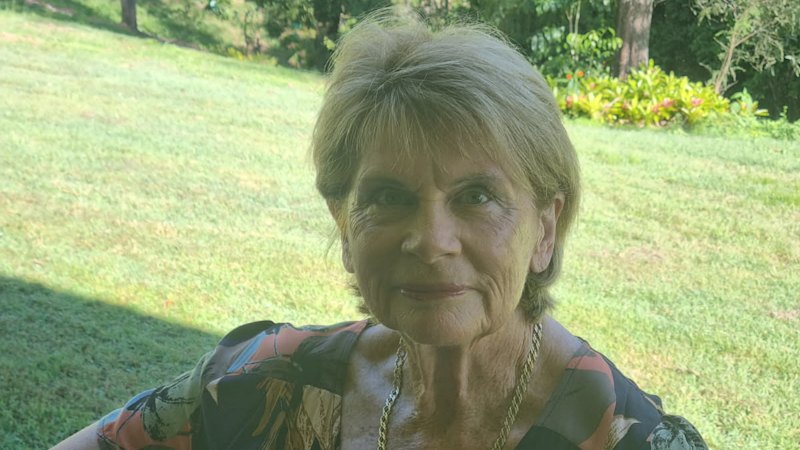
Dr Emily Musgrove, Clinical Psychologist and author of Unstuck

Dr Emily Musgrove.
As I think about 2026, the habit I want to lean into is the practice of acceptance. Looking back on 2025, I realised that some of the challenges I faced were made more difficult by my internal reactions to them. For example, I might catch myself replaying events, overthinking or rehearsing imaginary conversations. My mind would come up with a whole host of stories, like “why can’t this just be easier?” or “why don’t they understand me?”
Loading
From my work as a psychologist, I know that it’s these internal reactions that often prolong our suffering, or at times, even make it bigger. We get caught in a mental tug-of-war with reality, not wanting our experience to be here, even though we can’t do anything to change it. And that struggle is exhausting.
So, this year, my intention is to bring an attitude of acceptance to challenging moments.
Acceptance doesn’t mean giving up, agreeing with everything, or condoning poor behaviour. It simply means acknowledging things as they are so we can respond with more clarity and less judgment.
To help me practise this, I’m using a few simple steps:
- Pausing at the end of the day and taking a few slow, grounding breaths.
- Asking, “What am I noticing right now?” Naming what’s here. That is, “I’m noticing here is anger,” or “I’m noticing my mind racing.”
- Checking in gently: “What am I holding on to? Where do I feel it in my body?”
- Softening on the out breath, letting go of any physical tightening or bracing.
- Asking what I truly need. A hug? Rest? Movement? Support? Or is it time for problem-solving or a small values-led action?
We don’t always get to choose what happens to us, but with practice, we can choose how we respond. By doing these small things, I’m hoping to meet 2026 with more ease and a little more wisdom. It’s a subtle shift, but a powerful one.
Dr Tony Boutagy, strength coach and exercise physiologist
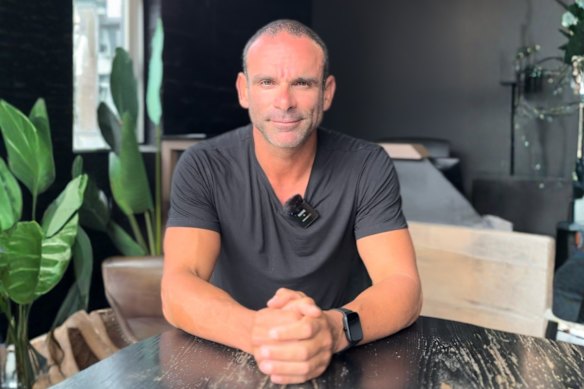
Dr Tony Boutagy.
Having high cardiovascular fitness levels is one of the most impressive predictors of living well and living for a long time – even better than not smoking or having high blood pressure, type II diabetes, or being overweight.
Loading
One of the areas in my own fitness training that I’ve let slide over the past decade has been specific types of exercise to keep this aspect of my fitness where it needs to be to see the benefits on longevity.
I think this is common for many people who find themselves time poor as they focus on their families, work, and social lives, that the energy left over to put into specific (challenging) workouts to develop high levels of fitness is often swept aside or deliberately not chosen.
The most effective type of training to improve cardiorespiratory fitness is a form of high-intensity exercise called high-intensity interval training (HIIT) and supramaximal interval training (SIT).
These two styles of training have the triple benefits of being a time effective strategy to increase all components of cardiovascular fitness while at the same time using the neuromuscular system to recruit our fast twitch muscle fibres, which decline as we
age, and produce lasting benefits on cognition and the brain via a number of different
muscle-to-brain signalling pathways.
The good news, I need to remind myself, is that it’s not a really large time commitment: 10 to 20 minutes, two times per week will be enough to move the needle for these aspects of fitness and health.
Given that my major barrier is being tired from long days at work, commuting and family commitments, this is how I plan to fit it into a full life:
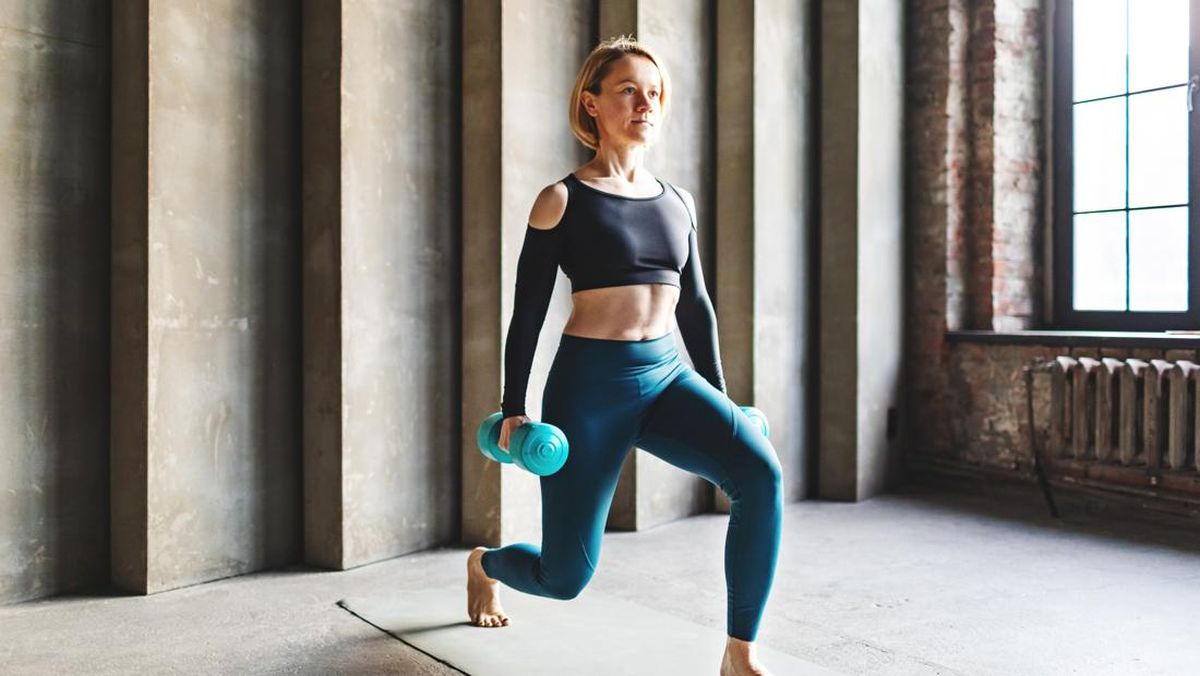
- Add 10 or so minutes of HIIT or SIT at the end of a normal exercise session in the gym. Even three lots of 20 seconds at best effort on a gym bike, assault bike, rower or ski erg, with a few minutes rest in between, has been shown to be highly effective at improving fitness levels with minimal demands on time. I will do that twice a week when time poor. I’ll avoid sprint running so I don’t tear my ageing calf muscles and perform on safer gym alternative instead.
- Or I might add 20 minutes of a style of HIIT called short intervals at the end of an easy ride, run, work commute on the bike or Saturday coffee ride. This would involve alternating 30-seconds at a hard effort with 30-seconds at an easy effort for between 10 to 20 minutes.
- Walk up a steep hill or stairs at a brisk pace in my lunch break to break up the inactivity of a workday.
I’ll also rope a friend into doing this with me to share the fitness love and bond by sharing in a little positive suffering together.
Dr George Barreto, a professor of medicine and one of Stanford University’s World’s Top 2% Scientists
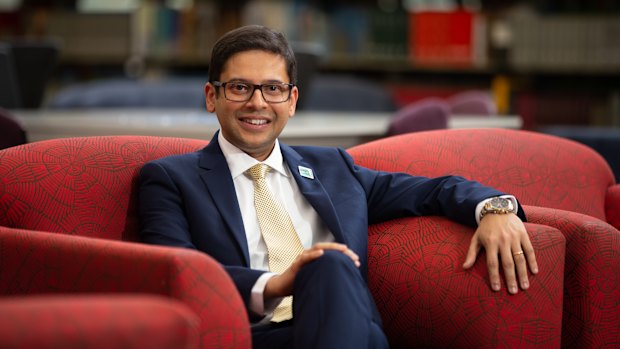
Professor George Barreto.
With professional roles that are predominantly consumer-facing, my work is very fulfilling. However, I am not immune to the challenges that accompany work and everyday life.
Loading
While often perceived in a negative light, challenges and stress present us with opportunities to grow and evolve as individuals. I regard myself as a work in progress, having spent the last few years attempting to introduce small changes to my daily routine to help me adapt and grow as a person.
Reflecting on the past couple of years the one thing I firmly accept as critical to a healthy life is the appreciation of a strong interconnection between the mind, soul, the physical body and the gut. The habits I have cultivated (within each of these realms) that I intend to carry forward into 2026 are:
- For the mind – constantly remind myself of a simple fact of life: “The world owes you nothing”, (Mark Twain), but that should never stop you from showing up for yourself. Make sure to get seven to eight hours of sleep a day.
- For the soul – Invest in true happiness by being disciplined, practising gratitude, being empathetic and sharing all the love inside you with the special people in your life. Ultimately, it is in giving that we receive.
- For the body – make time for daily intentional physical exercise. I prefer to walk at least 10 kilometres every day, which serves as an opportunity to relax my mind too.
- For the gut – a regimen I have adhered to over the past 2 years has been to consume at least one fruit a day along with a daily dose of probiotics (a small tub of yoghurt and a glass of Kombucha).
I wish everyone the very best in 2026.
Make the most of your health, relationships, fitness and nutrition with our Live Well newsletter. Get it in your inbox every Monday.
Most Viewed in Lifestyle
Loading