3 months ago
24
3 months ago
24
One of the inescapable paradoxes of a terrorist attack is that we are most desperate for answers, and most moved to diagnose it, in its immediate aftermath when we know the least about it. In this respect, the tragedy of Bondi was no different, spawning a broad spectrum of immediate accounts.
For some, this was nothing less than the shocking return of Islamic State, which we had come to assume was a spent force after the destruction of its purported caliphate in 2019. At the other extreme, this was simply the work of two crazed people in isolation. A middle view, focusing especially on the pair’s recent trip to the southern Philippines, posits some kind of small network between them and the terrorist groups active in Mindanao.
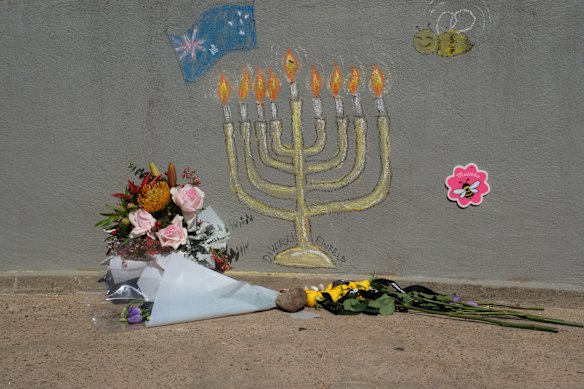
Flower tributes at the footbridge where the Bondi shootings took place.Credit: Oscar Colman
Now, after nearly three weeks of investigation, the Australian Federal Police has given us a fuller picture. As it stands, they believe the two men received no training or “logistical preparation” in the Philippines, and acted alone. No one – including the formal Islamic State organisation – directed them to undertake this slaughter. The commissioner stresses this is very much an “initial assessment”, and is therefore open to revision. Even so, it’s an important first marker: both predictable and hugely concerning. It is entirely in line with how terrorism is changing, and underscores just how difficult authorities’ task has become.
The truth is Islamic State is not “back” or “resurgent” in any meaningful way as an organisation, aside from its modest gains in Syria, sub-Saharan Africa, and in Afghanistan, where it is often fighting the Taliban. But not for years has it been able to direct attacks of its own in far-off lands. That’s no small mercy when you recall what those attacks were like. Recall the 2015 terror attacks in Paris in which 130 were killed, 90 at the Bataclan theatre and 40 others at a range of other sites: planned in Syria, then organised by a cell in Belgium. Bondi does not seem to come from a world of “networks” and “cells”. All signs are it was much more self-driven than that.
That’s apparently true, even of the infamous trip to the Philippines. The federal police’s current view is that the alleged terrorists barely left their hotel, which if true, suggests something ad hoc about the whole affair. Someone with connections to Islamic State representatives is unlikely to be so careless as to fly from Manila to Davao, leaving behind a trail. And someone who does that is unlikely even to know where Islamic State operatives are. With that in mind, the federal police’s preliminary assessment isn’t a surprise.
Loading
Islamic State still matters here, but not as an organisation. It matters as a brand. It becomes a symbol to be worn by whomever wishes to wear it. A year ago yesterday, it was Shamsud-Din Jabbar driving a truck through a crowd on Bourbon Street in New Orleans. In 2024, it was a 15-year-old boy stabbing a 50-year-old Jewish man in Zurich, having pledged allegiance to Islamic State in a video. The year before that, a man stabbing a teacher at his old school in France, and another shooting two Swedes dead in Brussels. Indeed, this is the same process we saw with al-Qaeda, whose central organisation perpetrated September 11, got seriously damaged when the US-led coalition invaded Afghanistan, but which then inspired a series of self-starting terrorist attacks in the West.
This is chaos. No one is in control of it. Not even the Islamist terrorist organisations in whose name these attacks occur. To be clear, they have embraced this fact, frequently exhorting whoever is consuming their propaganda to take these acts of violence upon themselves, but they ultimately have no say in where or when this happens. Terrorism hasn’t so much evolved as devolved to this point where the violence is so radically democratised that it can properly be called leaderless.
Naturally, governments try to impose order on the chaos. But their tools are made for a more concrete threat. A traditional terrorist organisation has a structure you can break, a leader you can encircle, a chain of command you can disrupt. It is a walnut to the state’s sledgehammer. But as the American-French scholar Scott Atran has observed, leaderless terrorism is more like a ball of mercury. Taking to it with a sledgehammer doesn’t crush it, it just makes it take on new, scattered forms.
That’s why, when ASIO director-general Mike Burgess warned us – well before Bondi – that “our greatest threat remains a lone actor using an easily obtained weapon”, rather than something “directed by an offshore group” like Islamic State, he was describing just how dangerous the threat is, not downplaying it. But Burgess would know that there is no such thing as a truly “lone actor” in the broad sense. It’s almost never a story of one or two crazed, isolated people. Some may act entirely alone, at their own initiative, but all feel some connection to a broader movement.
Loading
That’s one reason the federal police this week spoke of its “flying squad of disruptors” who have been combing “through the sermons line by line” of Muslim preachers “we believe are inciting hatred towards the Jewish community”. With no structured organisation to disrupt, the focus shifts to the rhetoric that contributes to this leaderless radicalisation. That makes sense as far as it goes, even if it’s a thorny area to legislate. The trouble is we’re dealing with an environment that, by ASIO’s own description, is far more complex than just that, where, as Burgess has it, “social media, mental health, the spread of misinformation and conspiracy theories” meet. Hate preachers are one thing. An important thing. But the online world, with its rabbit holes and silos and chaotic availability of every extremist discourse, is yet something else. And no government has shown the ability to tackle that.
We don’t yet know precisely how these things combined in the Bondi case. We know very little of the alleged perpetrators’ backstories. We know some of their influences, which naturally, police are investigating. But we don’t yet know which were most instrumental, and how many of these were virtual rather than personal. Eventually, though, we should. And this week is a reminder to pay attention to the end. Because while terrorism, with its emotionally lacerating horror, demands from us strong immediate reactions, it’s also true that our first impressions are rarely as sound as our last.
Waleed Aly is a broadcaster, author and academic.
The Opinion newsletter is a weekly wrap of views that will challenge, champion and inform your own. Sign up here.
Most Viewed in National
Loading