3 months ago
24
3 months ago
24
December 30, 2025 — 7.00pm
It was another year of high-conviction bets, and fast reversals.
Markets delivered both windfalls and whiplash as investors bet big on shifting politics, bloated balance sheets and fragile narratives, fuelling outsized stock rallies, crowded bond yield trades, and crypto strategies built on leverage, hope, and not much else.
Donald Trump’s White House return quickly sank – and then revived – financial markets across the world, lit a fire under European defence stocks, and emboldened speculators fanning mania after mania. Some positions paid off spectacularly. Others misfired when momentum reversed, financing dried up or leverage cut the wrong way.
As the year draws to a close, here are some of the most eye-catching wagers of 2025 – the wins, the wipe outs and the positions that defined the era. Many of those bets leave investors fretting over all-too-familiar fault lines as they prepare for 2026: shaky companies, stretched market valuations, and trend-chasing trades that work – until they don’t.
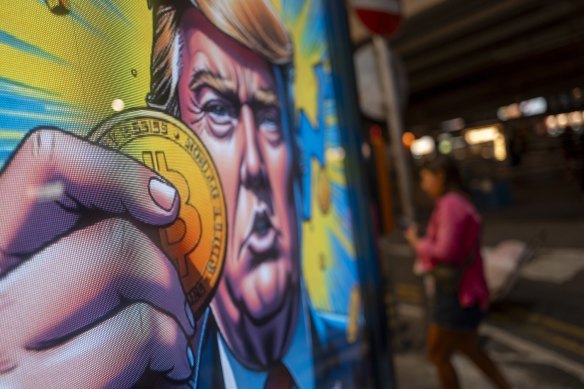
Investors piled into crypto after Donald Trump’s decisive election victory.Credit: Bloomberg
Crypto: Trumped
It looked like one of crypto’s more compelling momentum bets: load up on anything and everything tied to the Trump brand. During his presidential campaign and after he took office, Trump went all-in on digital assets - pushing sweeping reforms and installing industry allies across powerful agencies. His family leaned in, championing coins and crypto firms that traders treated as political rocket fuel.
Loading
The franchise came together fast. Hours before the inauguration, Trump launched a memecoin and promoted it on social media. first lady Melania Trump soon followed with her own token. Later in the year, Trump family–affiliated World Liberty Financial made its WLFI token tradable and available to retail investors. A set of Trump-adjacent trades followed. Eric Trump co-founded American Bitcoin, a publicly traded miner that went public via a merger in September.
Each debut sparked a rally. Each proved ephemeral. As of December 23, Trump’s memecoin was floundering, off more than 80 per cent from its January high. Melania’s was down nearly 99 per cent, according to CoinGecko. American Bitcoin had sunk about 80 per cent from its September peak.
Politics gave the trades a push. The laws of speculation pulled them back down. Even with a friend in the White House, these trades couldn’t escape crypto’s core pattern: prices rise, leverage floods in, and liquidity dries up. Bitcoin, still the bellwether, is on track for an annual loss after slumping from its October peak. For Trump-linked assets, politics offered momentum, but no protection.
AI trade: The next Big Short?
The trade was revealed in a routine filing, yet its impact was anything but routine. Scion Asset Management disclosed on November 3 that it held protective put options in Nvidia and Palantir Technologies – stocks at the centre of the artificial intelligence trade that’s powered the market’s rally for three years.
While not a whale-sized hedge fund, Scion commands attention due to the person who runs it: Michael Burry, who earned fame as a market prophet in The Big Short book and movie about the mortgage bubble that led to the 2008 crisis.
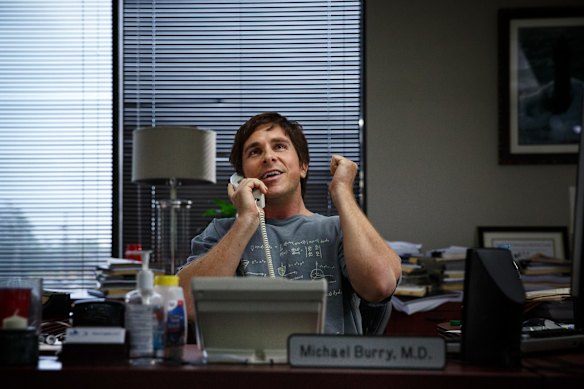
Christian Bale as hedge fund maestro Michael Burry in The Big Short. Credit:
The strike prices were startling: Nvidia’s was 47 per cent below where the stock had just closed, while Palantir’s was 76 per cent below. But some mystery lingered: Due to limited reporting requirements, it was unclear if the puts – contracts that give an investor the right to sell a stock at a certain price by a certain date – were part of a more complicated trade.
Loading
And the filing offered just a snapshot of Scion’s books, leaving open the possibility that Burry had since trimmed or exited the positions. Yet scepticism about the lofty valuations and massive spending plans of major AI players had been building like a pile of dry kindling. Burry’s disclosure landed like a freshly struck match.
Nvidia, the largest stock in the world, tumbled in reaction, as did Palantir, though they later regained ground. The Nasdaq also dipped.
It’s impossible to know exactly how much Burry made. One bread crumb he left was a post on X saying he paid $US1.84 for the Palantir puts; those options went on to gain as much as 101 per cent in less than three weeks.
The filing crystallised doubts simmering beneath a market dominated by a narrow group of AI-linked stocks, heavy passive inflows and subdued volatility. Whether the trade proves prescient or premature, it underscored how quickly even the most dominant market narratives can turn once belief begins to crack.
Defence stocks: New world order
A geopolitical shift has led to huge gains in a sector once deemed toxic by asset managers: Defence. Trump’s plans to take a step back from funding Ukraine’s military sent European governments into a spending spree, giving a huge lift to shares of defence firms – from the roughly 150 per cent year-to-date rally in Germany’s Rheinmetall, to Italy’s Leonardo close to 90 per cent ascent during the period.

Brushing aside previous ethical concerns, investors embraced weapons makers this year.Credit: Rheinmetall
Money managers who once saw the sector as too controversial to touch amid environmental, social and governance concerns changed their tune and a number of funds even redefined their mandates.
“We had taken defence out of our ESG funds until the beginning of this year,” said Pierre Alexis Dumont, chief investment officer at Sycomore Asset Management. “There was a change of paradigm, and when there is a change of paradigm, one has to be responsible and also defend one’s values. So we’re focusing on defensive weapons.”
From goggle makers to chemicals producers, stocks were snapped up in a mad rush. The boom spilled into credit markets as well, with firms only tangentially linked to defence attracting hordes of prospective lenders. It marked a repricing of defence as a public good rather than a reputational liability – and a reminder that when geopolitics shifts, capital tends to follow faster than ideology.
In Australia, drone detection company DroneShield jumped on the bandwagon, with its stock still up more than 300 per cent this year – even after its top brass cashed in and dumped all their shares in October, sparking an investor stampede that more than halved its share price since then.
Debasement trade: Fact or fiction?
Heavy debt loads in major economies such as the US, France and Japan – and a lack of political appetite to confront them – pushed some investors in 2025 to tout gold and alternative assets like crypto, while cooling enthusiasm for government bonds and the US dollar.
The idea gained traction under a bearish label: the “debasement trade,” a nod to historic episodes when rulers such as Nero diluted the value of money to cope with fiscal strain.
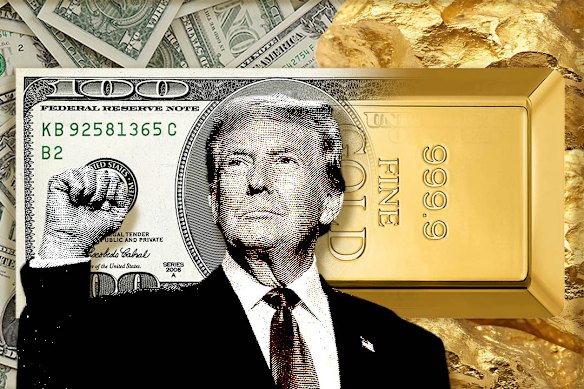
As investors searched for shelter beyond the US dollar, gold rallied.Credit: Matt Willis
The narrative reached a crescendo in October, when concerns over the US fiscal outlook collided with the longest government shutdown on record. Investors searched for shelter beyond the dollar. That month, gold and Bitcoin both rose to records – a rare moment for assets often cast as rivals.
As a story, debasement offered a clean explanation for a messy macro backdrop. As a trade, it proved more complicated. Bitcoin has since slumped amid a broader retreat in cryptocurrencies.
The US dollar stabilised somewhat. Treasuries, far from collapsing, are on track for their best year since 2020 – a reminder that fears of fiscal erosion can coexist with powerful demand for safe assets, particularly when growth slows and policy rates peak.
Loading
Elsewhere, prices told a different story. Swings in metals from copper to aluminium, and even silver, were driven at least as much by Trump’s tariff policies and macro forces as by concerns about currency debasement, blurring the line between inflation hedging and supply shocks.
Gold, meanwhile, has kept powering ahead, reaching new all-time highs. In that corner of the market, the debasement trade endured as a focused bet on rates, policy and protection.
Debt markets: Cockroach alert
Credit markets in 2025 were unsettled not by a single spectacular collapse, but by a series of smaller ones that exposed uncomfortable habits. Companies once considered routine borrowers ran into trouble, leaving lenders nursing steep losses.
New Fortress Energy’s newly-exchanged bonds lost more than half their value in the span of a year. The bankruptcies of Tricolor and then First Brands wiped out billions in debt holdings in a matter of weeks.

“When you see one cockroach, there are probably more,” warned JPMorgan boss Jamie Dimon.Credit: Alamy
In some cases, sophisticated fraud was at the root of the collapse. In others, rosy projections failed to materialise. In every case, investors were left to answer for how they justified taking large credit gambles on companies with little to no proof they’d be able to repay the debt.
Loading
Years of low defaults and loose money eroded standards, from lender protections to basic underwriting. Lenders to both First Brands and Tricolor had failed to discover the borrowers were allegedly double-pledging assets and co-mingling collateral that backed various loans.
Those lenders included JPMorgan, whose chief executive Jamie Dimon put the market on alert in October when he colourfully warned of more trouble to come, saying, “When you see one cockroach, there are probably more.” A theme for 2026.
Bloomberg
Most Viewed in Business
Loading