3 months ago
20
3 months ago
20
“Without targeted action, many existing dwellings will remain exposed to increasing climate risks for decades to come,” it warned.
“Population growth and housing stock turnover are key drivers of future exposure. Continuing to build housing in high-risk areas will increase exposure and asset losses.”
The commission estimates that by the end of the century, the annual damage caused to homes by climate change will be $31 billion or 1 per cent of GDP in today’s dollars. Cumulatively, the cost between 2025 and 2100 will be at least $744 billion.
It argued preventive measures now could drastically reduce that cost. Making homes more resilient to climate change would save $186 billion while preventing the construction of new properties in high-risk areas, such as on floodplains, could save another $54 billion.
It found moving quickly would deliver substantial benefits. A five-year program of work could prevent $38 billion in damages by the end of the century. But dragging it out over 30 years would cost an additional $44 billion in damages.
According to the commission, the federal government should develop a climate resilience star rating system that potential buyers could use to identify homes at risk of climate-related damage.
All levels of government should work together on ways to protect properties including the retrofitting of existing properties and through planning rules.
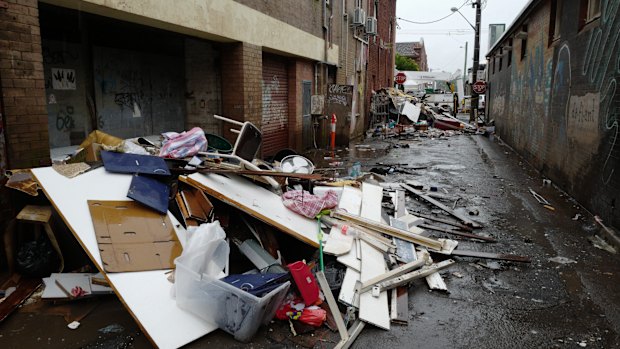
Floods such as those that hit Lismore in 2022 are expected to hit more often and cause more damage over coming years.Credit: Getty Images
“Over the years ahead, boosting our resilience to the impacts of climate change will lower costs to the economy, society and the environment. We need to create the foundations for effective adaptation now,” it found.
“The opportunity to act is greatest when new homes are being planned and built, allowing those benefits to be realised with less disruption and, in many cases, likely at lower cost than retrofitting existing homes,” it found.
It’s not only homes at risk. Oxford Economics Australia believes access to drinking water will be put under greater pressure in coming years.
Economist Dominic McNally said the country is likely to go through a $23 billion desalination plant construction boom as a growing population, construction of data centres and climate change put pressure on drinking water supplies.
Last week, Melburnians were warned they could face water restrictions for the first time in a decade after Victoria experienced its lowest inflows on record between January and June.
Rainfall in south-west WA including Perth has dropped by 20 per cent since the mid-1970s and reduced stream flow by an average 80 per cent. Perth already has two desalination plants and is in the process of building a third in the city’s north.
Oxford said construction on four desalination plants was under way across the country. That will grow to 11 by the end of the decade.
“A desalination construction boom is imminent as water authorities look to desalination plants as the solution to Australia’s impending water shortages,” he said.
The most expensive is likely to be a $5 billion plant to service South-East Queensland, while expansions to current plants in Sydney ($920 million) and Melbourne ($840 million) were likely to be needed.
Get to the heart of what’s happening with climate change and the environment. Sign up for our fortnightly Environment newsletter.