3 months ago
16
3 months ago
16
By Rachael Ward
December 6, 2025 — 7.00pm
Melburnians in outer-suburban areas generate 14 times more carbon emissions than those in the inner city well served by public transport.
Providing better links between public transport, housing and jobs would cut emissions by 80 per cent, according to new Monash University research.
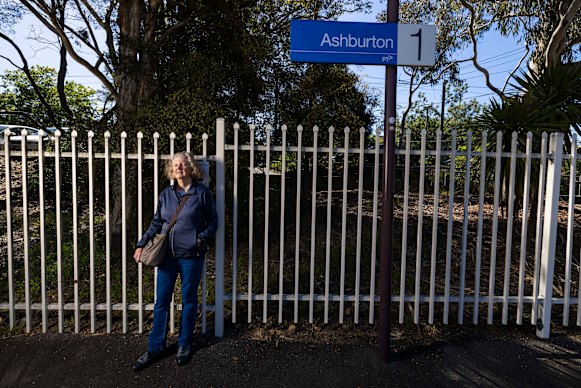
Julia Blunden has given up her car and now catches public transport. Credit: Wayne Taylor
The average Melburnian contributes 21¢ per weekday to the cost of climate change, but the amount varies widely, from less than 4¢ for people in parts of Carlton and Docklands with the best public transport and walking connections, up to 58¢ in car-dependent Bacchus March.
Emissions generated during weekday trips around greater Melbourne add up to $333 million a year in climate change costs, which include things like flood damage and treating respiratory illnesses.
However, that could be cut to as little as $68 million if the city shifted to walkable neighbourhoods with integrated public transport, as 65 per cent of all trips around the city are currently by car.
Loading
“People are forced to drive, that is a failure of the planning system, not the people,” associate professor of transport Liton Kamruzzaman said.
An analysis of some 10,000 neighbourhoods around the city found more than 80 per cent of areas were built in a sprawl pattern, meaning developments are more than 800 metres from a train station, lacking walkability or access to jobs.
Researchers identified a distinct type of neighbourhood with the best access to transport and walkability they dubbed “mobility-oriented development areas”, which included parts of East Melbourne, South Yarra and Richmond.
These areas were six times more effective at reducing emissions than sprawl areas in suburbs like Wallan, Cranbourne and Lynbrook where people were forced to rely on cars, Kamruzzaman said.
Researchers accessed travel data from more than 78,900 people between 2012 and 2020 collected as part of the Victorian Integrated Survey of Travel and Activity (VISTA).
Transport is tipped to become the largest-emitting sector by the end of the decade, with the Australian government encouraging the uptake of electric vehicles to support emissions reductions targets.
Kamruzzaman said relying on technological fixes like electric vehicles or encouraging people to change travel habits wasn’t enough to meet climate targets alone.
“Existing transport policies are not working to cut down emissions from the transport sector, and we have alternative tools,” he said.
Loading
He said that until now, there hadn’t been enough evidence of what types of neighbourhoods produced emissions and their associated costs.
Retired TAFE teacher Julia Blunden lives in Ashburton in the city’s east but grew up in Werribee with limited transport links.
She travels to the outer suburbs for bushwalks by train but has always kept a car on standby to get around her suburb.
Now that her eyesight isn’t what it used to be, she’s giving up her car and searching for other ways to get around. However, her local buses are unreliable and the nearest tram stop is 25 minutes away.
“I wish I did have a tram in High Street. I wish that the Alamein train service was better than it is,” she said.
“It’s very infrequent after a certain time, at night and on the weekends.”
The findings highlight the gap between policy pushing for accessible neighbourhoods close to transport and the reality of how they are actually built, University of Melbourne transport planning lecturer Paraic Carroll said.
“While we do try to build density closer to rail in particular, it’s not all about living close to a train station, it’s about how you can actually get to and from that station,” he said.
Carroll said relatively “quick wins” like providing more pedestrian crossings and adding to the bicycle network would go a long way toward improving walkability and driving down emissions in existing suburbs.
Loading
“The ratio between funding roads versus public transport and active mobility still really is not at a level where it should be, particularly in the outer suburbs,” he said.
“A lot of attention from a net zero perspective is given to electric vehicles alone, which won’t save us.
“We need neighbourhoods that let people avoid unnecessary travel altogether, or at least give people mobility rather than just replacing one vehicle with another.”
The Monash University study did not include emissions from shipping and air travel based on the assumption they wouldn’t be impacted by neighbourhood design. It used a standardised carbon cost of $60 per tonne.
Get to the heart of what’s happening with climate change and the environment. Sign up for our fortnightly Environment newsletter.
Most Viewed in National
Loading