3 months ago
18
3 months ago
18
January 14, 2026 — 5:00am
Don’t bother with window seats or breakfast eggs on planes. Embrace airport hotels, US trains and brightly coloured luggage. Here’s our list of the most overrated, and underrated, things about flying, riding and cruising in 2026. Agree or disagree? Leave your comments below.
OVERRATED
Window seats
The city you took off from looked great for those five minutes you were right over it but now you realise you can’t move for the next 12 hours. Sure, you have somewhere to rest your head if you’re good at calisthenics. But good luck trying to wake those two passengers sleeping beside you if you’re really needing the bathroom.
Exit-row seats
Unless you’re an NBA player who needs acres of extra legroom, exit seats aren’t worth it. You can’t leave anything on the floor, the armrest doesn’t move, often there’s limited recline and on international flights, you’re almost guaranteed to be next to the toilet or the galley. And we’re expected to pay extra for this?
Expiring loyalty points
You work hard, travel hard, maintain loyalty to a particular hotel brand but then … if you stay home for a bit, you might wake up one day to discover all your hotel loyalty points expired while you weren’t looking. Ouch. It’s always worth getting in touch to see if the brand will reinstate those lost points to keep you happy.
DXB
Dubai Airport (DXB) is ranked No.11 in the world by Skytrax, supposedly the authority on airport quality, and yet it’s cramped, has limited facilities, terrible restaurants and nowhere to sit. What gives? And while we’re at it, how is Tokyo Narita – an airport that’s miles out of the city, expensive and clearly a poor cousin to the vastly superior Haneda – number five in the world?
Travel pillows
Despite countless design variations, from inflatable ones to wrap-around versions to U-shaped memory foam affairs, do you know anyone who’s ever had a decent night’s sleep on a plane using a travel pillow?
Sydney Airport
The $200 million redevelopment of Sydney Airport’s T2 Domestic is due to finish late 2026. So it may be premature to underrate Australia’s busiest terminal. For now, though, it feels as if the core task – getting people on and off planes – has been forgotten. Navigating the dense maze of food and retail to reach the aprons can feel like nutting out an escape route. Similarly, at the international terminal, finding a seat for a coffee air-side before a flight seems near impossible, but finding somewhere to buy a luxury handbag certainly isn’t a problem.
Printed airline menus
Often distributed in the premium cabins to emulate the experience of being in an actual restaurant, printed menus are a needless waste of paper. Put the menu on the entertainment system instead, where it can be easily accessed and updated without creating more landfill.
New carry-on rules
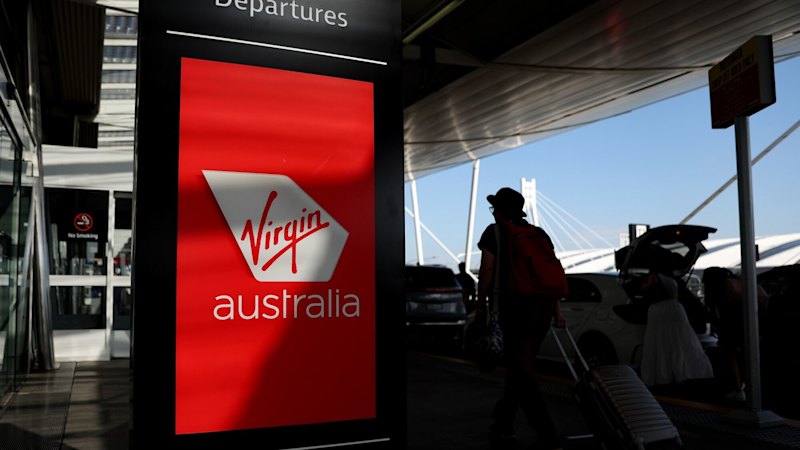
Some passengers will applaud Virgin Australia’s new carry-on baggage policy, which touches down on February 2, while others will feel extra-stressed. The big change is that economy class passengers can stow only one bag (weighing up to eight kilograms) instead of two (weighing up to seven kilograms combined). A personal item can still be stowed under the seat in front, but it will come with size restrictions.
Breakfast eggs
Warm egg dishes served in a cafe are one thing but when they are doled out at cruising altitude, they can repulse fussier long-haul flyers. Airlines could think outside the square (tray), ditch the scrambles and frittatas, and try more innovative and delicious hot dishes such as fragrant bowls of pho, toasties, porridge or hash browns. Yum.
Fancy sit-down restaurants at airports
Airports now love to trumpet the fact that they have attracted big-name chefs and well-known fine-dining restaurants to open outlets in their departure halls. But how often do you have an hour or more (and the will, and the money) to sit down for a formal meal in an airport? Almost never.
Airline celebrity-chef collaborations
Cool, your airline has partnered with a swag of celebrity chefs from around the world who are designing incredible meals that will be served on fine china along with matching, expensive wines poured in restaurant-quality stemware. Lovely. But what are we eating in economy?
Polish dining cars are great value. But cruise drink packages? Forget about it. Our global writers weigh up the best and worst of experiences on the tracks and at sea right now.
Cruise ship drink packages
How high can they go? The price of all-inclusive drinks packages on cruise ships keep going up, now starting at about $100 a day for each person. On a two-week sailing, a couple will be squeezed for almost $3000 for drinks, on top of the price of the cruise. Unless you plan on knocking back eight or more boozy beverages every day (even on port days), it makes sense to skip the package and buy drinks as you go.
Specialty restaurants on ships
It’s hard not to feel extorted when you pay a lot of money for a luxury cruise, then have to pay a lot more for specialty dining. Shouldn’t higher-end fare at onboard steakhouses and sushi bars come as standard on upscale ships? Three cheers for the luxury lines (Seabourn, Viking and Oceania come to mind) where guests can dine at almost all of the ship’s specialty restaurants without extra charge.
Single staterooms
Cruise lines cheerily promote single staterooms as the thrifty answer to solo travellers’ prayers, but are they really all that? Usually smaller than a standard stateroom and often the first category to sell out, they’re pricier (per person) than a larger, double-occupancy room for two. The smart money for solos is on waiting for a “no single supplement” sale to book a spacious double room for the price of one passenger fare.
Faraway shore excursions
Before you book that expensive shore excursion to the Leaning Tower of Pisa or the mighty Colosseum, you might want to check where the ship is docked and how long it will take to get to the attraction. Ships visiting Rome are actually docked at the Port of Civitavecchia, for example, which means it’s going to take you about two hours each way to get to The Eternal City, leaving not much time to see the sights before sailaway.
Paddleboard tours
For off-ship exploring, SUPing may be great for the core, but it’s a woefully inefficient mode of transport. Tricky enough on a calm day, it’s downright impossible in choppy conditions or with any sort of headwind. Give us a comfortable canoe or kayak any day.
Steam trains
People wax lyrical about the romance of steam trains – the chuffing engine, the high-pitched whistle, the billowing smoke. In reality, they’re slow, noisy and environmentally insensitive. And don’t get us started on the cost. There’s a reason train technology has moved on.
Segway tours
On paper, Segways sound like the ideal transport option for a city-centre tour. Swift and manoeuvrable with zero emissions, they offer an appealingly effortless alternative to traipsing around on foot. However, as anyone who’s actually been on one will attest, they’re unwieldy, tricky to control, and you’ll spend the entire time looking like you’re leaning into a strong headwind. Not even George Clooney looks cool on a Segway.
UNDERRATED
Quiet cabins
If you pack those bulky noise-cancelling headphones then you won’t notice, but you try watching the TV screen with the headphones provided while your older aircraft revs its engines like a bogan in a hotted-up Commodore. Compare the noise to an Airbus A380, the quietest airliner out there. Improved engines and cabin insulation mean less engine noise – so you can hear your TV, and you can even have conversations.
Australian airport security
Some countries wield airport security like a political weapon, while others are so lax they leave seasoned travellers genuinely rattled. These extremes make you realise how comparatively sane Australia’s system is. It’s hardly flawless, but frontline staff are generally fair, and the country is at least moving in the right direction. The nationwide rollout of CT scanners, part of tougher new federal standards, is one of several overdue upgrades taking our airports towards the level of efficiency passengers deserve.
DIY tacos
Hola, Australian airport lounges. How about borrowing this simple idea? Spotted in an otherwise unremarkable airport lounge (United Club, Washington DC’s Dulles airport, near gate C17) were the ingredients for tacos: flour or corn tortillas, barbecue fire-braised chicken, pico de gallo, salsa roja and cotija cheese. Happy days. See united.com
Pets on planes
Not everyone is happy about Virgin Australia’s in-cabin trial (operating only between Melbourne and the Gold and Sunshine coasts) but owners of small dogs and cats will be hoping it gets the green light as a permanent policy. Owners and their furry friends will be less stressed; other humans who hate it can always take a different flight. See virginaustralia.com
Group boarding
How’s the serenity? Things are a little more orderly around Qantas’ domestic boarding gates at major airports since the airline started trialling, refining and rolling out its own group boarding system from late 2023. “Gate lice”, as passengers who crowd the gate early have been dubbed, now have to cool their heels and wait for their group number to be called. See qantas.com
Capped airport taxi fares
Sydney taxi drivers – and their infamous shenanigans – have brought a fixed-fare trial upon themselves. In the 18-month trial, which started in November, fares between Sydney Airport and the Sydney CBD trial area are capped at $60 for standard and wheelchair-accessible taxis and at $80 for a requested maxi taxi. It’s long overdue. See sydneyairport.com.au
AirAsia transfers
AirAsia Ride is a pick-up and drop-off car service operating in Kuala Lumpur, Bali and Chiang Mai that allows Air Asia passengers to schedule a ride to and from the airport. Rides can be scheduled up to seven days in advance, and they are competitive in price with other ride-share services. The difference is the car should be waiting for you on arrival at a designated pick-up spot – no hanging around. See airasia.com
Chubu Centrair International Airport, Japan
This lesser-known airport in Nagoya has excellent public transport, whimsical design features (look for the ninjas in the departure hall) and an outdoor observation deck only 300 metres from the runway. The icing on the cake? Flight of Dreams, a free theme park containing the first Boeing 787, a fabulous kids’ play area and a working 787 flight simulator. No wonder Skytrax has named it World’s Best Regional Airport for the past 11 years. See centrair.jp
Brightly coloured luggage
What’s the secret to a stress-free baggage claim experience? Brightly coloured luggage. No more elbowing to the front so you can be next to the belt. No more scanning every case like you’re studying a police line-up. When your bag is neon pink, sunflower yellow or lipstick red, you can sit back and relax, confident in the knowledge that no one else is going to pick it up by mistake.
Flykitt Jet-lag remedy
People are understandably sceptical about “miracle” jet-lag cures, but Flykitt is based on proven research with US fighter pilots and navy SEALs. Combining an AI-driven app, a pair of blue light-blocking glasses and a range of natural supplements, it helps to speed up the re-alignment of your internal body clock by telling you when to eat, sleep and exercise. It works for 93 per cent of travellers and it even offers a money-back guarantee. See flykitt.com
MPC app
A free, easy-to-use app that can help you avoid hours lining up at a US border point? Sounds too good to be true but MPC is the real deal, offering expedited entry at 35 US airports. Set up a profile before you leave Australia, then create an arrival submission when you land. Seconds later, you’ll be directed to a dedicated – and often empty – MPC immigration line. Finally, a US border initiative to cheer about. See cbp.gov
Airport hotels
Still think airport hotels are sad affairs? Sofitel doesn’t agree. Ireland’s first will open in 2026 directly opposite Terminal 2 at Dublin Airport. Airport hotels have evolved beyond layovers. Some people even take a staycation in them. Niche, perhaps, but the stress relief isn’t. For a night before an early flight, or for sanctuary during a long connection, these well-placed inns are an underused travel hack. Try the new Novotel & ibis Styles Melbourne Airport or Moxy Sydney Airport. See all.accor.com ; marriott.com
Flights out of Brisbane
Brisbane Airport (BNE) is investing $5 billion in its “Future BNE” transformation to be ready for its 2032 Summer Olympics. With more airlines scheduling international flights and availability on routes into Asia and the South Pacific, Brisbane is worth considering. Even the price may be better. Sure, you’ll need to factor in travel to Brisbane if you’re not already there but connecting through it can work out cheaper. And the gorgeous Qantas Domestic Lounge (opened 2017) provides extra incentive. See bne.com.au
Air New Zealand’s economy Skycouch
The option to book three economy seats in a row is one of the best ideas of 21st century air travel. For some of us, the idea of lying down with a footrest that can be raised to form a bed that two can squeeze onto is so much more attractive than simply a premium economy recline with more leg space and better meals. And for two, it’s a bargain. See airnewzealand.com.au
Polish train dining cars
Full-service dining cars have become a thing of the past on most European railways. Not in Poland, however, where this civilised option lives on. If you’re travelling aboard a sleeper train or selected intercity service run by PKP, look for a dining car where you’ll find staff cooking up a storm, creating classics such as sour rye soup with egg and sausage, potato pancakes with goulash, and the ever-popular dumplings known as pierogi. Smacznego. See wars.pl
Northern Explorer, New Zealand
There’s no cheaper way to see New Zealand’s North Island. Ride between Wellington and Auckland – a journey of 681 kilometres, with fares from $NZ219 ($191) – a 14-hour journey through Middle Earth. Travel through five unique geographical regions, passing by the high plains of a volcanic plateau where you can see three volcanoes (Mount Tongariro, Ngauruhre and Ruapehu) through panoramic windows, or an open-air viewing deck. See railnewzealand.com
US train journeys
Sure, they’re not the Orient Express, but Amtrak’s long-distance train trips offer a cheaper, more social and infinitely less-stressful way to see the country than by road. If you only do one, make it the California Zephyr, which meanders through seven states on its way from San Francisco to Chicago. The sections in the Rocky Mountains and Sierra Nevadas are gloriously scenic, and it’s a chance to stop in underrated destinations like Elko and Omaha. See amtrak.com
Sea days
Sea day, me day. When a ship is at sea all day long, embrace the excuse to make use of all the amenities (breakfast in bed, spa treatment, pool cabana, towel-animal tutorial) or simply do nothing at all. Gaze out at the ocean, peer through binoculars at soaring birds, surrender to an afternoon nap. Packed itineraries leave little time to rest, socialise or enjoy a long, leisurely lunch. Sea days are the answer.
Mundi Biddi Trail, Western Australia
This little-known cycling trail runs for 1072 kilometres from Mundaring (near Perth) to Albany taking in some of South West Western Australia’s prettiest tracts of forest, bushland and coastline. One of the longest continuous dedicated cycling routes in the world, you’ll feel a little lost – but that’s the point. There are camping sites and huts along the way – though it’s easy to detour and find fancier digs in picturesque villages. See mundabiddi.org.au
LAX Flyaway bus
With Ubers now costing $US60 ($92) from LAX to Downtown Los Angeles, the $US12.75 cost for a bus ticket on the LAX Flyaway Bus is a true bargain. The bus goes direct from Union Station to the Airport (and vice versa), with drop-offs at each terminal, and runs 24 hours a day, seven days a week. Children under five are free. See flylax.com
Sign up for the Traveller newsletter
The latest travel news, tips and inspiration delivered to your inbox. Sign up now.