
 2 months ago
81
2 months ago
81
What do neon-pink lakes, skull art and a shoe-shaped church have in common? They are among the world’s secret wonders: places that are known to just a few, and are all the more intriguing for having slipped beneath the tourist radar.
In Lonely Planet’s Secret Wonders of the World, the familiar roll-call of bucket-list icons gives way to the odd, overlooked and astonishing. Some of these places are overshadowed by more famous neighbours; others are too strange, remote, fragile or unsettling to have entered the mainstream travel imagination. Not all can be visited. Some are too dangerous, too difficult to reach, or better admired from afar. But each has a story worth telling.
The world’s great sights hardly need another introduction. The Vatican, the Great Barrier Reef and other celebrated landmarks deserve their acclaim, but their fame can also come at a cost, drawing crowds that strain both the travel experience and the places themselves. This collection looks elsewhere: to natural phenomena, eccentric monuments, visionary art projects, haunted histories and human-made marvels created not for profit or prestige, but for the sheer pleasure of wonder.
Some will delight; others will disturb. Some are beautiful, some bizarre, some profound. Together, they remind us that the world still has surprises waiting in its margins.
FALKIRK, SCOTLAND
The Kelpies
Sign up for the Traveller Deals newsletter
Get exclusive travel deals delivered straight to your inbox. Sign up now.
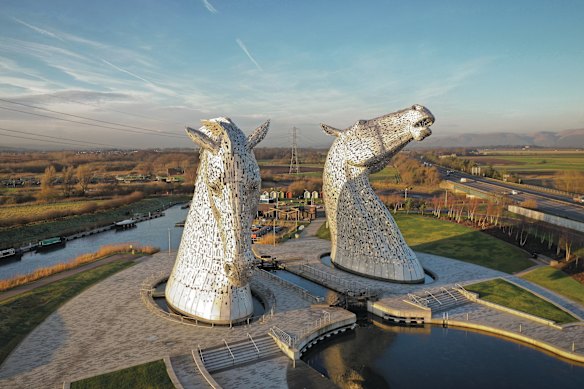
Towering 30 metres above the Helix parklands near Falkirk, the Kelpies are among Scotland’s most striking public artworks. The pair of gleaming steel horse heads stand guard at the eastern entrance to the Forth & Clyde Canal, celebrating the animals that once hauled barges along the country’s waterways.
Their name, however, comes from a far darker source. In Scottish folklore, kelpies are shape-shifting water spirits, usually appearing as horses that tempt unsuspecting travellers onto their backs before dragging them beneath the surface. Some legends tell of them taking human form to lure victims to a watery fate.
Artist Andy Scott drew on both myth and history in creating the sculptures. While their scale and shimmering steel evoke the power of the legendary creatures, they also honour the Clydesdale horses whose strength helped drive Scotland’s industrial past. The result is a landmark that is equal parts folklore, engineering and public art.
The Kelpies can be glimpsed from the M9 between Falkirk and Grangemouth, or explored on a guided tour that ventures inside the sculptures.
See thehelix.co.uk/
KARAKUM DESERT, TURKMENISTAN
Darvaza Gas Craters
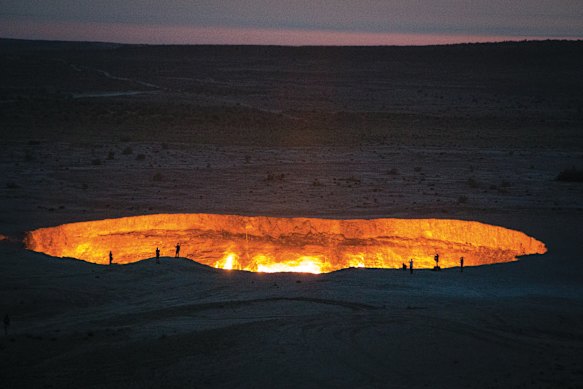
Reaching the Darvaza gas craters is no easy feat. Hidden deep in Turkmenistan’s remote Karakum Desert, they lie in one of the world’s most isolated countries. But the effort is richly rewarded. One of the three artificial craters burns with such intensity that its fiery glow can be seen for kilometres across the surrounding desert, creating what appears to be an entrance to the underworld.
The story begins in 1971, when Soviet engineers drilling for oil accidentally collapsed their rig into an underground pocket of natural gas. Fearing dangerous methane leaks, they set the crater alight, expecting the fire to burn out within days. Instead, it blazed on for decades. Its boiling mud, scorched rock walls and intense heat kept visitors at a distance, although spiders somehow continued spinning webs close to the crater’s edge.
Roughly the size of an American football field and about 30 metres deep, the crater became known locally as the “door to hell”. The scale of the blaze, combined with the stark emptiness of the Karakum Desert, makes it an unforgettable sight, particularly after dark when the flames illuminate the night sky. Yet even this seemingly eternal fire may not last forever. In 2025, scientists announced that the blaze was beginning to weaken after more than half a century.
The craters are typically visited on an organised tour, as independent travel in Turkmenistan is heavily restricted. Intrepid Travel offers itineraries that include the site.
NAGASAKI, JAPAN
Hashima
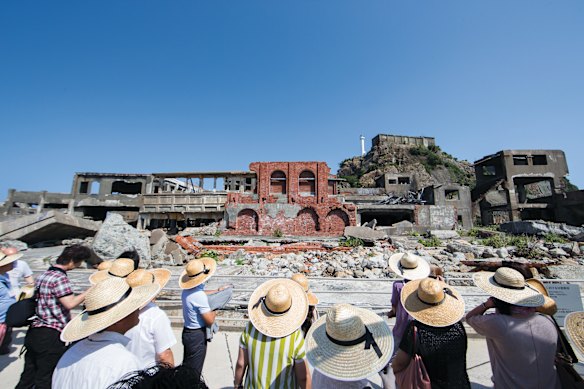
As the ferry leaves Nagasaki Harbour, passengers scan the horizon for the unmistakable silhouette that has earned Hashima its nickname: Battleship Island. Passing barges and tiny offshore islets, the island eventually comes into view, its hulking outline rising from the sea like a grey warship.
Known in Japanese as Gunkanjima, or Battleship Island, Hashima has become one of the country’s most haunting destinations. Abandoned cities have long fascinated photographers and filmmakers, and the island gained international fame after appearing as the villain’s lair in the 2012 James Bond film Skyfall. Yet its real history is every bit as compelling.
Hashima was once the most densely populated place in Japan, built around an undersea coal mine that fuelled the country’s industrial growth. When the mine closed in 1974, the island was abandoned within four months. Apartment blocks, schools, clinics and temples were left behind almost overnight. Today, crumbling concrete walls expose abandoned kitchens, televisions and children’s toys, while vines creep through rubble-strewn alleyways and rusted steel twists into strange, sculptural forms.
Visitors explore the island from elevated walkways, kept well back from buildings that continue to deteriorate under the salt air. The silence is striking. Aside from the crash of waves against the seawall, there is little to disturb the stillness. It is a place that feels suspended in time, preserving a vanished community while quietly posing a larger question: how permanent are even the world’s greatest cities?
Access to Hashima is by guided boat tour from Nagasaki.
See japan.travel
BUDAI, TAIWAN
High-Heel Wedding Church
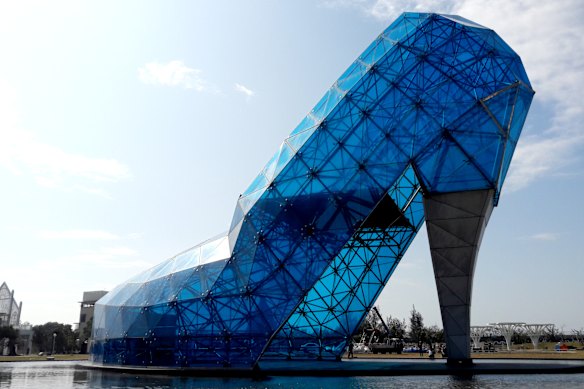
Looking like the glass slipper left behind by a giantess at the ball, Taiwan’s High-Heel Wedding Church is a curious monument to a little-known chapter in the island’s history. Made from about 300 blue-tinted glass panels, the 17.8-metre-tall, shoe-shaped structure commemorates the women affected by an epidemic of blackfoot disease, a vascular condition once linked to long-term arsenic exposure in parts of south-western Taiwan. Many underwent amputations and were unable to wear the wedding shoes that inspired the building’s unusual design.
The shimmering sapphire-coloured landmark also holds the Guinness World Record for the world’s largest high-heeled shoe-shaped structure – although it’s fair to wonder how fiercely contested that particular title might be.
The High-Heel Wedding Church is reached via West Coast Expressway 61 from Xinying Bus Station. It’s also one of the area’s most popular photo stops.
DJENNE, MALI
La grande mosquee
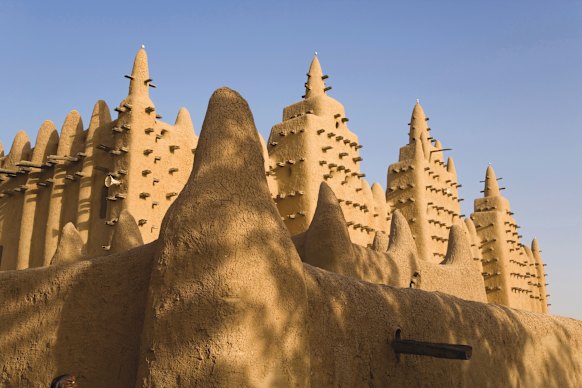
Even on Monday market day, when Djenne’s dusty streets and squares are thronged with thousands of traders and shoppers, it’s hard to take your eyes off the Grande Mosquee. Somehow both graceful and imposing, it rises above the bustle like a living creature, its porcupine-like wooden beams jutting from the warm, earthen facade.
Completed in 1907, the mosque remains the world’s largest mud-brick structure. It faithfully recreates the original mosque built on this site in 1280 after Djenne’s 26th king, Koi Konboro, converted to Islam. That building stood for more than six centuries as a symbol of the island city’s wealth and cultural importance before falling into ruin in the early 19th century following the jihad led by the Islamic ruler Cheikou Amadou.
Like its predecessor, today’s mosque depends on constant care. At the end of each rainy season, thousands of volunteers join skilled Bozo masons to replaster the building with fresh mud, preserving one of Africa’s great architectural landmarks. The distinctive wooden beams that project from the walls aren’t merely decorative; they also serve as permanent scaffolding, allowing workers to climb the structure during the annual restoration.
Non-Muslims cannot enter the mosque, but excellent views are possible from the Petit Marche and the rooftops of nearby houses.
Before planning travel to Mali, check the latest Australian government advice.
DALLOL, ETHIOPIA
Danakil Depression
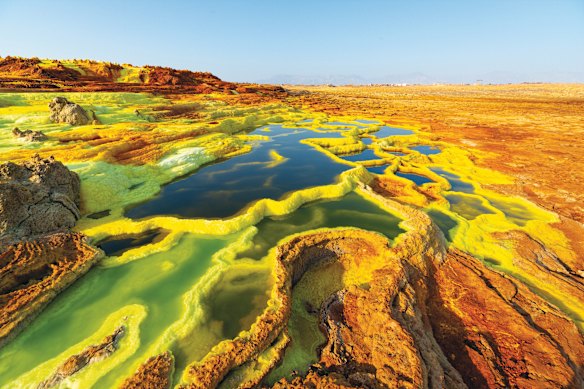
At the Danakil Depression, a volcanic rift in Ethiopia’s northern Afar Region, the Earth’s crust is being pulled apart, widening by one to two centimetres each year. At its heart lies the Dallol cinder cone volcano, one of the saltiest places on Earth and, by average annual temperature, the hottest inhabited place on the planet.
This hellish landscape of acid springs, salt flats and volcanic vents is also strangely beautiful. Magma heats groundwater until it bubbles to the surface, dissolving minerals into an extraordinary palette of colour. Sulphur yellows, vivid green salt deposits and rusty-brown rock formations combine to create a landscape that looks more like an abstract painting than anywhere on Earth.
For scientists, Dallol offers more than spectacular scenery. Studying the hardy microbes that survive here despite the extreme heat, acidity and salinity could help answer one of humanity’s biggest questions: where else might life exist? By understanding how these “polyextremophile” organisms endure such hostile conditions, astrobiologists hope to better understand the potential for life in similarly extreme environments beyond our own planet.
See visitethiopia.et
ALASKA, US
The village of Chicken
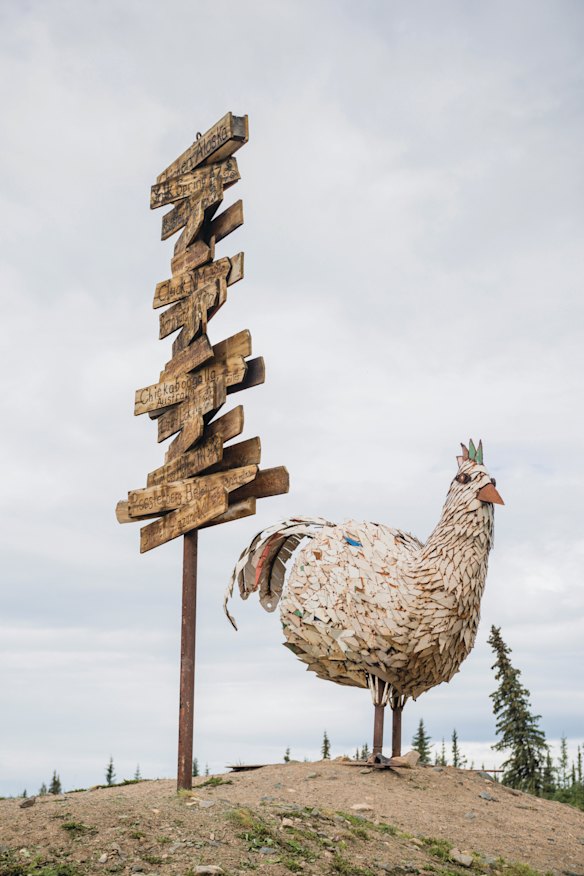
A handful of log cabins in the middle of nowhere, Chicken is a tiny speck in Alaska’s colossal, unforgiving wilderness. Reached via the Top of the World Highway, a summer-only mountain road, it is best known for an eccentric claim to fame: a bar where a cannon fires underwear into the air, while the adjoining saloon is festooned with knickers, licence plates, baseball caps and handwritten notes.
Chicken is one of Alaska’s last gold-rush holdouts. When the highway closes in October, the population drops to single figures as winter cuts the village off from the outside world. Summer brings a trickle of prospectors, adventurous road-trippers and travellers eager to pan for gold or delve into frontier history.
The settlement dates to the late 1800s, when miners survived their first winters on plentiful ptarmigan, a type of wild grouse. Legend has it they wanted to name the town after the bird, but no one could agree how to spell it, so Chicken won by default. Today, visitors can tour a working mine, try their luck panning for gold and browse the gift shop’s gleefully irreverent souvenirs.
The village reaches peak eccentricity during Chickenstock, when almost 1000 revellers descend for folk music, bluegrass and the inevitable chicken dance. With music echoing beneath the midnight sun, campers wandering to the public outhouse and knickers launched skyward from a cannon, Chicken feels like a place where the Wild West never really ended.
See travelalaska.com
MAUI, HAWAI’I
Rainbow eucalyptus trees
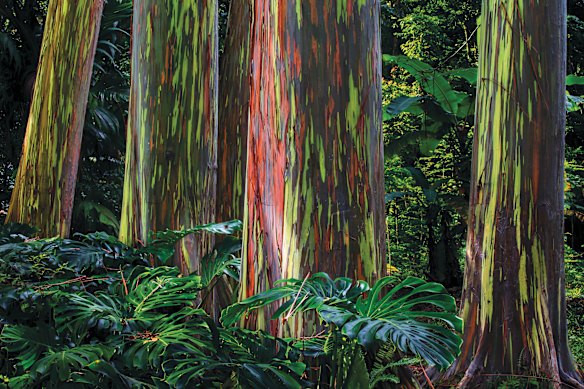
The serpentine Road to Hana in Hawaii is one of the world’s great scenic drives, with waterfalls, rainforest and dramatic coastal scenery unfolding around every bend as the highway winds towards the sleepy town of Hana. One of its most overlooked attractions stands right beside the road: a grove of rainbow eucalyptus trees that look as though they’ve been painted by hand.
Their extraordinary colours – vivid reds, purples, greens and oranges – are the result of bark shedding at different times throughout the year. As fresh layers are exposed beneath older ones, the trunks become living canvases, with new patterns and colours constantly emerging. No two trees are ever quite the same, and the display is always changing.
The rainbow eucalyptus grove is at mile marker 7 on Hana Highway (park carefully). More of the trees can also be seen at the nearby Ke’anae Arboretum.
See gohawaii.com
ROTTERDAM, NETHERLANDS
Kijk-Kubus Museum-House
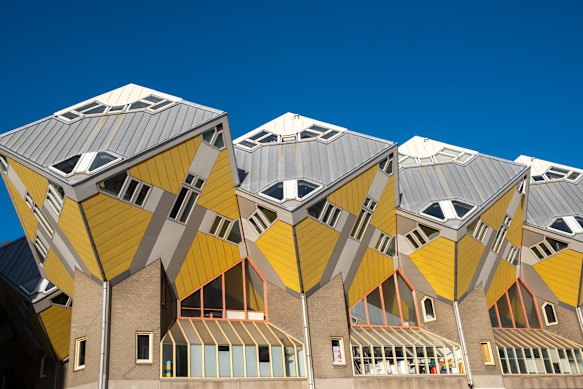
Rotterdam is renowned for its bold architecture, but few buildings are as instantly recognisable as Piet Blom’s bright yellow Cube Houses. Tilted at 45 degrees and perched above the Overblaak Development, the striking homes were designed to resemble trees, creating what Blom described as an urban forest.
One of the houses is open to visitors as the Kijk-Kubus Museum-House. From the outside, it looks as though every room must be sloping at impossible angles. Step inside, however, and the clever design reveals surprisingly practical living spaces, with the floors and walls feeling far more conventional than the dramatic exterior suggests. The only real compromise is the need for custom-built furniture to fit the unusual geometry.
Kijk-Kubus Museum-house is opposite Rotterdam Blaak station. It is open daily from 11am to 6pm.
NEAR SIAULIAI, LITHUANIA
Hill of Crosses
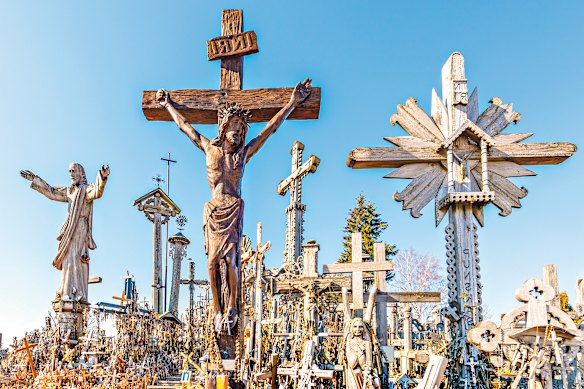
Lithuania’s crucifix-covered Hill of Crosses is no ordinary pilgrimage site. Rising in a defiant, spiky silhouette near Siauliai, Kryziu kalnas grew from acts of remembrance and resistance, becoming one of the country’s most powerful symbols of faith under Soviet oppression.
Locals have been placing crosses here since the 19th century, with the first thought to honour those who died during an anti-tsarist uprising. By 1900, 130 crosses had been counted, and the number continued to grow. Soviet authorities tried to halt the public display of devotion, bulldozing the site in 1961, burning wooden crosses and melting metal ones. Instead, the destruction only strengthened resolve. Under cover of darkness, people returned to plant new crosses, while the KGB tried roadblocks and even declared the area a quarantine zone. Nothing worked. The hill kept growing, crucifix by crucifix.
After 1989, as Lithuania emerged from behind the Iron Curtain, the hill became a symbol of survival and victory. Crosses were laid openly: simple bound twigs, ornate silver crucifixes and memorials to those deported to Siberia under Soviet rule. Pope John Paul II’s visit in 1993 cemented its status as a pilgrimage site. Today, the Hill of Crosses stretches about 60 metres long and almost as wide, with an estimated 100,000 crosses and counting.
The Hill of Crosses is 12 kilometres north of Siauliai. Drive or take a Joniskis-bound bus.
See lithuania.travel
SVALBARD, NORWAY
Global Seed Vault
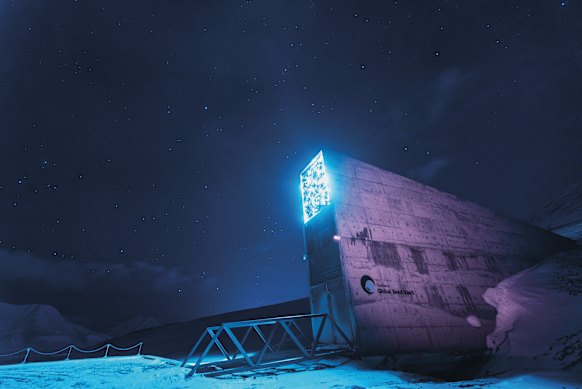
If you’ve ever mulled over how humankind could begin anew after a global disaster – say, crop failure or a zombie apocalypse – then you will be heartened to hear about Norway’s Global Seed Vault.
Squirrelled away on the northerly archipelago of Svalbard, the bank’s mission is to store enough seeds to ensure genetic diversity among crops around the globe. About 1700 agricultural outposts across the world already carry their own stocks of seeds. Diverse varieties of crops, resistant to disease or hardy in droughts, are stored for a rainy day (or rather, a not-so-rainy one). Their fragile contents would be easily lost in power outages or human-made disasters, so the Global Seed Vault provides the ultimate back-up plan: some 1.3 million samples of around 5000 plant species, safely stashed in sealed baggies within a far-flung Arctic safehouse.
It doesn’t get much safer, or more remote, than halfway between northern Norway and the North Pole. The site even has James Bond-style safeguards in place: in the event of a power failure, the seldom-opened vault will remain sealed so that the permafrost will keep stocks cold. Security measures stipulate that the stored seeds can be retrieved only by the nation that placed them here, ensuring no one can capitalise on another country’s agricultural crisis.
Unsurprisingly, it’s closed to visitors, though you can take a virtual tour via the website.
Immerse yourself in the Global Seed Vault’s frosty surroundings by exploring Svalbard, reachable by flights from Oslo and Tromso.
See seedvault.no
COUNTY KERRY, IRELAND
Beehive huts
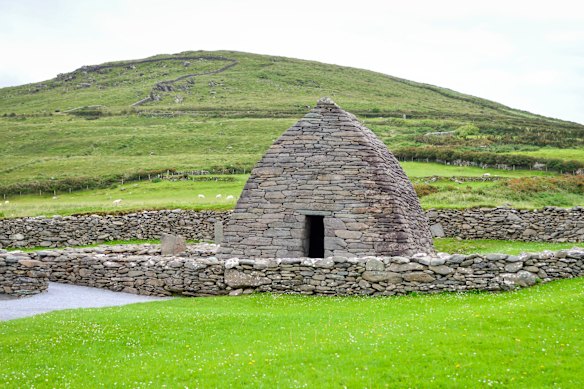
Like sheep and country pubs, clochan, or beehive huts, are familiar features of south-west Ireland’s coastal landscape. Dozens of these dry-stone structures are scattered across the green hills of the Dingle Peninsula, squat reminders of an agrarian, and perhaps spiritual, past.
Historians date many of the huts to around the 8th century CE. Built without mortar, their walls can be up to 1.5 metres thick and are held together using corbelling, a technique in which overlapping stones support one another to create a stable, self-supporting structure. From the outside, they slightly resemble round medieval helmets; inside, they offer a surprisingly sheltered refuge from the Atlantic wind.
The best-known examples are found around Fahan on the Dingle Peninsula, where sea spray, stone walls and rolling pasture give the huts a suitably elemental setting. They are thought to have been used for grain storage or as temporary shelters against sudden storms. Some historians also suggest they may have served as austere dwellings for monks and pilgrims making their way towards Cnoc Breanainn, or Brendan’s Hill, named for the Irish saint.
The huts can be seen on a road trip around the Dingle Peninsula, along with ancient forts, coastal villages and some of Ireland’s most dramatic Atlantic scenery.
See ireland.com
Five Australian secret wonders
Aradale Asylum, Victoria
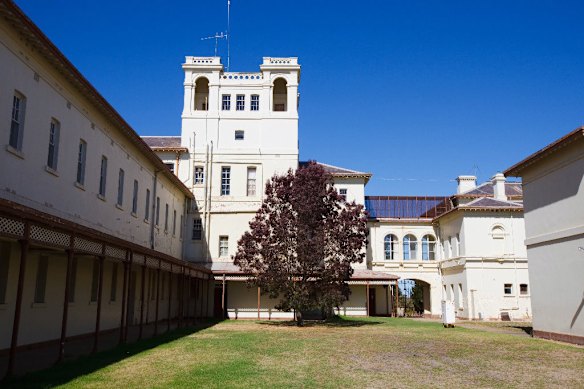
Australia’s largest abandoned psychiatric hospital is as architecturally impressive as it is unsettling. Built in 1867 near Ararat, its Italianate towers, hidden security features and labyrinth of wards tell a confronting story of 19th-century mental healthcare. Guided tours explore both the grand buildings and the lives of the thousands of patients once confined within them.
Lake Ballard, Western Australia
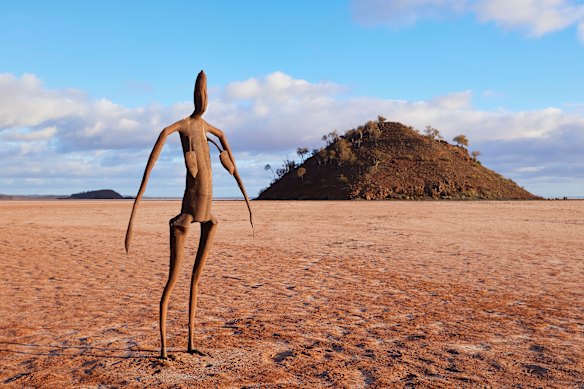
On a vast salt lake near Menzies, 51 steel sculptures by British artist Antony Gormley appear to drift across the shimmering horizon. Created from casts of residents, Inside Australia transforms the remote landscape into an open-air gallery where heat haze, distance and light play tricks on the eye, especially at sunrise, sunset and under a full moon.
Umpherston Sinkhole (Balumbul), South Australia
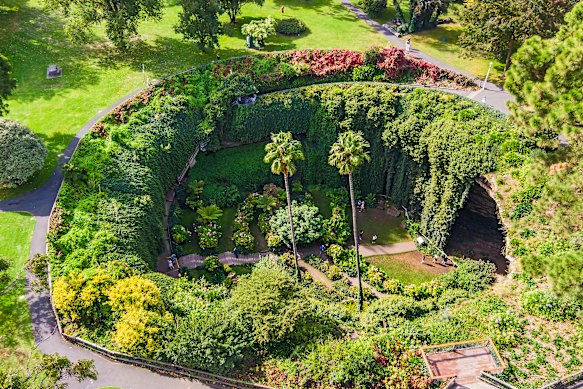
Mount Gambier is rich in geological oddities, but Umpherston Sinkhole is its most enchanting. Formed when a cave roof collapsed, the 50-metre-wide pit was transformed into a sunken garden in the 1880s, later restored after years as a rubbish dump. Today, palms, hydrangeas and ivy spill down its limestone walls, while possums emerge at night like residents of a subterranean Eden.
SS Ayrfield, NSW
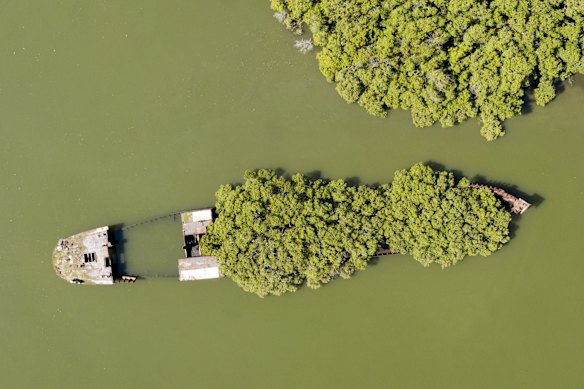
One of Sydney’s most unexpected sights is a rusting cargo ship transformed into a floating forest. Abandoned in Homebush Bay in 1972, the former supply vessel has become home to a thriving mangrove ecosystem, with trees spilling over its hull and slowly pulling the steel apart. Nature, it seems, is proving the ship’s final and most patient conqueror.
Futuro House, ACT
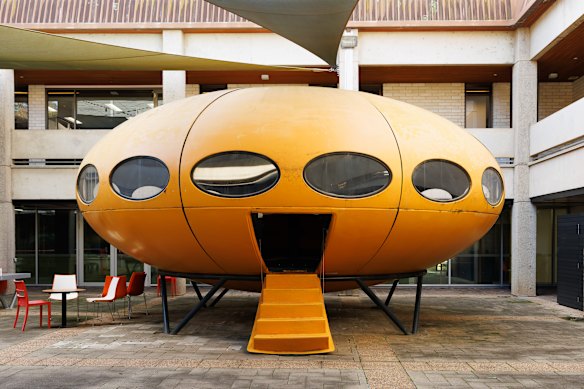
It looks like a flying saucer parked on the University of Canberra campus, but this futuristic pod is one of only about 100 Futuro Houses built worldwide. Designed by Finnish architect Matti Suuronen in 1968 as a prefabricated holiday home, it survived the collapse of the ambitious project and now offers a rare glimpse of yesterday’s vision of tomorrow.
Lonely Planet’s Secret Wonders of the World is published by Lonely Planet (RRP $45; see shop.lonelyplanet.com)
Extract compiled by Julietta Jameson

















































