3 months ago
20
3 months ago
20
That familiar stranger you see every day on the bus is disappearing. Here’s why
You might never speak to them, or even make eye contact, but there are probably a few people on your regular commute who you recognise.
But these familiar strangers have become less common in Brisbane. And that’s a problem, since they help people feel safer on public transport.
University of Queensland researchers analysed more than four years of Go Card data – from December 2017 to February 2022 – for commuters who repeatedly passed through a bus stop inside the same 15-minute window.
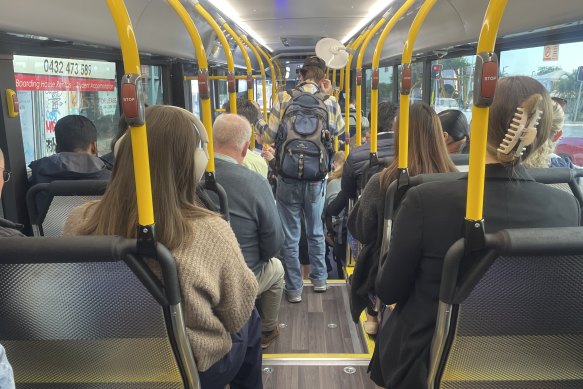
Seeing a familiar stranger each day on public transport can boost your feelings of safety and community, researchers say.Credit: Courtney Kruk
Each time a passenger tapped onto the Translink system, there was a data point, and UQ human geography Associate Professor Jonathan Corcoran said researchers scoured the huge pool of anonymous information for matches that occurred at least twice in three months.
“As expected, we saw a sudden drop in commuting during the COVID-19 pandemic,” he said.
But while people were returning to public transport in Brisbane – with the help of 50¢ fares – Corcoran said these familiar stranger interactions had not recovered.
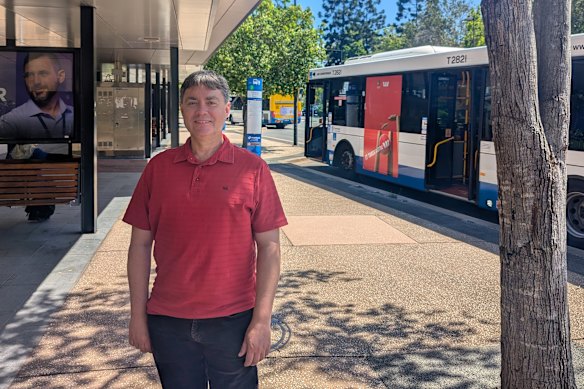
University of Queensland Professor Jonathan Corcoran.Credit: The University of Queensland
He said brief encounters in everyday surroundings made people feel safer and like they belonged, even if they barely, or never, spoke to each other.
In outer suburban areas, car dependency was higher, which eliminated opportunities for incidental encounters on the way and between activities, and while the reduction in familiar strangers on public transport was accelerated by the pandemic, the rate had been declining over time.
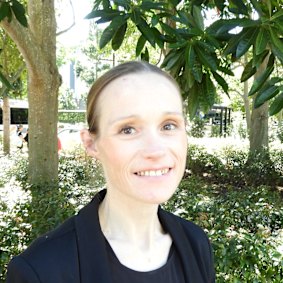
UQ’s Renee Zahnow says the pandemic accelerated flexibility in people’s schedules.Credit: The University of Queensland
UQ social science Associate Professor Renee Zahnow said research indicated routines and social structures had not returned to pre-COVID levels.
“The pandemic accelerated changes that were happening slowly in our communities – things like shopping online, working at home and moving to home-schooling,” she said.
“The results of the study reflect a decline in the collective nine to five workday and a trend towards greater flexibility in our lives, which is associated with fewer individuals routinely moving through the same places at the same times.”
Zahnow said public transport stations and stops were community spaces where people had shared connection through a common activity, even if characteristics such as age or ethnicity differed.
“While benign and effortless, incidental interactions actually bind communities together,” she said.
Loading
“When people recognise others around them, they feel safer and are more likely to step in to help in the case of a disaster or emergency.
“If everyday interactions are not happening as much via commuting, we need new strategies to build connections and help stem loneliness, anxiety and feelings of being unsafe.”
The researchers suggested this could include spots where people could bump into each other in the community, such as pop-up food trucks or dog parks.
Installing more attractive features at public transport stops, such as free Wi-Fi, book exchanges, comfortable seats, cafes and co-working corners for hire could transition them from transfer places into social hubs, they said.
Start the day with a summary of the day’s most important and interesting stories, analysis and insights. Sign up for our Morning Edition newsletter.
Most Viewed in National
Loading