3 months ago
18
3 months ago
18
A decade ago the Herald examined what Sydney would look like and how it would function in 2026. Here is what did get done - and what needs to be done next.
See all 6 stories.The world of schools and education loves a fad. In the past decade, it has seen plenty: from construction of architecturally impressive new schools with open-plan classrooms to project-based learning to boost “21st century” skills.
But the world of education is sobering up from the cascade of gurus, trends and shiny bright new things of recent years, says Catholic Schools NSW chief executive Dallas McInerney, who oversees almost 600 schools.
He says educators now recognise that it might appear old-fashioned to have students sitting in rows facing a teacher at the front of the room – but it is an incredibly effective way to learn.
“The age where uninformed architects have a hold over school planning is over. I think the age of education being an incubator for unbridled experimentation is finished,” he said.
“Parents won’t tolerate kids in bean bags. They want them in rows, if not, at least desks and tables and chairs, with someone at the front.”
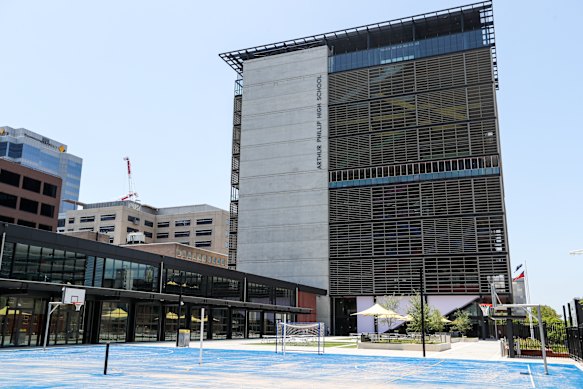
Predictions of a boom in high-rise schools such as Arthur Phillip in Parramatta did not come to pass.Credit: Edwina Pickles
Shifting student populations
In 2016, it was anticipated that new schools would become denser, taller and more specialised. Those vertical schools did arrive, with the construction of Inner Sydney and Arthur Phillip High, but not in the same magnitude as was expected.
Student population growth was expected to explode in inner-city areas but that could not be further from what happened.
The Department of Education failed to plan or build schools for the surging population on the fringes of the city’s north-west and south-west, forcing parents to seek out a private school.
In 2016, we tipped the rising cost of servicing an expensive Sydney mortgage would push more parents to choose a free public education for their child. But across all of Sydney and NSW, public schools are witnessing a generational exodus of families.
McInerney says in addition to families opting for the Catholic and independent sectors, he expected students to travel longer to get to school thanks to infrastructure developments such as the metro.
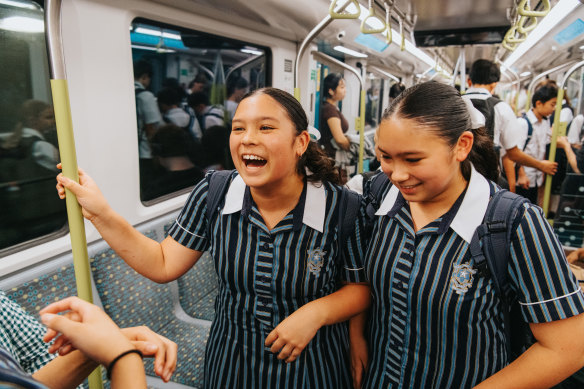
Elly and Imogen Wagener enjoy the ride from Kellyville to school in North Sydney on the metro.Credit: James Brickwood
“More and more, the choice of schooling will be determined not by where the family home is, but where mum and dad go to work, and their travel arrangements and their drop-offs, and their transport infrastructure,” he said.
Loading
Informed Decisions chief economist Rob Hall, who creates enrolment projections for public and non-government schools, said Sydney’s south-west would see the biggest and most rapid demographic shift towards school-aged children in the coming decade.
Meanwhile across Sydney, there would be an extra 22,000 teenagers, bringing the high school aged population to 437,000 by the end of the coming decade.
Chief executive at Independent Schools NSW Margery Evans said she expected to see the trend towards private schools to continue.
“I think that the movement going into independent schools will slow, but I still think it will maintain strong growth, at least for the next five years,” she said.
“Parents are now very conscious of what they particularly want for their child, and we’re even seeing children in the same family send their children to different schools because kids are different.”
The role of AI
Evans said the rise of artificial intelligence would also transform schools but in twin ways. Teachers would harness it to personalise students’ learning while schools would increasingly put guardrails around its use.
“What I predict is we’ll see a dual focus on leveraging the benefits of their technology and the AI, while at the same time a real focus on protecting students from harm.”
Macquarie University School of Education’s Professor Matt Bower said schools must learn from experiences with laptops, mobile phones and social media. He said one could not simply put new and powerful technologies in children’s hands without teaching them how to use them responsibly.
Loading
“Teachers will be critical to help students cultivate the learning dispositions that set them up for success,” he said.
“While the so called 4Cs of creativity, critical thinking, communication and collaboration will still be important, increasingly we will need to focus on 4Es: empathy, ethics, enterprise and engagement.
“If technology is becoming super-intelligent, teachers need to increasingly help students develop their humanistic capabilities.”
How higher education will change
After a tumultuous decade of change in funding models, underpayment scandals, student dissatisfaction and political punditry branding universities as elite and out of touch, higher education, too, will look different in a decade’s time. Like schools, universities will focus on emerging technologies and the way they will change the way graduates live and work.
“People will continue to be learning,” said University of Sydney vice-chancellor Mark Scott. “Technology, the nature of work and opportunities at work will all be changing. What we’ll be doing here is equipping young people for not just their first job but for their career.”
Scott predicts that while the undergraduate degree will continue in person, significant changes are coming to post-graduate education.
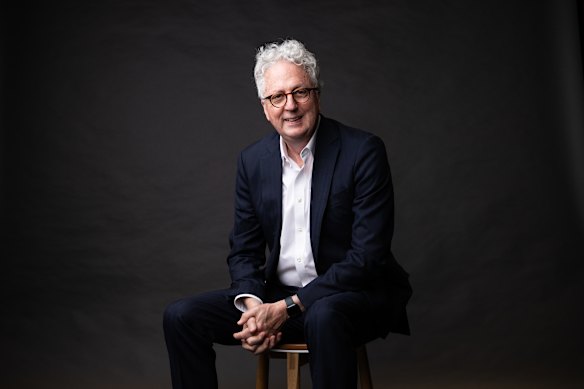
Sydney University vice chancellor Mark Scott.Credit: Louie Douvis
Instead of a two- or three-year masters degree, “short, sharp” courses delivered in partnership with industry to upskill for changing workplaces may become commonplace.
Already offered in AI skills and project management, these courses, Scott said, were likely to appear in disciplines as diverse as law, engineering, medicine and the humanities.
Loading
The increase in population slated for the next decade will demand additional government funding, said Scott, to create new universities and upgrade existing ones for learning, teaching and research.
“The government will need to make the capital investment to create the space for students to study and research, just like they had to create new hospitals for a larger and more complex communities,” he said.
“It’s been decades since new universities were established at any scale.”
Start the day with a summary of the day’s most important and interesting stories, analysis and insights. Sign up for our Morning Edition newsletter.