3 months ago
14
3 months ago
14
Victoria’s efforts to pay down debt will be hampered as it races to pay off its superannuation liability for a scheme that needs four times as much funding as it is getting.
The opposition seized on the figures, contained in the Victorian Auditor-General’s Office (VAGO) review of the Annual Financial Report, to argue the government will struggle to meet its target of fully funding its super liabilities for the public sector by 2035.
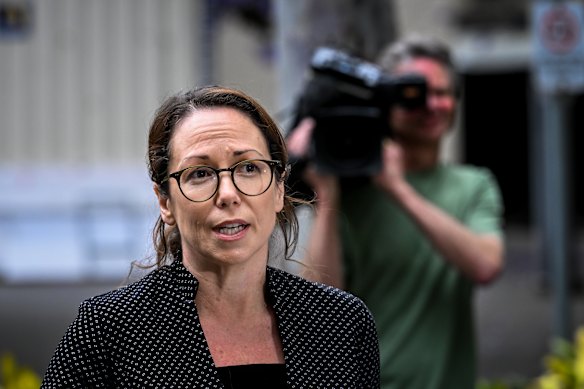
Treasurer Jaclyn Symes addresses the media after the release of Victoria’s mid-year budget update.Credit: Justin McManus
The government contributed $200 million less than budgeted in 2024-25, the auditor-general said in the report, published last month. It leaves the state with $18.3 billion to pay off by 2035, more than double the $8.4 billion the state has contributed over the past decade.
The Allan government, which insists it will meet the target with annual top-up payments, is planning to contribute about $500 million a year over the coming two years.
“This means that annual contributions will need to increase to approximately $2.1 billion from 2028 to fully fund the liability by 2035,” VAGO said.
That would be a fourfold increase, and well above the $139 million contributed in 2023-24 and $360 million in 2024-25, according to the state’s annual financial reports.
In the lead-up to the 2022 election, then-treasurer Tim Pallas said Labor would defer $3 billion worth of the top-up payments in the years to June 2027.
The Parliamentary Budget Office then estimated, at the request of the opposition, that this decision would worsen net debt by $882.8 million by 2035. The government would need to borrow more money later to meet the liability, the budget office said.
Deferring contributions does not stop retired public service workers receiving timely benefits.
A ministerial brief from the Department of Treasury and Finance in 2023, obtained by the opposition under freedom of information, acknowledged that deferring payments would “significantly increase the superannuation top-up payments that are required beyond 2026-27”.
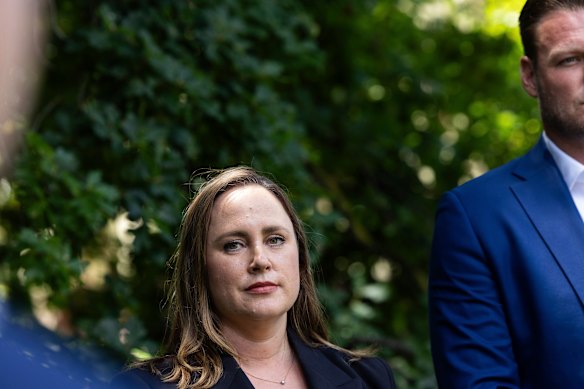
Opposition finance spokewoman Bridget Vallence.Credit: Paul Jeffers
Opposition finance spokeswoman Bridget Vallence described the government’s decision to defer payments to the superannuation liability as “economic vandalism”.
“They will likely have to borrow billions more to fund it in future years, adding to Victoria’s growing debt crisis,” Vallence said.
In 2000, the then Labor government committed to fully fund superannuation liabilities by 2035 through top-up contributions. Previously, the state had paid benefits when they were due rather than when they were accrued.
Loading
RMIT emeritus professor of public policy David Hayward said the target was unnecessary because annual superannuation contributions for existing public sector staff would be larger than those needing to be paid out to retired workers each year.
But he said the government had always committed to the more conservative approach of paying off the liability by 2035 – yet showed little interest in meeting it.
VAGO said delaying payments exposed the government to emerging risks that could challenge its ability to fund the liability by 2035.
“Further, the current liability estimate is subject to external risks, such as the fund’s investment performance and salary and pension increases,” the auditor-general said. “For example, a lower-than-expected investment return from the fund’s assets would require more contributions from the government to fully fund the liability by 2035.”
Loading
The government’s annual financial report for 2024-25, released in October, also pointed out that the liability was sensitive to inflation and wage growth or a lower return on scheme investments.
Opposition Leader Jess Wilson has made budget repair central to the fight for next year’s state election – with net debt forecast to reach $192.6 billion by June 30, 2029 – while the government has rolled out advertisements claiming a Coalition government would slash services.
On Thursday, releasing former bureaucrat Helen Silver’s review of the Victorian Public Sector, Treasurer Jaclyn Symes announced a $4 billion savings plan.
The Allan government will cut 1000 jobs, about half the number Silver recommended, and abolish or merge 29 public entities. Silver had called for 78 entities to be consolidated.
The mid-year budget update, released on Friday, confirmed the government remains on track to deliver its first operating surplus since the pandemic. While revenue was $1.5 billion higher than forecast, that was largely eaten up by an increase in spending and tax exemptions.
“We remain on track to fully fund the unfunded superannuation liability,” a government spokesman said.
“Victoria’s economy is backed by our fiscal strategy, which is delivering a larger surplus, reducing debt as a share of the economy and investing in the things that matter most.”
Our Breaking News Alert will notify you of significant breaking news when it happens. Get it here.
Most Viewed in Politics
Loading